What would municipalities lose without budgets, one year before the elections?
A total of 138 towns and cities would see their allocations, amounting to 56 million, threatened.
-
CAT -
CAST
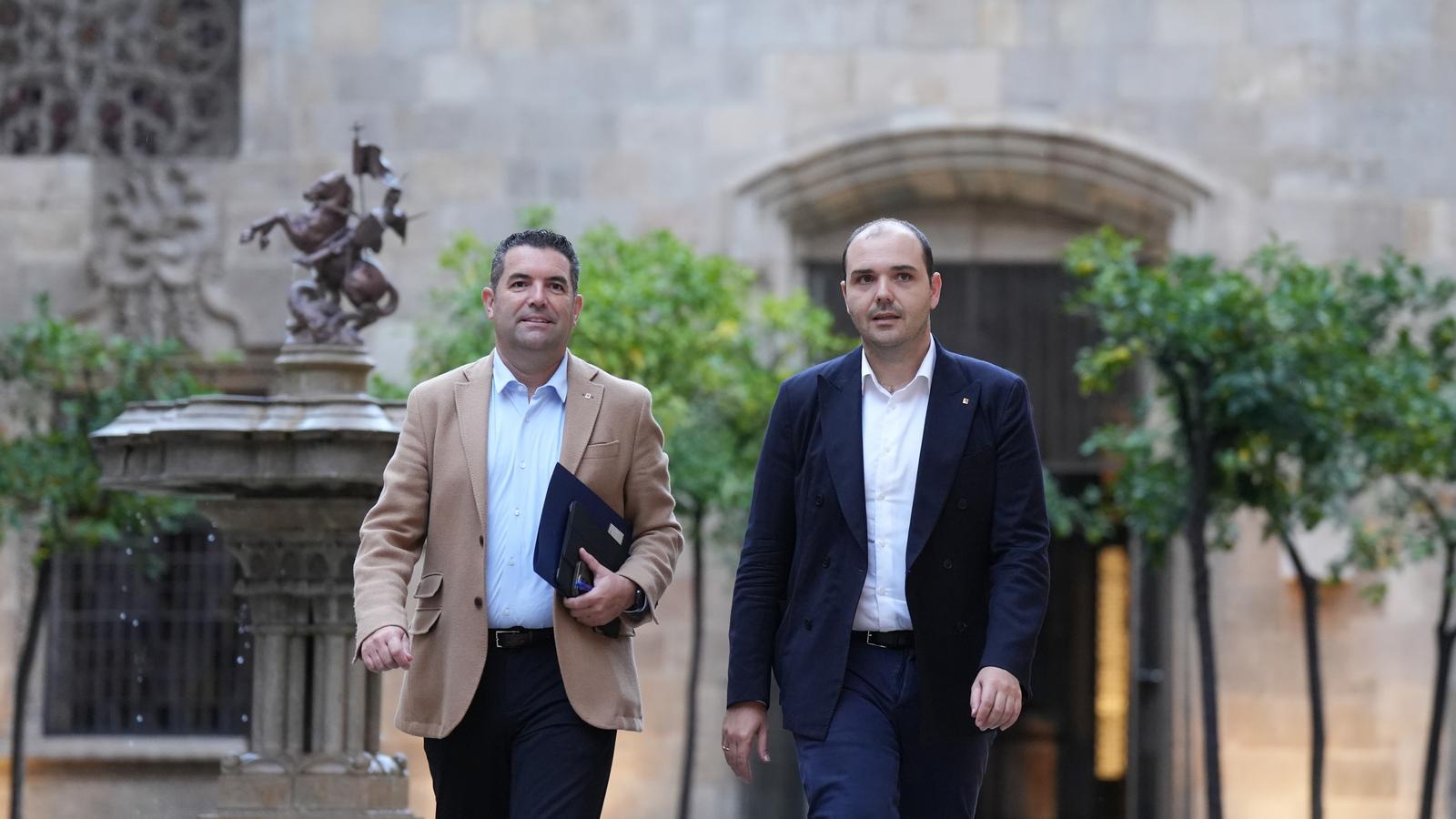
BarcelonaThe first budgets designed by Salvador Illa's government are "fully focused on municipal development." This is the thesis that The Minister of the Presidency, Albert Dalmau, defended in his first appearance in Parliament To explain the main lines of the budget, with 9.1 billion euros more available for the Generalitat compared to 2023. One of the secretariats that fares best is that of Local Governments and Relations with the Aran Valley, which increases from 196.5 million euros to 351 million to give municipalities a boost to carry out urgent works, unblock projects that have been stalled for years, or continue with the neighborhood planAll of this comes a year before the elections, a crucial event for mayors, where everyone wants to arrive with as much work done as possible to showcase during the campaign. What could the municipalities lose if the Catalan Parliament ends up rejecting the budget? No From Esquerra?
"If it were up to the mayors to approve them, there would already be budgets by January 1st," argues the Secretary of Local Governments, Xavier Amor, in a conversation with ARA. This is not the case with the first budget of the Illa government, which, at best, will come into effect in April. In this regard, Amor admits that they are already "late" to be able to channel all the projects in time. In any case, and with the idea of being more "transparent" and so that everyone knows what they gain (and what they could lose), the secretariat has identified, by name, in the budgets the 138 municipalities that already know for sure that they will receive more than 56 million euros in total to complete pending tasks. This is separate from the 185 million euros from the local cooperation fund, the 43 million euros for the Aran Valley, and the 60 million euros for the new PUOSC, which complete the secretariat's budget.
A good number of these earmarked funds are found in the additional budget provisions, representing projects worth €21.1 million. An additional €14.3 million is allocated for priority projects in housing, energy, and sports, separate from the funds already included in the budgets of each regional ministry. These are projects that the mayors themselves, from across the political spectrum, have agreed upon directly with the Catalan government and serve as yet another avenue for the government to exert pressure on the Republican Left of Catalonia (ERC).
Urgent Actions
Among the allocations within this fund are those for urgent matters, as highlighted by the Catalan Government. In Aitona, they are waiting to repair the historic bridge, while in Malgrat, the funds are earmarked for rebuilding the municipal brigade's building that burned down in a fire. In Prats de Rei, they have a new residence, but to reach it, the C-1214 road must be repaired. In Barberà de la Conca, the funds should be used to address a crack that runs the length of the town, from the houses to the bell tower, and which could not be repaired through regular funding programs. Another case: in Barranc del Llop in Alcanar, where the ERC party governs, ten houses are at risk if another storm hits the area, as happened this past autumn. The Catalan Government wants to buy them to prevent a disaster. All these allocations would lapse if there is no budget: as they are additional provisions, they would not be covered by the extension. Could these projects be saved with supplementary credits? The main problem, explains the secretariat, is the slowness of processing these applications for projects not covered by any other funding mechanism, which would require opening an individual file for each one. This makes it such an impractical solution that last year, for example, the Government did not process any such aid through this system. The budget extension would also leave the spending status of the Secretariat for Local Governments and Relations with Aran up in the air, with eight million euros allocated for urban regeneration projects.
The neighborhood plan
Funding for the neighborhood improvement plan that the Catalan government launched last year is also reflected in this year's budget. The Generalitat plans to allocate €12.5 million to cover half the cost of the twenty projects already underway. The secretariat is confident that, should the budget be extended, the government would prioritize this spending, given that this plan, inspired by the previous tripartite coalition government's initiative, has become one of its flagship projects. which has even been used as an example of policies to fight the far right. But nothing is certain, and Amor also admits that if the situation escalates to the point of supplements, all departments will have to tighten their belts. To begin with, and as the ARA explained, there would be 1.5 billion unrecoverableBut last year, for example, the neighborhood plan was indeed channeled through the supplements.
While the Catalan government calls on Esquerra Republicana (ERC) to act "responsibly," time is passing without any of the three parties—the PSC, ERC, and the PSOE—making a move, and the day of the vote on the amendments in their entirety, March 20, is drawing ever closer. The sticking point remains the collection of personal income tax (IRPF), the condition the Republicans have set for sitting down to negotiate. In an interview on Catalunya Ràdio, the Minister of the Presidency, Albert Dalmau, admitted that the government needs "a few more months" to resolve the management of income tax and prepare the Catalan Tax Agency (ATC). "What do we do in the meantime? Do we condemn Catalonia to not having a budget? I think we have earned their trust because we have delivered on the Rodalies commuter rail service and the funding," he asserted.
ERC, however, maintains that, in addition to strengthening the Catalan Tax Agency (ATC), the necessary legislative changes must also be made to legally protect the Catalan tax authorities when collecting personal income tax (IRPF). And that depends on the Spanish government, which is currently refusing. Without a gesture from Madrid, they will not withdraw their amendment in its entirety.
