A National Police chief, regarding the 1-O: "For the anti-riot police it did not differ in anything from a Champions League final"
Commanders and agents shield the role of the four police officers accused of mutilating an eye of Roger Español
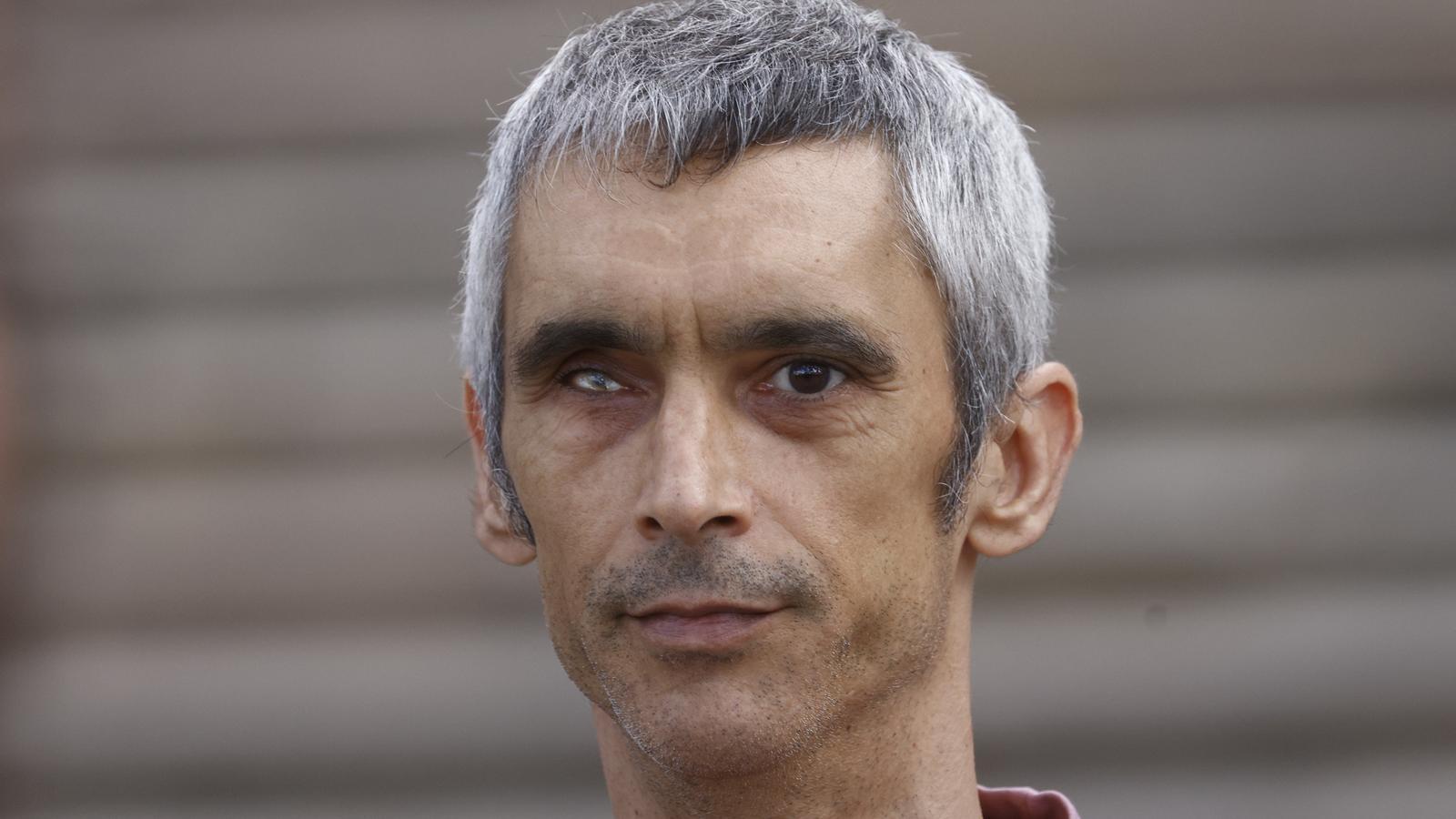
BarcelonaThe commanders and the rest of the agents acting as witnesses shield the actions of the four national police officers who are sitting in the dock for the rubber bullet that mutilated Roger Español's eye during the 1-O. This Thursday, a superior of the riot police downplayed the fact that the shooter fired the weapon parallel to the ground, and claimed that the riot police device was similar to other operations: "It did not differ in anything from a Champions League or Copa Libertadores final, a visit from the Pope, or going to help with the Dana or any other catastrophe".
The witness, the first of about fifty police officers summoned to testify on the second day of the trial, explained that the days prior to October 1, 2017, they held "briefings" to inform the agents and convey instructions for the device. In these meetings, the agents received orders to fire towards the ground and with an energy reducer, a piece that can be attached to the shotgun and causes the projectile to exit with less power, because they already anticipated that the protesters would be very close. Even so, the police commander defended that "the bounce is not mandatory, nor is direct fire prohibited" aiming directly at the body.
In contrast, a shooter who testified afterwards claimed that they must always fire by making the projectile bounce: "The ball always with a bounce on the ground, that is what they have taught us". A third witness, also a shooter and who was part of the same device at the Ramon Llull School, explained that the bounce of the rubber bullets is unpredictable "because the ball comes out differently each time".

Orders from superiors
The interrogations are also focusing on whether there were grounds to use rubber bullets and who gave the order, a key point to clarify the responsibility not only of the inspector and the two sub-inspectors sitting in the dock with the riot officer who shot Español, who are the only police officers who will stand trial for the 1-O and face 13 years in prison. The witnesses have agreed that the order is always given by a hierarchical superior and is transmitted in a chain to the riot officers, who from then on choose the specific moment to shoot. The officers fired rubber bullets while walking backwards, protecting the departing vans, and the protesters were following them, but at that moment, no one was blocking the vans' exit. Two riot officers explained that they received the order to fire rubber bullets, but another said he never heard it, and that when he saw his colleagues firing, it was already too late because they were being called to get into the vehicles and leave.
The commander who testified early in the morning admitted that the regulations on anti-riot equipment condition the use of rubber bullets on there being a risk to the physical integrity of the officers. According to him, there was "a significant risk" because the protesters were being "violent" and had thrown objects in such an "aggressive" way that, in his opinion, they justified the charges. The rest of the police officers who testified during the morning and were part of the operation also referred to this "aggressiveness." They said that the protesters insulted them by calling them "españolazos" and "sons of bitches," and that they threw stones, fences, lighters, and bottles at them, although the throwing is not shown in the images of the day.
Some agents have also reported shouts telling them "we will do the same to you as to the Civil Guard", in reference to September 20th during the search at the Department of Economy, when police cars with weapons inside were left open and surrounded by protesters. In fact, some witnesses this Thursday have also referred to that day to explain that on October 1st they had express orders to protect the vehicles where they store weapons.
Furthermore, the police officers who have testified also claim that before the shots were fired there was an attempt at mediation and that they had fired blanks –detonations without projectiles– to warn the protesters who, according to the first commander, were following them "in an organized manner". "They were warned of what could happen", a commander justified. In a stretch of about fifty meters, which makes up half a block on Sardenya street, 48 blanks and 17 rubber bullets were fired.
