We will paint the Prat airport in oil

-
CAT -
CAST
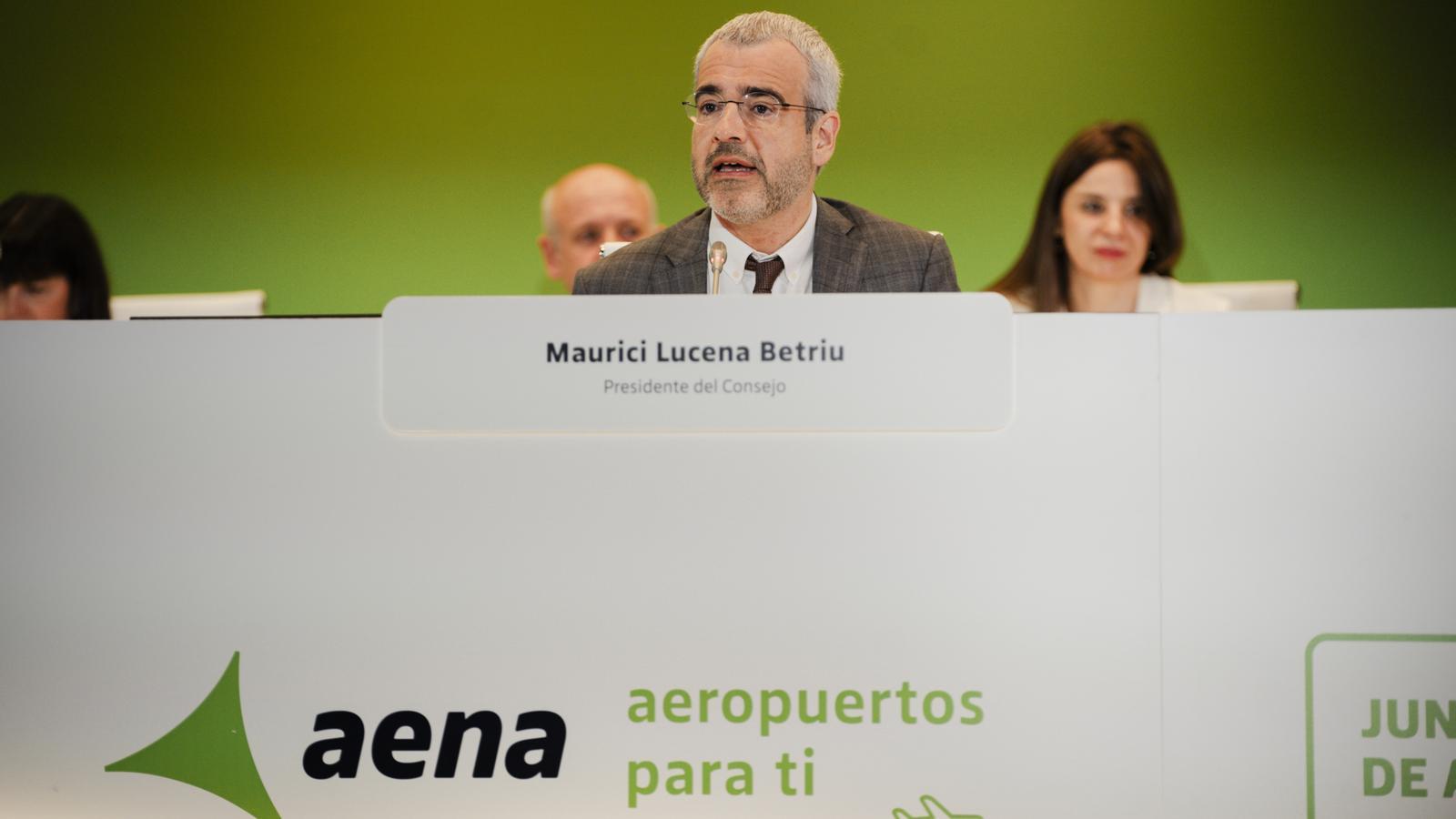
Lately, Salvador Illa can't stop stumbling. We have reached a point where, in this country, everything seems on the verge of overflow and collapse. Regarding the government partners, the transfer of IRPF, for the moment, remains stalled, which led ERC to reject the budgets. As if that were not enough, the desire to have a say and vote on El Prat airport (named Josep Tarradellas from Madrid) seems increasingly unlikely. At least if we judge by the intransigent attitude of Maurici Lucena, president of Aena.Lucena has repeated on several occasions that “it cannot be and, moreover, it is impossible”. He is acting exactly like that sergeant in the chickpea joke, who explained to the recruits that the bombs, if they didn't fall by gravity, would eventually fall “por su propio peso”. A militant of the PSC and former spokesperson for that group in Parliament, Lucena repeated on Thursday, the 16th, that what Catalonia is demanding is not feasible and would be —attention— unconstitutional. “There is only room —he emphasized— to deepen coordination with the territories”, which means that, if anything can be decided, nothing at all. And so that no one could get their hopes up, he concluded: “The rest is outside the legal and constitutional framework”. Lucena, as you can see, presents himself as an expert in constitutional law. On the legal-legal issue, you can read the article written in this same newspaper by Professor Joan Ridao. As Ridao concludes, and contrary to what the socialist preaches, we are facing a strictly political issue.. As Ridao concludes, and contrary to what the socialist preaches, we are facing a strictly political issue.
Unlike what happens in Europe and the world, the Spanish airport system is radial and management is centralized in the hands of Aena. It is an anachronism. It is a unified system in which the few airports that make money (like those in Barcelona or Madrid) finance those that lose money (the majority). There is no competition between airports, since Aena controls everything and it is Aena who manages each one and also the entire system.There are only two explanations for Lucena's attitude. One: he is more Catholic than the Pope. That is to say, more centralist than Pedro Sánchez and Óscar Puente, Minister of Transport, combined. If we adhere to this explanation, it would mean that he is doing the dirty work for the central executive by placing impediments to the fulfillment of what the PSC promised to ERC in exchange for Illa's investiture. Second possibility: what Lucena intends is to calm the private shareholders of the company he presides over. Lucena himself has stressed —to give more weight to his radical rejection— that if any power were ceded to Catalonia, the company's private shareholders could take legal action. The possibility must also be considered, of course, that both explanations are correct at the same time. By the way, who are these private shareholders of Aena? Well, for example, BlackRock, the world's largest private fund manager, with approximately 5% of the capital. BlackRock is, after the Spanish government (51%), the one with the most shares, an investment that results in a most tasty business.Lucena's attitude can make us perfectly fear that we Catalans will have to paint the Prat airport with oil. This is despite the fact that the investiture pact between Illa and Oriol Junqueras's party clearly states that the intention is to “hold a decisive role in the definition, articulation, and management of the new Catalan airport system”. Something similar is happening with the transfer of personal income tax. Or, more subtly, with what is brewing in the case of Rodalies, where the Spanish government will reserve the right to scrap any decision it does not like.
