Trump and alternative realities
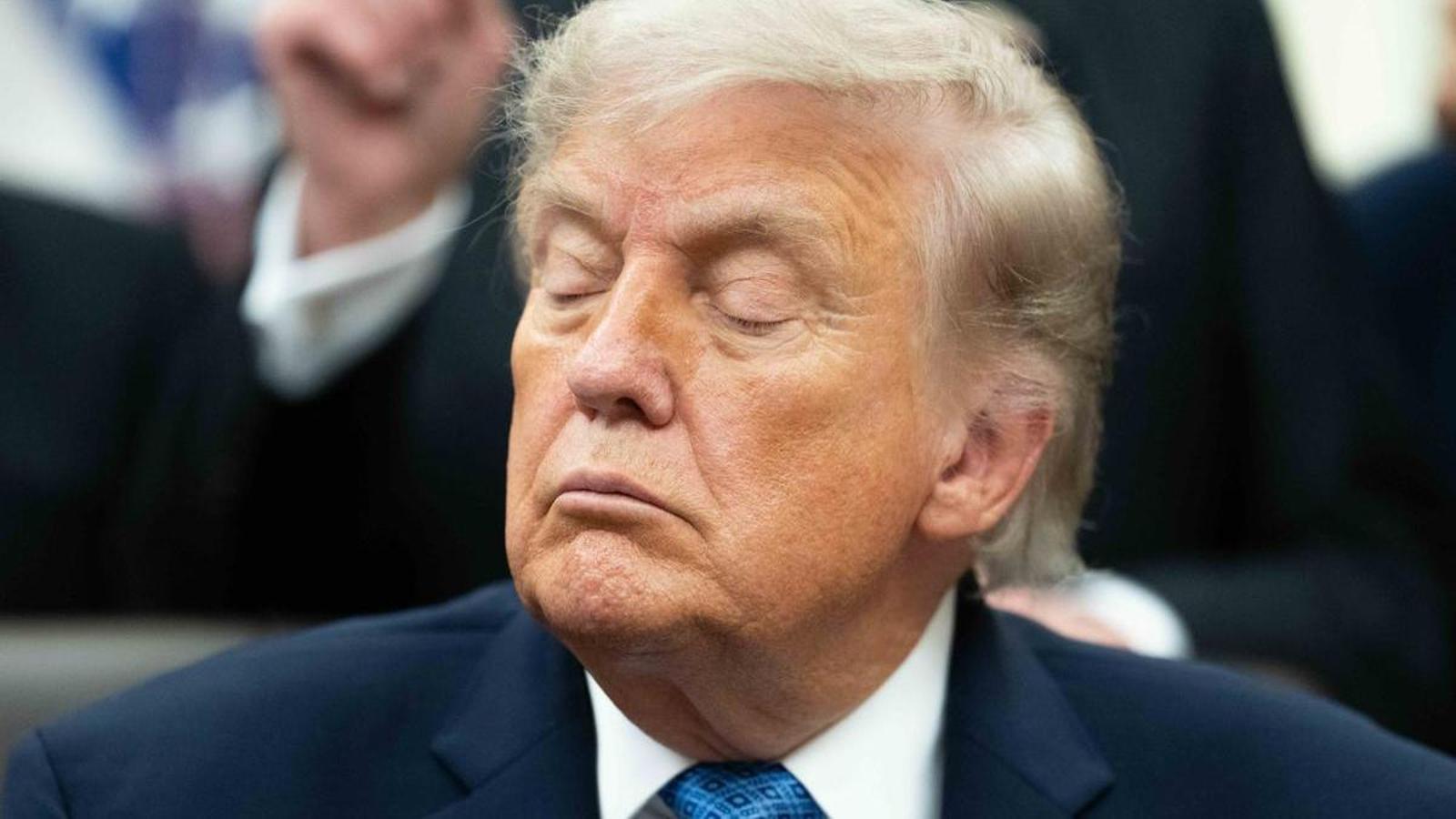

The war in Iran has led to the global proclamation of Donald Trump's disconnection from reality. Like the murky waters of the Lincoln Memorial pool, turned into a fluorescent ridicule costing $14 million due to unexpected algae, presidential incompetence rapidly moves between farce and tragedy.
A few weeks ago, the New York Times analyzed Trump's statements on the war in Iran, comparing them to the reality on the ground to try to identify the disconnect in a presidential discourse capable of speaking of "negotiating," "bombing," and "blocking" in the same day, and repeatedly announcing the end of the war long before reaching any consensus with the other party.
Iran has been the great strategic disaster of the second Trump administration. A genuine defeat that translates into a list of concessions to the Iranian regime unthinkable before the start of the military operation and which have yet to be fully finalized. Trump's diplomacy is built on an ambiguity that has left the Middle East installed in a gray area of inconclusive negotiations and exchanges of attacks; of truces without peace and supposed ceasefires that, in silence, endorse the continuation of repression.
After four days of crossfire in the Strait of Hormuz, Trump's envoys are seeking to resume dialogue with the Iranian regime in Qatar. The President of the United States is in a hurry to close a conflict that challenges his national agenda, but, once again, he clashes with different perceptions of reality.
Washington, Tel Aviv and Tehran have opposing interests, and their strategic calculations – and electoral ones, in the case of Trump and Benjamin Netanyahu. Iran feels it has won politically; the United States declares itself victorious when, in reality, what they will obtain is a low-intensity electoral pause that will stop the costs of war, and Israel feels aggrieved because it has not managed to carry the offensive to the end, as it intended.
The ambiguity of the agreement protocol signed between the United States and Iran fuels Tehran's temptation to further increase pressure on the ground and try to exert its control over the Strait of Hormuz for as long as the negotiation lasts. The Iranian regime knows that Washington has no desire to unleash military confrontation again, especially now that the price of a barrel of oil has been lowered. Trump's threats have been defused by a weakness in electoral polls that the return of war could only worsen. Practically 60% of Americans disapprove of his management, according to the monitoring carried out by the weekly The Economist. Only 16% of those surveyed believe that the Strait of Hormuz will remain permanently open after the conflict, and 54% say that going to war was a wrong decision.
In the week of the celebration of the 250th anniversary of the United States' independence, Trump's legacy is accumulating blunders and contempt for the foundations of the country's democratic system. The country has been weakened, precisely, by a presidential power reinforced with the backing of a Supreme Court, and a military power that has been confronted by Iran.
Trump's agenda is trapped in his own obsessions, national and global. Just a few days ago, the president refused to sign the housing bill, which attempts to control prices in the real estate sector – one of his party's priorities for the midterm elections – until the Republican majority in the House approved the legislative proposal that matters most to him: the Save America law, which is supposed to prevent the widespread electoral fraud that Trump denounces despite having no evidence of it. Under the excuse of a risk of "interference" by Iran in the US elections, the president is beginning to deploy his own interference in a system and a party that are distancing themselves from Trump and his disconnected reality.
