The new physics of power

-
CAT -
CAST
If I were writing a book about the United States' war with Iran, I would know exactly what the title would be. It would be the publication Donald Trump made on social media on April 5, 2026, addressed to the leaders of Iran: “Open the [expletive] strait, you crazy motherfuckers, or you'll live in hell… BEWARE!”
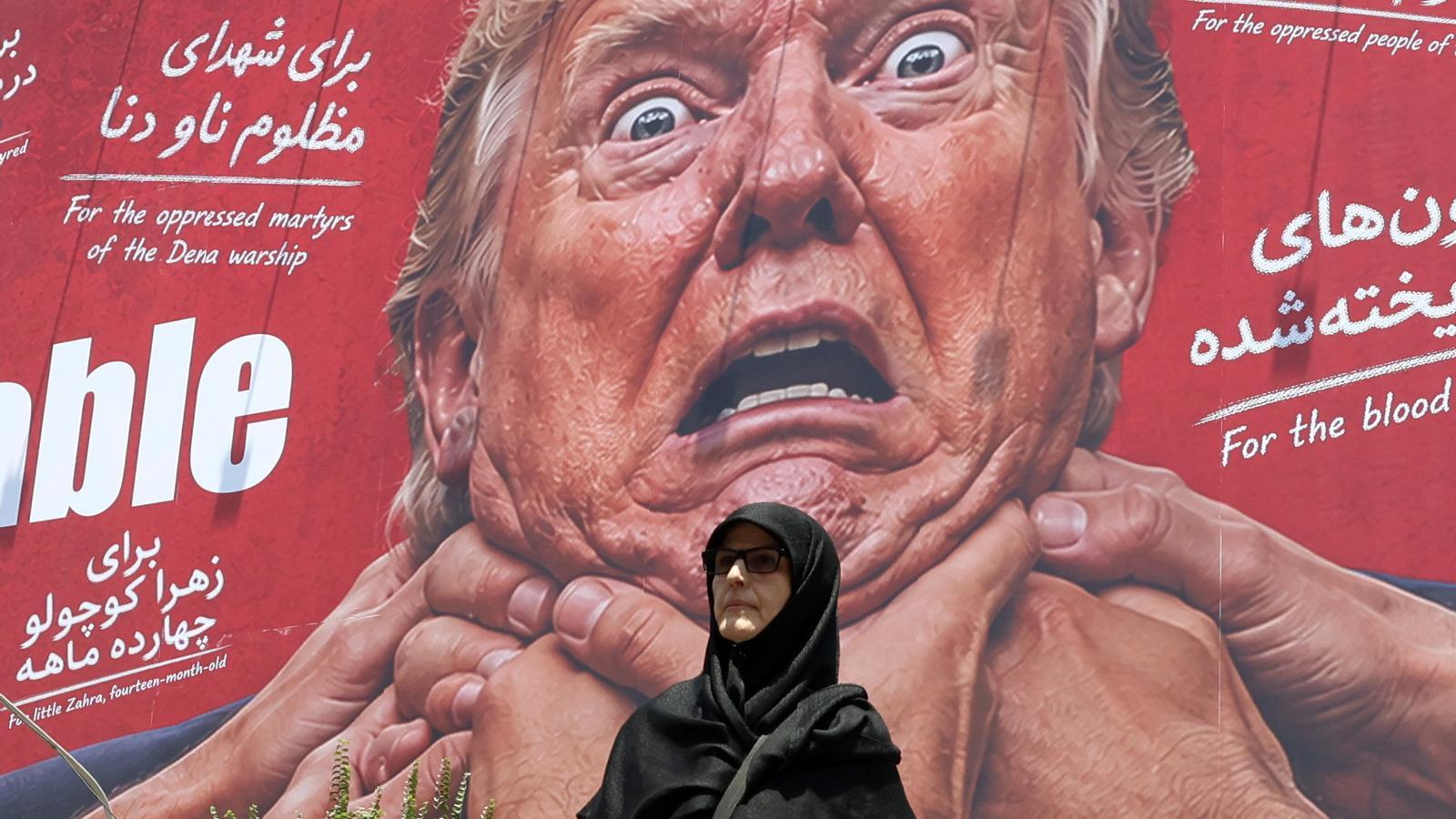
Wars are a crucible that very often exposes changes in the physics of the world around us: who has power, who doesn't, and how power is being exercised. Nothing better illustrates the new power equation produced by this war than the obscene rant Trump dedicated to Iranian leaders for not bowing to bombs.
This new physics of war is also present in the conflicts between Ukraine and Russia, Hezbollah and Israel, Hamas and Israel, and the Houthis and everyone else. My summary of this new dynamic is that the small can now act like the big, with great precision and very economically. And that it is much more expensive for the big to act like the small because they bear the burden of inherited weapons systems.
The net advantage, for now, seems to be for the small. And the emerging revolution in artificial intelligence will surely boost this trend.
It's not surprising that Trump is frustrated. On March 11, less than two weeks after he and Israel initiated this latest episode of war with Iran through a large-scale bombing campaign, Trump declared: “We have won. Let me tell you, we have won. One never likes to say too soon that one has won. But we have won. Hands down.”
He was right about one thing: never say too soon that you have won.
Trump did not realize that the Iranian government also has a say in when this war is won or lost. Unlike Trump, Tehran had a Plan B: to use its new capability to act like the big, with precision and cheaply, to take control of the Strait of Hormuz, even though its army was a small fraction of that of the United States and had been hard hit.
The Iranians have inflicted real damage on the United States (on the battlefield and on our economy), the magnitude of which both Trump and Secretary of Defense Pete Hegseth have been concealing.
Let's review some news you might have missed.
The reason the US's main aircraft carrier in the Persian Gulf, the USS Abraham Lincoln, sometimes lacks sufficient supplies to sustain its crew of nearly 5,700 people is that, after the first day of the war, Iranian missiles and attack drones destroyed much of the supply base. "As it was reduced to ashes, a major Navy logistics hub was also destroyed," the Times reported. This forced Trump and Hegseth to rely on a base under British command on the island of Diego Garcia as their supply hub – a base that is about 4,345 kilometers from Bahrain. Why was the base in Bahrain so unprotected against Iranian missiles on the first day of the war? If that's not enough reason to drag Hegseth before Congress, I don't know what is.
Or perhaps you missed this news in Defence Security Asia magazine, which stated that in early March, an Iranian missile destroyed a $500 million radar that was vital for operating an advanced THAAD missile defense system at Jordan's Muwaffaq Salti Air Base. The attack represented “a potentially transformative moment” in the “strategic contest” between Iran, the United States, and Israel, according to the magazine. The attack occurred against the most sophisticated missile defense system in the US arsenal!
John Arquilla, a professor emeritus of defense analysis at the US Naval Postgraduate School, explained to me that missile warfare is no longer just about firing a warhead on a predictable trajectory and then letting inertia and smart GPS guidance systems carry it to its target. The Russians have dedicated enormous resources to building missiles with mid-flight maneuverability, guided by better real-time information, increasingly propelled at hypersonic speeds, and capable of arriving from an angle a defender has not anticipated. They say Iran's Fattah missiles have these capabilities. "This is making the missile the predominant weapon of the 21st century," Arquilla explains.
For generations, Arquilla points out, wars were "won by mass and energy." Warfare followed a simple physical law: the farther you fired your projectile, the less accurate it was. Therefore, distance had to be overcome "with mass and energy." Not today. "Wars are now won with information," says Arquilla.
Now even the smallest actors have access to warfare. Just look at how Hezbollah has inflicted significant damage on Israeli communities and the Israeli military; how Ukraine has bled the great and fearsome Russia, and how Iran is fighting the United States and Israel, to see how cheap precision weapons that can be built in a basement workshop with components from Amazon have eliminated the old link between range and accuracy.
Meanwhile, the U.S. armed forces only have 11 large and heavy divisions and 11 carrier groups.
Trump and Hegseth remain focused on “escalating the war upward” —adding more pace and more tonnage— and the Iranians are focusing on “escalating the war outward,” hiding small units with precision missiles in more places and attacking American bases and Arab oil facilities throughout the Gulf.
These new weapons amplify another advantage the small have over the big: they don’t have to win. They just have to avoid losing. We have to win, end the war, go home, and never look back. Good luck with that now.
But Iranians and Hezbollah should not get too carried away: they should remember that even though the small can now act like the big, the big can also do what they do. On the first day of the war, Israeli airstrikes with precision weapons—with the help of American intelligence—killed more than 40 top Iranian leaders gathered at a high-level meeting in a single complex in Tehran. In other words, with precise information, Israel annihilated a large part of Iran's national security elite in one fell swoop.
And then came the Israeli attack with pagers on Hezbollah. Using a relatively small amount of explosives and a huge dose of intelligence, Israel killed and injured a significant number of Hezbollah fighters in a few hours.
The cyberattack by the United States and Israel on the Natanz enrichment facility in Iran that began in 2009 was another version of this. Instead of bombing the facility, the United States and Israel introduced a small computer worm —Stuxnet— to disable a large number of Iran's IR-1 centrifuges, although the centrifuges were quickly replaced and the disruption was minimal. (The United States and Israel have never acknowledged responsibility for the virus). This is the big acting as if they were small, using only "malware.
What is truly alarming today is how easy it is becoming for children to act like adults, and for small I'm not just referring to the actors' age, but also to their age. A teenager with a laptop, a Starlink connection, and an AI model can cut a municipal water or energy system.
So don't be surprised if one of these days you hear your mayor speaking like Trump and saying something like: “Reconnect my water, you crazy bastards, or…”.
Copyright The New York Times
