The jet ski riders

1. The fire. An inferno doesn't need to be sixth generation to raze everything, forests, houses, and lives. The example of Almeria, with so much death, is devastating. So far, the handful of fires that have occurred in Catalonia during the first two waves of unbearable heat have ended, as President Illa says and repeats, without human victims. The priority is clear. And it is on days like these, of danger and fear, that a handful of anonymous people behave in a way that reconciles you with the human condition. It is not only the firefighters, the rural agents, and the mayors of towns that do not usually make the news who are up to the task. The solidarity among neighbors who help each other, the generosity of citizens who host people in their homes or bring jugs of water is not valued enough, in a world increasingly focused on its own navel. In this context, I want to tell an anecdote that is hard to believe.
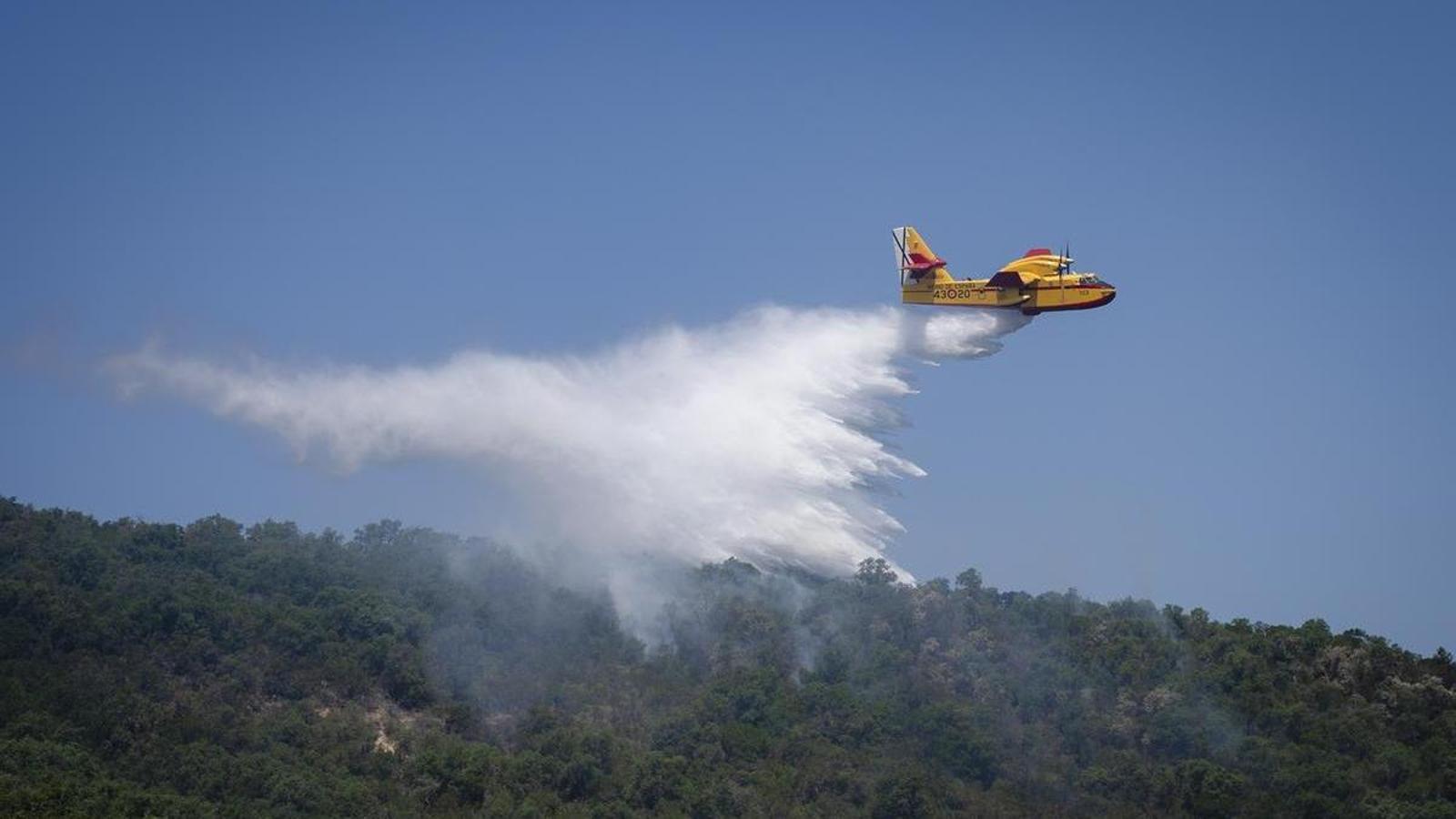
2. From Friday, July 3, when the radial saw of the operator working on the GI-660 road in La Bisbal caused the fire in the Gavarres massif, the lives of many people changed in an instant. The Generalitat did not take long to confine the population of seven municipalities. Up to forty thousand people received the order, which could only be a recommendation, not to move from where they were. The residents of the higher urbanizations of Calonge and Santa Cristina d'Aro feared that the flames would reach their walls. Others rushed to grab their documents, keys, three photo albums, their animals – dogs, cats, and horses – and fled what could be ground zero. If there was a tramuntana wind, the fire spread along the left flank. If the sea breeze blew, the firefighters struggled to prevent the perimeter from growing on the right. The help of the UME had to be requested because 30,000 hectares of the natural lung of Baix Empordà and Girona were in danger. The images of the smoke, sometimes of an infernal red, at times with the blackness characteristic of the end of the world, looked great on Instagram but made your heart sink. The first night, from Friday to Saturday, was critical. The firefighters waited for the first sunlight to launch the helicopters and seaplanes again to attack the flames. And then, what I would never have imagined happened.
3. Throughout the morning, from one of the privileged balconies overlooking the sea of Sant Antoni beaches, with views from Palamós to Torre Valentina, watching the seaplanes work was a spectacle. They were two aircraft that, every four or five minutes, would land on the sea, fill their tanks with salt water, and take off again to spray the flank that needed it at any given moment. It was a hypnotic, heroic spectacle that generated a kind of addiction. Well, oblivious to the fire, the confinement, the suffering of everyone, two men were having a blast with their jet skis. They were sailing on the same sea, as if nothing were happening. At the worst moment. On the first Saturday of July, precisely at eleven in the morning, they had decided to do this nautical activity, and nothing stopped them. But then, the most unexpected thing of all happened. The two jet ski pilots decided that, every time a seaplane landed on the sea, on the south-to-north trajectory, they would race alongside it. As if it were a race. As if they wanted to challenge the seaplane in a gamble to see who was faster, to see who could do more. Once the plane took off, they would turn around and wait for the next seaplane to challenge them again, circulating alongside them during the maneuver of landing, loading, and taking off again. You don't know how much fun these two specimens had. A Saturday they will remember their whole lives. Let's hope these two cheekies never have their house burn down.
