The attitude and the tools
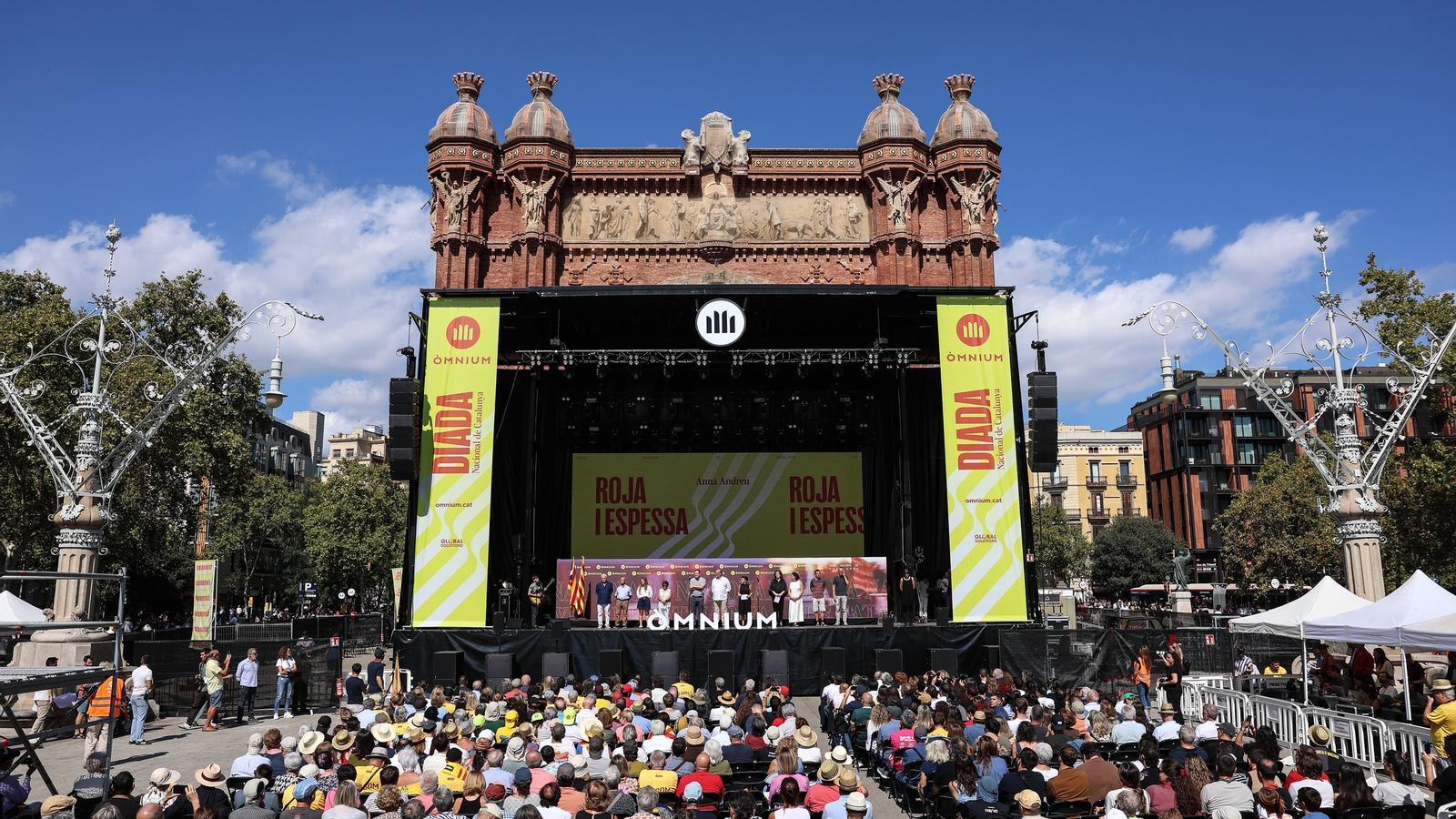

There are two ways to analyze this year's Diada. The pessimistic one reminds us that the country faces internal problems, and the latent threat of an involution in Spain, which –historically– indicates that we will be the ones to suffer. But in this context, the Eleventh of September has brought some 50,000 people to the streets, with more young people than ever; it is a respectable figure in our listless present. But it has also reminded us that among “our own” there are people who exude hatred. A new poll predicts the meteoric rise of Aliança Catalana. Overall, Parliament would once again have an absolute pro-independence majority, which will not be operational because there is a political and moral abyss between those who could be involved. If it serves as any consolation, the “Spanish” bloc is equally useless (unless the PSC wants to commit suicide by making a pact with the PP and Vox). Who will fish in these troubled waters? Many of us warned that the baton blows against the ballot boxes on October 1st could create a generation of skeptics. But we were not thinking of Orriols when, after the imprisonment of the pro-independence leaders, we shouted “The smiles are over!” Andreu Nin also, in April 1931, wrote: “Ourrevolutionwill not be so cheerful”. Because independence, like any revolution, is a serious affair. But Orriols has nothing serious about her, beyond her ridiculous solemnity. Her discourse, besides being an ethical failure of Catalanism, is a distraction and a deception.
There are two ways, he said, to analyze this year's Diada. The second, more optimistic one, is based on diffuse sensations that many analysts shared on Saturday: gestures, words, and attitudes. The youth. The delight in forgetting defeatism, reconnecting with the country, and standing up, both to the local fascism native as well as its cousin, which is assimilationist Spanish nationalism –more powerful, and also more dangerous, because it has a thousand faces, some of them frankly sympathetic–. Globalized societies have one single advantage, and it is that they force people to seek certainties. In a fractured country, everything that is authentic and secular has added value. Even –this is the charm– for those who come from abroad. Catalan identity, with all its nuances, must guide us through the fog. In the Procés, the independence movement built a house of cards based on acronyms. Before returning to it, the Procés must be a memory and a lesson, nothing more; and the ultra-essentialism must pass, like a fever. Meanwhile, there is a great deal of work to be done, and it is already being done, in the realm of mentalities. Just one example: the advertisement that Barça released on the Diada, with global impact, is a model to follow, even for those of us who detest football as a metaphor. Today's Barça combines success and identity in a way that is unusual in this country. It is governed by exciting and accessible principles: always go to win, preserve the origins, unite local and global talent, and do not back down in front of the true enemy. The enemy, for the culers, is not Lamine Yamal but Florentino Pérez: here is a didactic way of explaining things to an AC voter. Sport is one of the great builders of identity in the world, and that is why Barça is an asset of enormous significance, because its international success, like that of Gaudí's work, cannot be explained without its origin. It goes directly, without intermediaries, from Catalonia to the world. The traditional power –which is in Madrid– contemplates this with disbelief and rage.While we do not have the new tools, this new mentality must show its face. More combative and mature, morally solid, with the instinct that helps to choose friends and enemies well. Things never happen as one expects, but today I dream –and for once I want to be overly optimistic– that this mutation is already taking place.
