Musk, Piketty and the Luddites
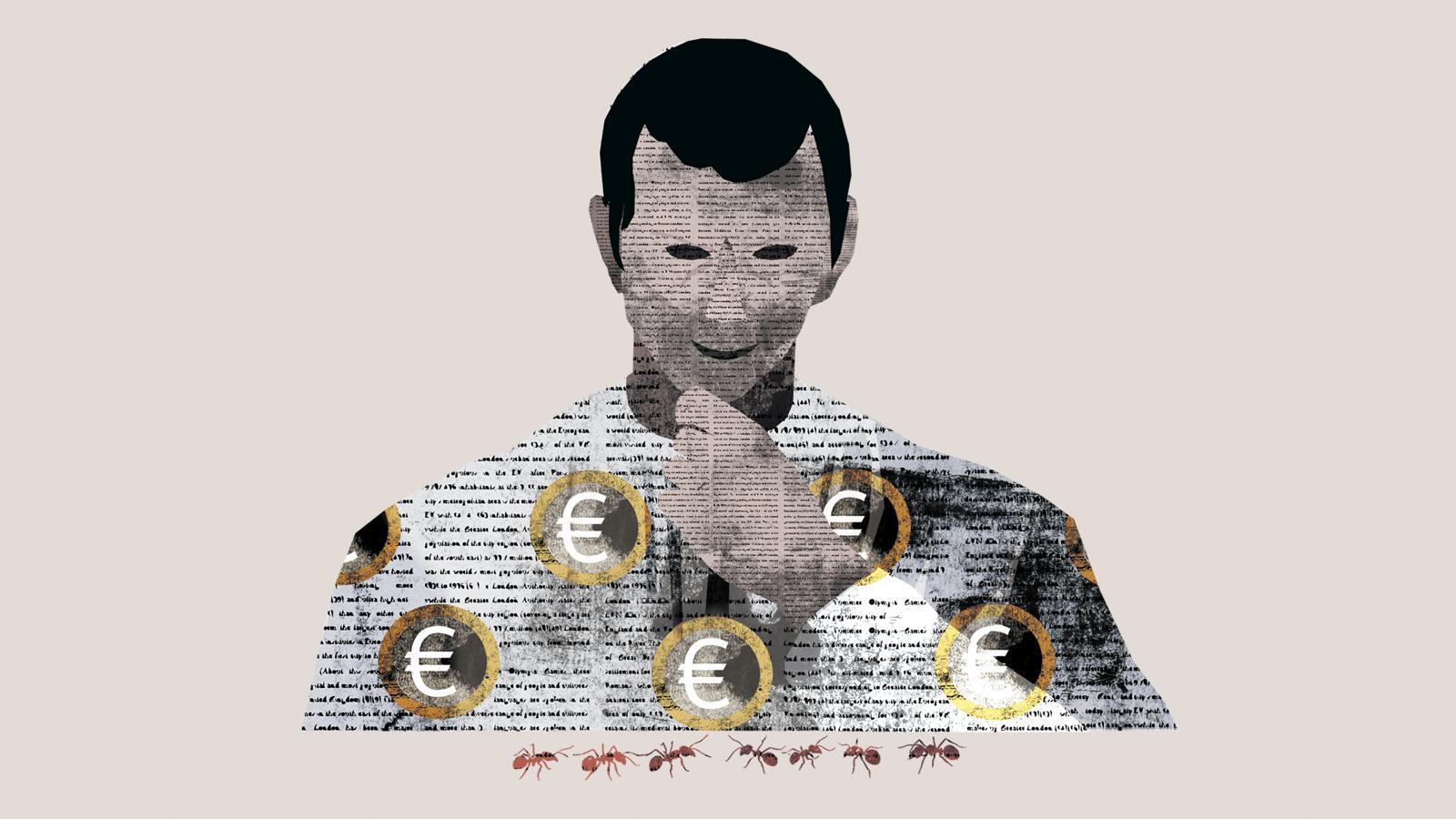

Barcelona"The poor have understood many things", the Pope said in the Canary Islands on the same day that Space X went public and Elon Musk became the richest man in history. What we don't know is what the South African has learned humanly. Only the speed and vertigo of the changes we are going through explain that the confusion we are experiencing does not explode. In Spain, political confusion turns a pope into a moral reference in a Congress of Deputies poisoned by polarization, which applauds him unanimously for seven minutes. Each one ready to use him in their own way. It is the same confusion that turns Musk, a textbook unbalanced person with zero humanist capacity, into another reference of our times.
I interview the economist Thomas Piketty with the curiosity, interest, and also the caution with which one visits a theorist, a brilliant academic, who could be far from political practice, from what is possible. His proposals to tax exorbitant fortunes require great consensus on the values of the world we want to live in. Piketty is right when he warns that true economic power is in the hands of a few people who have neither the values nor the criteria that could make them vectors of collective well-being. Social transformation does not concern them beyond technological changes and their greed.
Piketty is not alone in warning that tech companies are becoming a risk to democracy. Not only because of the enormous concentration of wealth but also because of the extraction they carry out from many economic sectors. Also in the information sector, and it cannot be forgotten that there is no democracy without a free press.
The role of the press
A.G. Sulzberger, editor of the New York Times, warned a few days ago at the congress of WAN-IFRA (the world association of press editors) about the relationship between artificial intelligence, big tech companies, and journalism. His central thesis is not contrary to AI: he argues that media outlets can and must use it responsibly, ethically, and always under human control. But he clearly distinguishes between using technology and accepting that AI companies build their products by appropriating others' journalistic work without compensation.
Sulzberger accuses big tech companies of carrying out a "brazen theft of intellectual property." AI companies take articles, research, books, music, images, and other creative works to train their models and feed their products without permission or sufficient compensation. What Silicon Valley calls "data," he warns, is not neutral data: it is the result of years of reporting, editing, verification, investment, talent, and professional risk.
In Sulzberger's view, tech companies "exploit news websites as if they were a mine." That is to say: they extract value from the work of the media, repackage it into AI-generated responses, and then keep the user within their own platforms. In the first digital era, Google and social networks could, at a minimum, send traffic to media outlets. In the era of chatbots and direct answers, this exchange breaks down: information is used, but the reader no longer necessarily reaches the medium that produced it.
AI companies need talent, computing, energy, and content. They pay for the first three elements, but aim to get the fourth for free. Hence their accusation that they are adopting a “more openly parasitic stance”: they feed on journalism and human creation.
Weakened democracy
The problem is not just economic. It is also democratic. If AI captures the value of journalism without returning anything to those who produce it, there will be fewer correspondents, less local reporting, fewer investigations, less war coverage, less oversight of power, and less reliable information. Democracy needs institutions capable of verifying facts, investigating abuses, and building a shared reality. If these institutions weaken, the public sphere becomes more exposed to propaganda, manipulation, and noise.
Many media outlets too easily accepted the Silicon Valley dogma that “information wanted to be free.” But they forgot that it had to be expensive because it is valuable. Producing reliable information costs money: it requires journalists, editors, lawyers, correspondents, photographers, time, security, and a professional structure capable of being responsible for what it publishes.
For too long, many media outlets chased foreign algorithms: they adapted headlines, rhythms, and priorities to Google, Facebook, and social networks. In this process, quick clicks, aggregation, cheap opinions, or content designed to please platforms were sometimes favored, to the detriment of original and distinctive journalism.
The press must also adopt AI, but under its own rules: with editorial judgment, transparency, human supervision, and a clear idea of which tasks can be automated and which belong to the irreplaceable core of journalism.
It is not about nostalgia for the old press business, but about a battle for power: what remains of democracy if journalism becomes simple free raw material for machines.
