Moral comfort
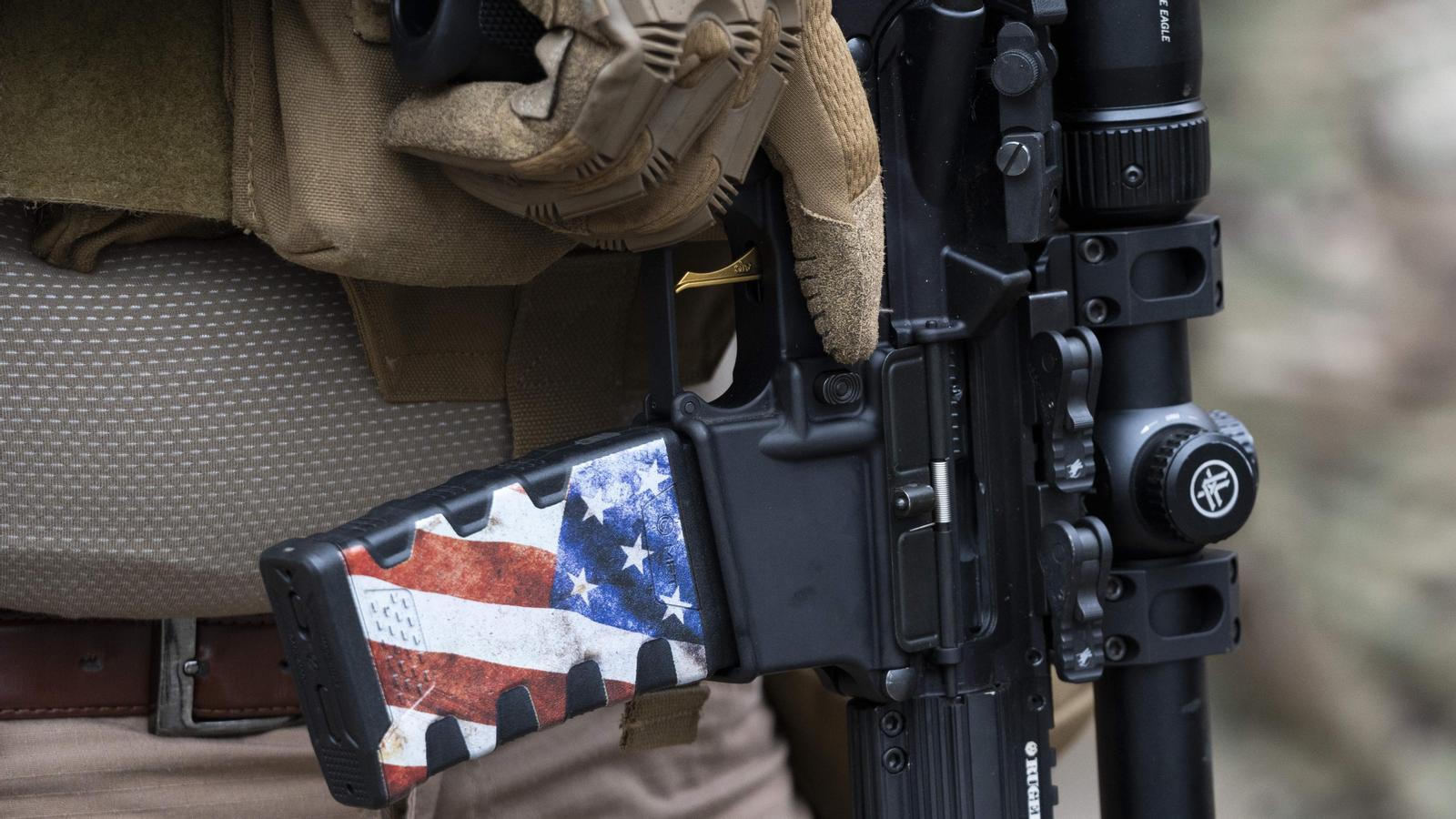

After learning some circumstances of the violent death of the 45-year-old gardener Carles Vilajosana in Manresa, the Minister of Interior, Núria Parlon, confirmed that the two minors arrested for the homicide were born in Catalonia and criticized the discourses that attempted to link the case with irregular immigration. According to the minister, one of the youths has Catalan parents, while those of the other are of immigrant origin. Neither of the two lives in a juvenile center.If the goal was to neutralize certain nonsense that was spreading on the networks at that time, I believe the minister acted correctly. On the other hand, if the intention was to close the subject of crimes committed by a very specific profile of minors, it seems to me that she achieved the opposite effect. In fact, it brought serious contradictions to the surface, some of which, as I will try to explain below, sometimes go unnoticed. Just because these types of issues are uncomfortable does not mean they should not be discussed: moral comfort often goes hand in hand with hypocrisy.When a serious shooting occurs in a school or high school in the United States, European media activate a narrative that is almost automatic: the tragedy is explained as a consequence of a "gun culture", etc. This expression, repeated until it becomes an interpretive category, functions as a global explanatory framework that associates a specific event with a cultural ecosystem characterized by legal permissiveness and social normalization (there is a collective imaginary where armed self-defense is seen as an almost natural right). The shooting is not just, therefore, the action ofan individual, but the symptom of an entire national culture that, according to this reading, makes it predictable.This discourse is partly right, obviously. European media often view the USA as a culturally distant space, and the notion of gun culture offers a quick and, above all, reassuring explanation. It allows violence to be placed in an "over there" that is different from the "here," and reinforces the idea that Europe—and Catalonia specifically—lives in more regulated and healthy societies, little exposed to structural violence; it is a way of drawing a comfortable moral distance.
All this is very well, but then this more or less causal relationship becomes problematic when compared with the media treatment of other episodes of serious violence.Indeed, when the aggression comes from minority communities that live alongside ours—be it a knife attack, an intentional vehicular assault, a rape, or a shooting—the narrative changes radically. For example, news reports tend to omit the place of origin, out of caution or to avoid stigmatization. In these cases, and unlike what is explained when things happen in the United States, the culture of origin is never presented as an explanatory factor, neither explicitly nor implicitly. Here, there is no talk of a “culture of violence,” nor of a “culture of machismo,” etc. The violent act is always treated as an individual action surprisingly detached from the group, and the narrative avoids any cultural determinism.The attitude is understandable, but all of this generates the discursive asymmetry we are discussing: the cultural framework of the United States explains the crime; in other communities, however, this framework is blurred or prudently erased. The difference is not accidental, and I think it responds to a tension between two forces: on one hand, the very positive and laudable desire not to fuel racial or ethnic prejudices; on the other, the convenience of attributing to a strong and hegemonic culture—the American one—what we would not dare to pin on a minority. The result is a comfortable but barely credible moral map: there are cultures that can be criticized without risk and others that are considered untouchable to avoid stigma.The problem, therefore, is not prudence—which is entirely necessary—, but inconsistency. If it is accepted that culture can be an explanatory factor in the American case, it should be admitted that it can be in other contexts, always with rigor and without reductionism. And if it is considered that linking culture and violence is dangerous, the same criteria should be applied to the USA. What we observe today is a kind of double narrative in which the culture of violence is a legitimate diagnosis in some cases, while in others it remains outside the analysis to avoid conflicts. At its core, it is a form of paternalism, and paternalism is the devil's own burden, especially when it is part of current legislation in the form of naive legalism. If we want to end up like Saxony, we only need to insist on this path.
