Long live the land
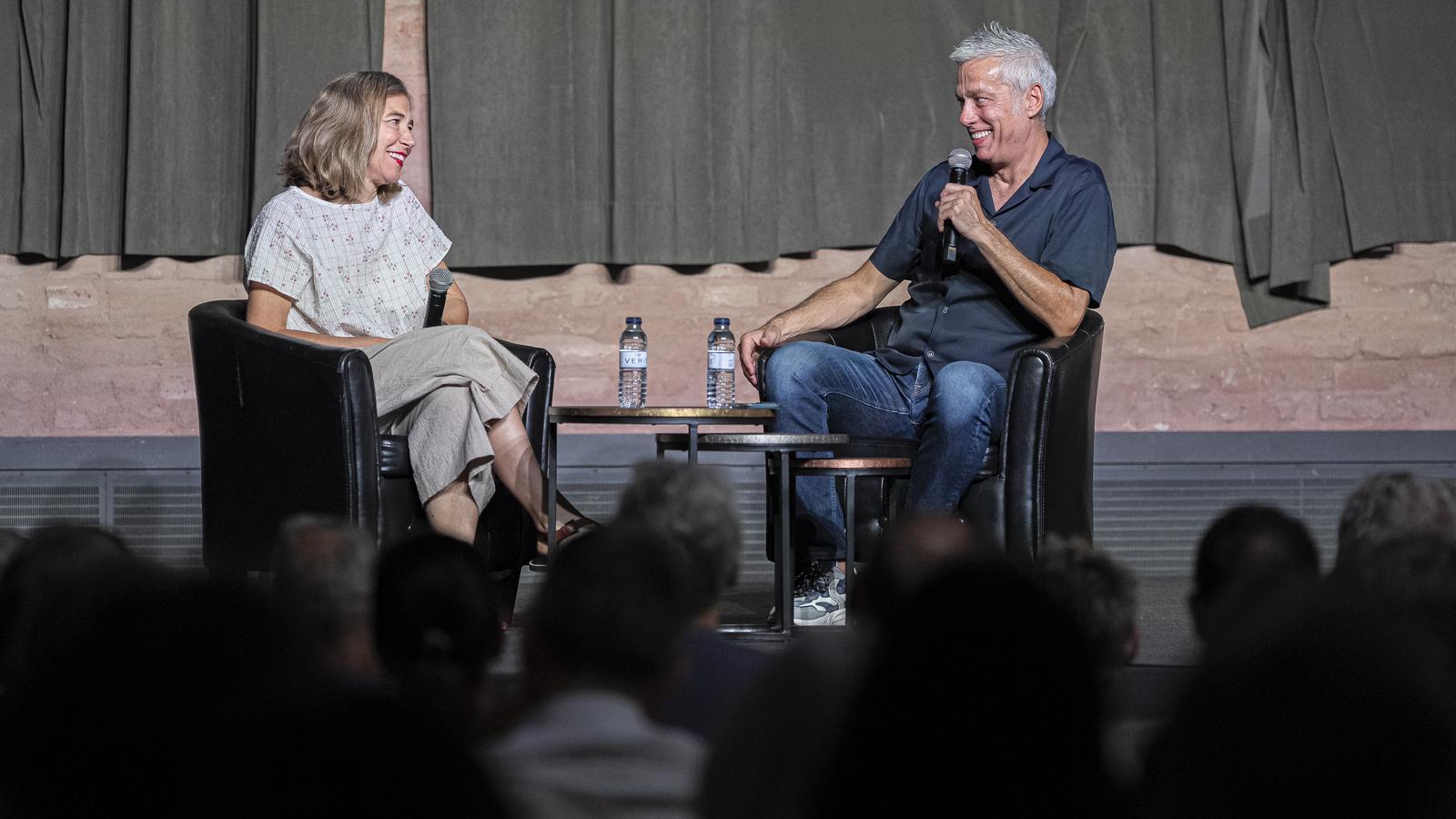

On Wednesday I was at the summer party of ARA, where, besides greeting colleagues and readers, I heard live the conversation between Albert Om and Ada Parellada, who in September returns to the newspaper to share her recipe book with her numerous followers. Ada is a whirlwind of a woman, and you can easily imagine her cooking four dishes at once. But she is a person with a very thoughtful discourse, in which enthusiasm responds not only to impulse but to a method and an idea. When I hear her, or Maria Nicolau, or Empar Moliner, and so many other people who talk about the land, the product, the wines, and agriculture, I realize that behind their fiery speeches there is not only hedonism, good habits, and environmentalism, but a whole idea of country, of how what is now called the territory should be managed, of how food connects us with a way of doing and living that are also past, heritage, and culture in all senses of the term.I would venture to say that, in these times of political discredit, these proclamations are an authentic reformulation of Catalanism, that concept which, as Josep Pla said, links with everything, and which always knows how to reinvent itself and disguise itself in the most useful way to approach the objective – which is, as always, the defense of the right to exist of a national community–. In the 17th century (and until 1714) Catalanism was revolt; in the 18th, economic development; in the 19th, simultaneously and not always friendly, it was cultural renaissance and social revolution. In the 20th century, political Catalanism exploded, harshly repressed by two dictatorships. And now, in times of political weariness and authentic demographic metamorphosis, one of the safe havens of Catalanism is the land, also threatened, but which continues to function as a mirror of the values and intangible heritage of the country. If cuisine is – back to Josep Pla – the landscape put in a pot, the nation is a human collective living together in the same space. If the political landscape is a wasteland, and the human landscape changes constantly, the natural landscape, the space where we exist, becomes even more the repository of some essential truths that define us and allow us to face changes with the tranquility of knowing that some things – the fruits of the land and culinary tradition – remain unaltered, even if they are enriched and diversified over time. They are the roots that prevent the tree from having to suffer from the length and reach of the new branches, which alter its shape without damaging its essence.This Catalanism of the land, or of the fruits of the land, does not only serve to claim escudella, garnacha, sea and mountain or ratafia. It is also the guarantee of a model of country that respects the environment, the sown fields, fishing and livestock; a country that does not let itself be swallowed by exorbitant growth or the greed of tourism. A country, in short, that respects itself, that does not renounce offering all the good it has to the world. Of this, in politics, we would call it sovereignty. And while history shows us that politics ends up being necessary to defend the country's model, we also know, as is tradition in this land, that when politics fails it is society that protects and organizes itself, shines with its own light and makes the country remain despite not appearing on maps with its own color. I toast, therefore, to all the farmers, ranchers, fishermen, restaurant or home cooks, sommeliers and disseminators who help us understand that, under a surface increasingly battered by plastic and cement, there is the land, watching the centuries and millennia pass, reminding us who we are.
