Lessons from conflict in the classroom
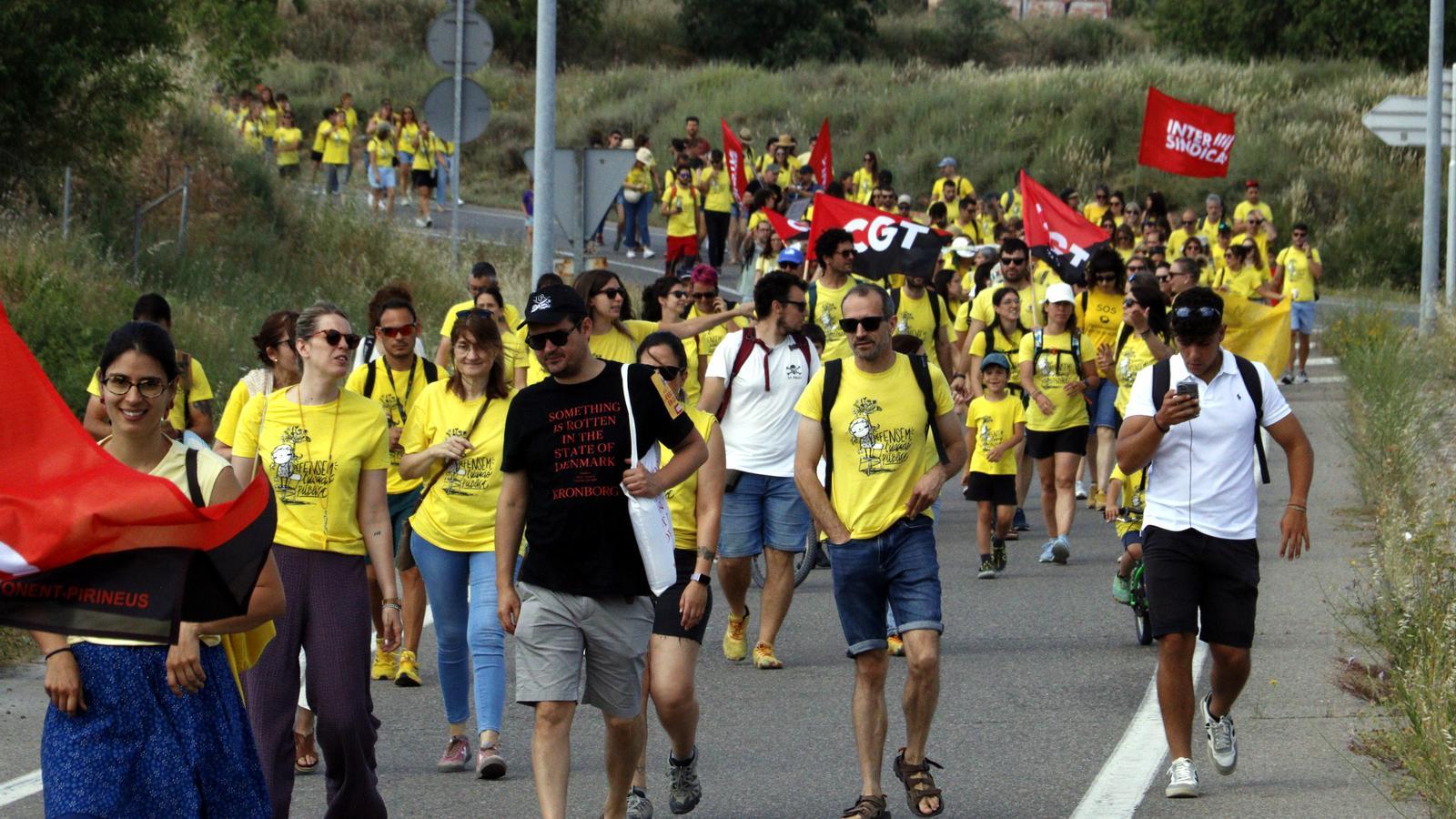

The battle for education will have dire consequences for students, families, the teachers who are striking, and, above all, for the protagonists of the negotiation process: on the one hand, the unions, disavowed by their base, and on the other, the Department of Education, which has seen its ups and downs and last-minute concessions prove futile. In short, it is a battle where everyone loses. There will be – indeed – labor improvements for some public servants who certainly deserve them (but they are not the only ones), but the great pending issue, which is the crisis in the educational model, will continue to await better times, times when generosity and a national vision prevail over tactical maneuvering and vested interests.On a political level, the conflict has confirmed the failure of the Illa government's narrative. They sold us good management and a de-escalation of tension, but the times when the PSC boasted of having anesthetized the country are long gone. On the contrary, it has been shown that the problems that, in part, motivated the rise of sovereigntism are still very much alive, although for the moment there is no social movement capable of turning citizen anger into a shock force. The country is as fed up as ever, but it has been deprived of a horizon of change and improvement. And the anger is beginning to give oxygen to those who are always ready to point to the most vulnerable, as victims but also as involuntary accomplices of a productive model that is crushing the social contract and the factors of collective cohesion. To top it all off, the PSC no longer relies on the PSOE's trump card (which is also the anti-PP trump card), because Sánchez's future is becoming clouded by moments.This scenario can entice the PSC's electoral rivals, but precisely the educational crisis should make them see that tactical maneuvering, when faced with the real challenges of the country, is not an option. ERC and CiU have already suffered teacher strikes, and both parties are complicit in the failure of the Catalan school model. It is up to the Government to initiate a new national pact for education, and it is up to the opposition – and the teachers – to have the generosity to get fully involved without thinking about their particular interests, be they electoral, ideological, or corporate.We don't know what would happen today in an election, but we do know that the citizenry is discontent. If the far-right rises, it will be difficult to avoid closer collaboration between the country's central forces –PSC, Junts, ERC, Comuns–, regardless of the number of seats they obtain. Since right now everyone is fighting with everyone, it is civil society that is making proposals (the Informe Fènix" is the clearest example). But, in the long run, institutions must exercise the leadership that corresponds to them. This does not just mean parliamentary consensus; it also means a constituent process to end the abnormality of Catalan political life, which has the theoretical leader of the opposition in exile, independentists disqualified or awaiting trial due to an amnesty that is a wet paper, and all this governed by an Autonomy Statute that has been cut and not ratified by the citizenry.If the PSC wants to lead the country and undertake the great reforms that are increasingly urgent, it now knows that it cannot do it alone. It also knows that its potential allies are sovereigntist or confederalist parties – in any case, parties that challenge the current constitutional framework. This will become even more evident when the PP and Vox reach Moncloa. More sovereignty and more resources are needed to face the present and save the future. Who will dare to oppose this watchword? Fortunately for Salvador Illa, ERC and Junts are too busy sticking their fingers in their eyes and resolving their internal contradictions. One day, however, they will see the handle of the frying pan in front of them.
