Lea Ypi's warnings


-
CAT -
CAST
"We don't learn the lessons of history because we don't know what questions to ask." Lea Ypi was in Barcelona this week. I could introduce her as an Albanian intellectual with British citizenship, as a philosopher, as a professor at the London School of Economics, as the author of books such as Books and IndignityIn short, the things their CVs say. But I prefer to emphasize the reasons why her work captivates me: her way of being in the world, the need to give voice to ideas but also to life, to the human condition and its complexity.
Born in Albania, a country singled out as one of the extreme forms of communist oppression, Ypi doesn't dwell on clichés or simply turn the page. She recounts her personal experience—from when she was a child in Red Tyranny—and that of her family—especially her grandmother—which brings to the surface the values of the human condition under extreme conditions, in circumstances and an era that many prefer to forget in the darkness. Her lived experience brings her to the present and doesn't hinder her; on the contrary, it inspires her, as she does in her brief Class boundariesTo say and explain what he sees and what he thinks jeopardizes the democratic future of capitalist societies like ours. With special emphasis on three issues: inequalities, migration, and the exclusionary nature of oligarchic states with power concentrated in the hands of a few.
Ypi observes us from a somewhat outsider's perspective, a result of his unique background, and points directly to nihilism: the loss of any sense of limits by those in power, which threatens rights and freedoms in the Western world. In this sense, his experience adds complexity to asking the right questions to understand where we are. And it makes us unsurprising to see the impulses emerging: the culture of hatred toward the other promoted by the far right, the concentration of power in very few hands, the contempt for citizens, the gap between society and representation. And with particular rejection of the hierarchical view of the West as the sole framework of civilization.
"The values that Europe proclaims with such pride—in such a unilateral and uncritical way—lose much of their value if they are applied only to a few," says Ypi. In this sense, his discourse becomes especially relevant at a time when we are witnessing a clear rise in the far right and out-of-control behaviors that Trump has made his way of being in the world. He calls for creating the conditions for a compromise that transcends "any nostalgia for past greatness, any illusion of civilizational superiority." Let's not lose sight of the world: "The injustices that immigration reveals" are front and center: "First they'll go after the undocumented migrants; then, the non-citizen residents; and finally, the citizens named Mohamed or Abdallah, just as they used to go after the Goldschmidts or Levis."
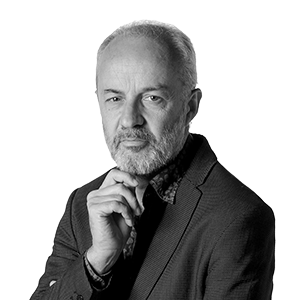
"The practice of selling citizenship to the rich and restricting access for those with few resources" is a clear expression of the drift of Western democracies. And it is no wonder that, in this context, the far right thrives. Similarly lamentable is the fading of social democracy and the demobilization of the left, as we see throughout Europe, while the far right surges. "The growing distance between representatives and the represented," whose relationship resembles "that of employers and consumers"; "the failure of social justice"; and "the inability to offer an alternative vision of the global order based on cooperation" confirm the impotence or capitulation of the left.
The totalitarian experience has led Ypi to issue warnings that we should not ignore: "The problem is that exclusions, both within and between states, reinforce each other and serve to consolidate an economic order that remains intact at its core." What would an alternative require? "Refusing to play the game of capture, rejecting the reduction of democracy to mere belonging and of political conflict to the cultural sphere."
The question is: does the imposition of post-democratic authoritarianism follow an unstoppable logic? Are economic powers and digital communication systems incompatible with regimes of freedom? And once again we come back to the question of the moment: is Trump a momentary delusion or an expression of the world to come?
