
On March 1, 2026, a spokesperson for the Iranian government announced on television: “After a lifetime of incessant and tireless struggle (...), the supreme leader Ali Khamenei drank the sweet chalice of martyrdom and entered Paradise.” He described Khamenei as “the tireless leader who has guided the state for the last 40 years” and, at the end of his statement, could not contain his tears.Not everyone in Iran thinks this way. There are citizens who would be willing to negotiate a reduction in economic sanctions and an agreement with the US, but they have no vehicle to express it. In an autocratic state, the opposition does not have the capacity to express itself. Even less so in Iran, where the opposition is physically massacred, with thousands of deaths and dozens of executions.Khamenei has been able to politically nullify his adversaries over the almost 40 years he has been the supreme leader –reformists at different levels: Rafsanjani, Khatami, Ahmadinejad, Rouhani, Pezeshkian–, and has consolidated his orthodoxy of intransigence with the support of the Islamic Revolutionary Guard Corps, the backbone of a police state. The fact that the one chosen to succeed him has been his son, Mojtaba, confirms this.The relationship between the US and Israel has mutated under the Trump administration into an alliance of equals. Beyond the supply of American weaponry, ammunition, and military intelligence since the birth of the Hebrew state in 1948, the alliance between the two countries to conduct a shared war in the Gulf seeks to obtain an incontestable political, military, and economic supremacy, which both imagine as viable and for which Israel has openly fought since 1967 and the US since the 1980s.
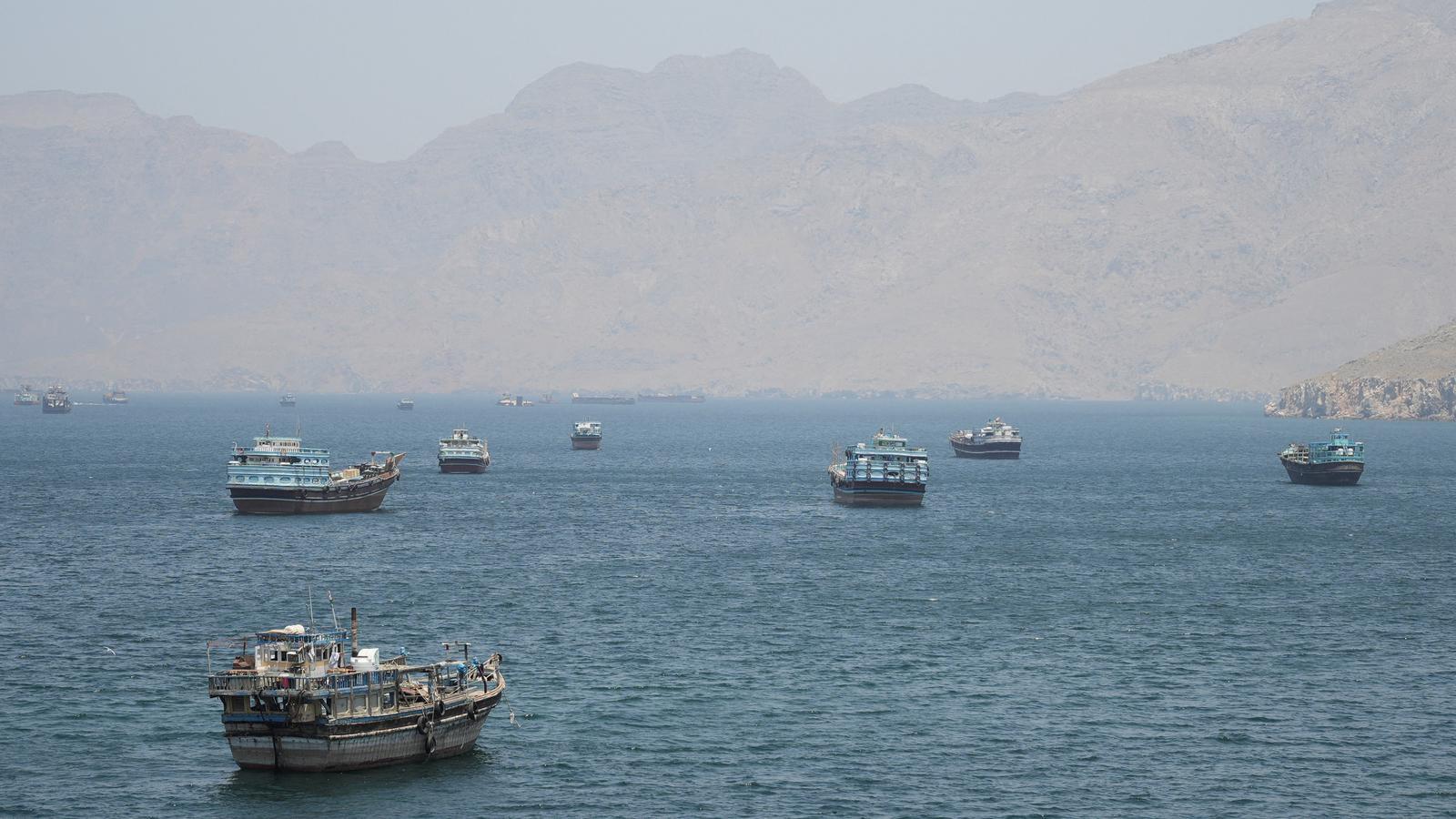
One side – Iran – does not want to give in because, if they did, they would show weakness in front of the reformist opposition in their country, and the others – the USA and Israel –, because their dream of destroying the enemy is “a touch away”. At the same time, both share the fear of the failure of their policy, which would have transcendent consequences in the US midterm elections in November and the presidential elections in Israel before the end of the year, and which could result in the reversal of the policy of aggression against Iran. The weapons of one and the other in the conflict are different: for the USA and Israel, military force; for Iran, geography, which prevents maritime traffic through Hormuz.Once the war is unleashed, the benefits for both sides are nil. The price of oil has risen from $70 to $120 per barrel, and this directly harms the US due to the generated inflation and global economic instability... For Iran, the damage to its economy is transcendent due to the reduction in revenue from not being able to export its oil and the direct damage implied by the consolidation of economic sanctions that limit its imports.Despite this, the conflict remains: neither one nor the other find the reasons to explain the concession that both must make to end it. Reasons of prestige and image prevail over those of a practical nature.Just as the West has had to correct the damage it did to China in the 19th and 20th centuries —with Chinese normalization, which has brought immense benefits to the world—, it is time for the US to correct the damage inflicted against Iran for a century. The appropriation of oil since 1908, the coup d’état against Mosaddeq —who nationalized it in 1953—, the dictatorship of the shah, father and son, from 1935 to 1979, the Iraq war against Iran since 1980, instigated by the West and which caused great material destruction for eight years –estimated at 1,200,000 million dollars– and about 1.5 million deaths, of which 1 million were Iranians... The regime of Iran is theocratic and cruel, but in the West we cannot criticize the adversary using tools similar to those they have used against us.
The threats of the US president against Iran, such as his threat saying “I will erase Iran from the Earth in one night”, are excessive, unjustified and counterproductive to achieving the end of the conflict. Until January, the sanctions were suffered by Iran and had a moderate cost for the US and the EU. Now the cost is growing and is becoming progressively less tolerable. The pressure no longer falls solely on Iran, but on the US. And it is just before changing strategy that the most extreme reasons are used not to do so.For the US, the red lines are to demonstrate that it has “won” the war; for Iran, that sanctions be lifted. The first involves a diplomatic declaration; the second, a change in trade relations. Both demands can be argued on the basis of not causing harm to third parties – not directly involved in the war, such as Oman, the Emirates, Saudi Arabia, etc. – and can be modulated by the variable of time, which smooths the edges and conceals the facts.Pacification ideas: the US could delegate control of weapons and Iranian enriched uranium to the UK and France, and oil trade to consumers based on the importance it represents for their economies. This measure would involve China and could be justified as a concession by the US to world peace without any counterpart. It is hypocrisy, because the US is the cause of the problem, but what matters now is to end the war... The beginning of peace should be an extension of the truce, without further explanation, and an "parking" of the thorniest issues, such as Iranian uranium and missiles. Once the conflict leaves the spotlight of current events, the solution could come through pragmatism. The difficulties lie in the form, not in the substance, and the US knows, despite the contrary claims of President Trump, that they have started a war they cannot win. And there are precedents: Korea, Vietnam, Iraq, Afghanistan...
