If you love the United States, be ashamed of it

My father had a preference for the Spanish expression "in the small details you see the person". At the G-7 leaders' summit in France, two moments showed two people in two very different lights.
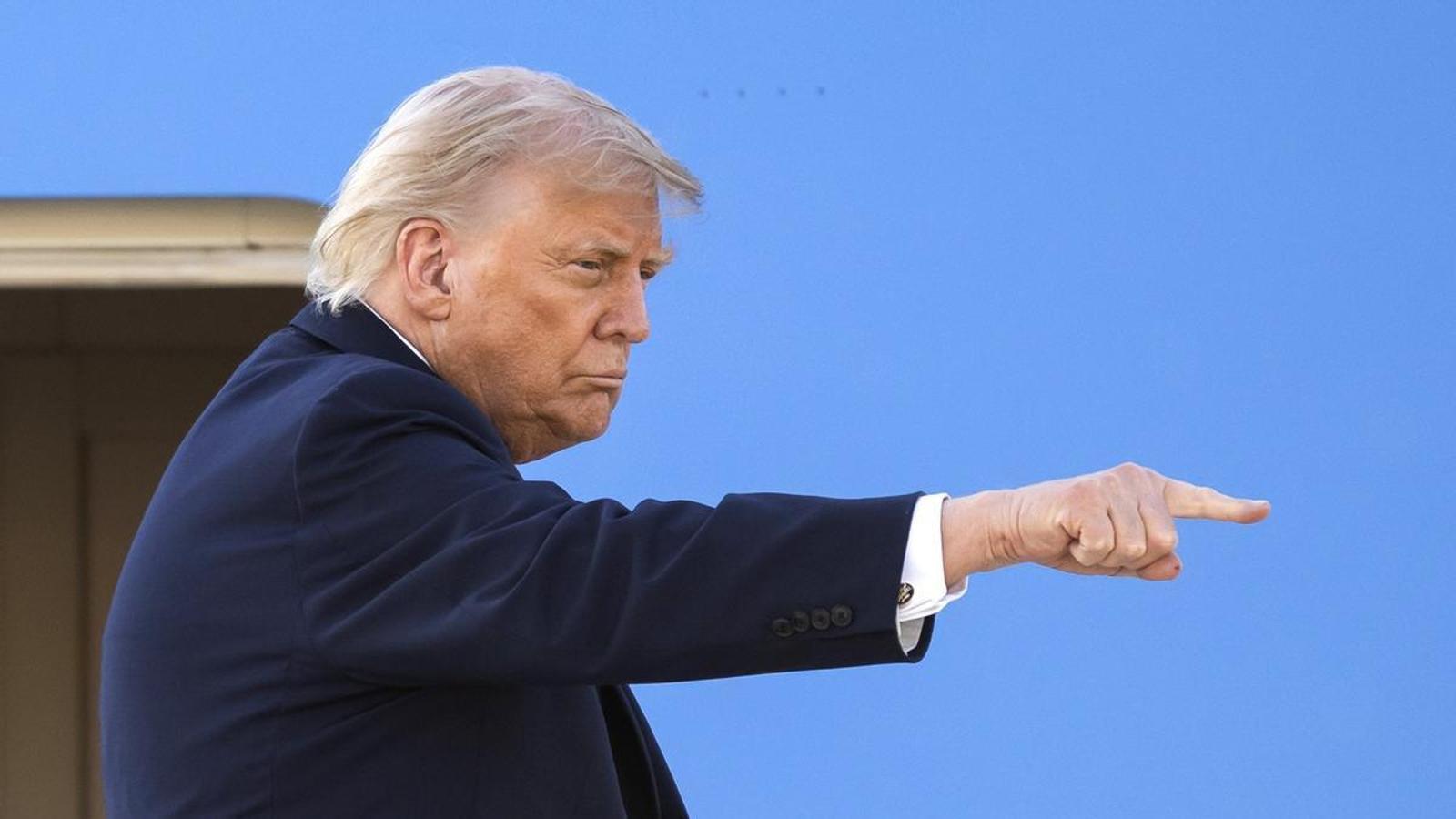
The first is –who else?– Donald Trump, the most powerful man in the world and, possibly, the smallest. Talking to a journalist, the President of the United States stated about the Prime Minister of Italy, Giorgia Meloni, with whom he previously had a good relationship: "She begged me to take a picture with her. She desperately wanted a picture with me." And he added: "I wouldn't have done it, but I felt sorry for her!"
Meloni's response was not long in coming. Trump's statement, she said, was "totally made up". And she stated, in a video posted on social media: "I don't know why the US president behaves like this with his own allies. It is worrying that he does not have the same firmness towards the enemies of the West, towards the enemies of the USA, leaders with whom he is much more lenient".
"There is one thing I should remember – he concluded. I never beg, and neither does Italy".
This relatively trivial, though revealing, episode contains a lesson that we Americans would do well to learn on our 250th anniversary: if you love the United States, now is the time to be ashamed of it.
Vicarious embarrassment is not simply a physical reaction stemming from discomfort or disgust. It also involves a mix of pity and empathy. We feel discomfort when a child messes up in the school play. We pity someone trying to calm their drunk partner at a dinner party. Similarly, we feel uncomfortable every time someone humiliates someone close to them, even if the humiliated person doesn't realize it.
Being a lucid American in the Trump era is to live morally, aesthetically, intellectually, and politically in vicarious embarrassment. If the administration were a play or a movie script, it would be neither a farce nor a tragedy, but a kind of absurd parody: Waiting for Godot crossed with Pulp Fiction and Two very silly simpletons.
No matter how much we scorn him, the president has us hooked, as the face and voice of a country that should know better. The furious face of Trump hanging between the exterior columns of the Department of Justice? That's us. His gaudy, tawdry redecoration of the White House? That's us. His repeatedly confessed admiration for Vladimir Putin? That's us. His ridiculous claim of having achieved regime change in Tehran? That's us. His mob-style threats against NATO allies? That's us. His indescribably vain (and pathetically unsuccessful) effort to put his name on the Kennedy Center? That's us. His family profiting from his presidency in ways as transparent as they are tasteless? That's us.
The same goes for his insult to Meloni, which may not be the worst of his sins, but it is the most emblematic because it is both unnecessary and absurdly self-destructive. It is also us. The same country that freed slaves, welcomed immigrants, invented airplanes, liberated concentration camps, took men to the Moon, and defied the Soviet Union to the point of tearing down the Wall is today the image of a well-dressed man soiling his pants at a party.
For ten years I have watched the Republican Party – my former political party – bend over backward to avoid shame, to pretend that the Vesuvius of daily verbal infamy erupting from Trump's mouth is irrelevant, hilarious, or calculated and cunning. Republicans turned their tolerance for the president's mental confusion into a kind of drinking game: the more you drank, the more of a "man" you were supposed to be. John McCain and Mitt Romney refused to play, and that honors them; other Republicans, less admirably, did so only after Trump had finished their political careers.
But for ten years, I have also watched as opponents of the president have not appreciated the need for shame from the consciousness of their role in Trump's rise. Democrats and their media enablers, who until June 2024 insisted that Joe Biden was fit for a second term (even while knowing, in some dark corner of their minds, that this could only benefit Trump), are complicit.
This is the challenge for Americans: let us not be afraid to feel shame. Ronald Reagan correctly predicted that the Soviet Union would end up in the dustbin of history. Now it is up to us to risk ending up in the dustbin of idiocy.
So let us stop looking the other way and assume the role we have played in bringing the United States to where it is today. Let us remember who we were, because that is what we may still be able to be again. If we are capable of assuming the current sting of our shame.
Copyright The New York Times
