Housing: Politics or politicking

To begin this article, I turn to the definition of Politics with a capital P, which is the one I have always felt most identified with: Politics consists of making possible that which is necessary. There are no precise definitions for the concept of petty politics, but everyone understands what it means. We could define it as taking advantage of suffering or need to serve an ideology or a party. These are two diametrically opposed concepts, but they too often go hand in hand.
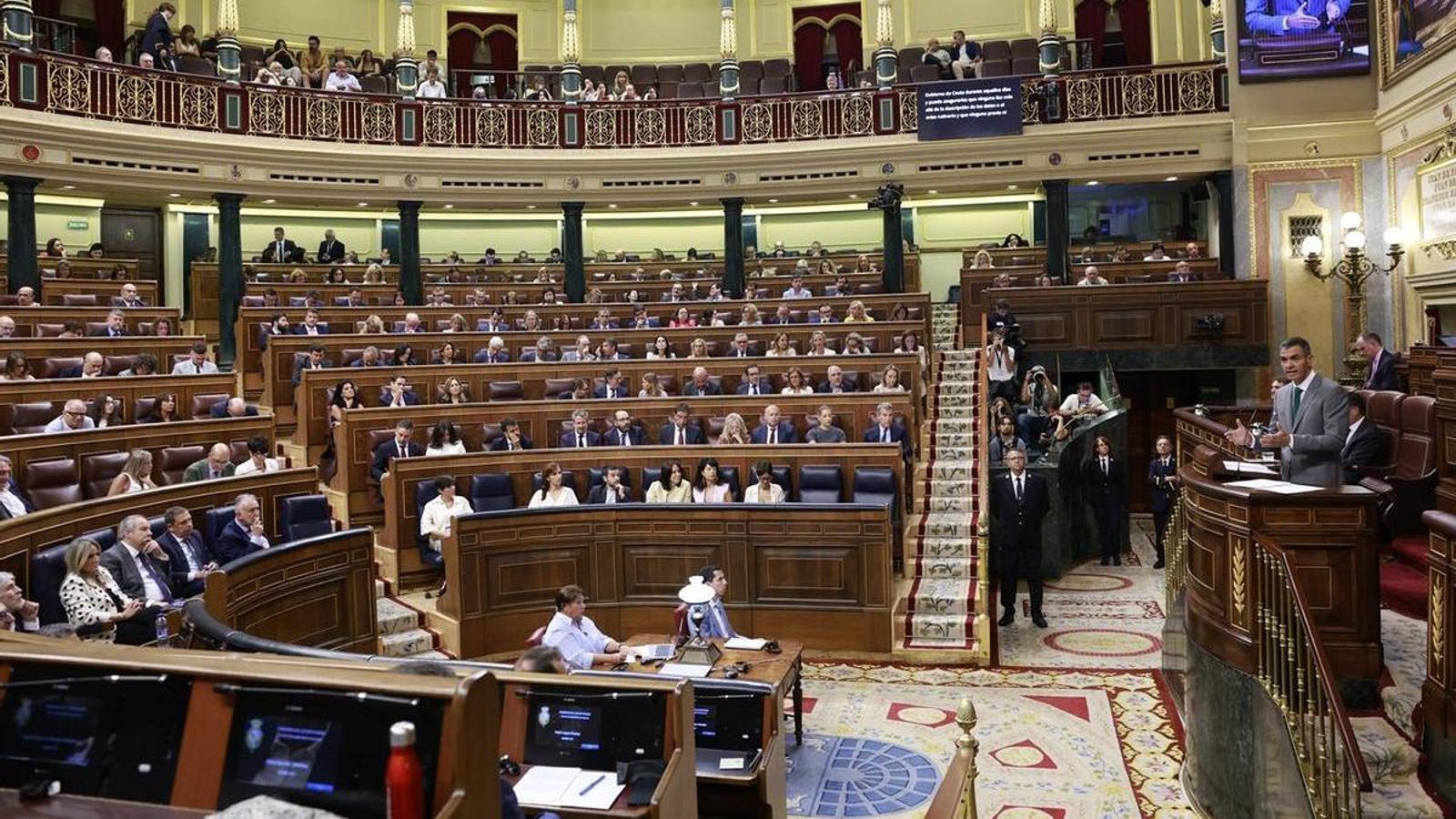
I am writing these lines before knowing the outcome of the vote on the housing decrees in the Congress of Deputies. However, the thread of the argument I will follow transcends a specific vote, no matter how much debate and noise it entails.
We are told about housing as the fifth column of the welfare state, based on the premise that the first four would be healthcare, education, pensions, and support for all kinds of dependencies. Well then, let's look at a first element that is nuclear: for the first four columns, it is necessary to mobilize public resources of great magnitude. And even so, it is not enough to keep the columns standing straight, as is demonstrated every day by the tensions so that these columns do not twist too much and can continue to hold up. On the other hand, for the so-called fifth column, housing, public resources are very thin and manifestly scarce. A first great question therefore arises, completely transcendent if we want to do Politics and not fall into petty politics: do we have public money to finance access to housing, at affordable prices, for hundreds of thousands of people? If the answer is affirmative, we will be able to do Politics, that is to say, solve what is necessary. But if the answer is negative, or evasive, we will not solve anything. We will pretend to find solutions, but it will only serve to save face, weather the storm, and kick the can down the road...
Regarding the availability of large amounts of public resources for housing, I believe two considerations must be made. The first consists of remembering that the Spanish state is already highly indebted and is one of those that pays the most interest on accumulated debt, and that the tax burden is very high. Consequently, there is little room to take on more debt, and no reasonable room to continue raising taxes. The second consideration, on the other hand, sheds more light: if we consider that the construction or purchase of housing is an investment and not an expense, a powerful and long-term debt could perfectly well be authorized at a European level to finance the promotion of housing. It is exactly what has been done recently for all the investment in security to face the Russian threat. If it has been done to defend ourselves better, it can also be done so that many people can have a roof under which to live.
The conclusion is clear and transparent: if there is public money to attend to health, education, pensions, and dependency, then there should also be money for housing, or let us not be deceived by claims that it is the other pillar of the welfare state. Let Politics be practiced, without falling into petty politics.
The second core element for finding solutions consists of knowing how to mobilize existing housing to put it on the rental or purchase market. Everyone knows that there is low supply and high demand for housing in many places. Therefore, prices go up. If one wants to soften prices, those who have housing must bring it to the market. And who are they? Well, since the public sector has very few, individuals must do it. For them to do so, they fundamentally need three things: legal security, economic incentives, and not to feel like sinners for having invested in bricks instead of all kinds of financial products. By the way, in countries of homeowners like Spain and Catalonia, investment in bricks has been highly stimulated—even by left-wing governments—and almost everyone has benefited from it. Some current accusing fingers sound like monumental hypocrisies.
Under current circumstances, and given the evolution of many decades, any policy that does not stimulate the release of housing to the market is doomed to failure. If only limitations and obligations are imposed, there will be less and less supply available. Perhaps prices will rise less, but what good is that to new tenants or buyers if they cannot find a home to move into? Limiting rents and imposing extensions can only be considered if it is accompanied by incentives and legal guarantees that encourage owners to offer their homes.
With less ideological burden and more feet on the ground, miracles will not happen, but solutions can be found. In the short term, by helping to mobilize supply, converting premises into housing, and accelerating permits that slow down a lot of initiatives. And in the long term, by setting the conditions to build new housing and new mobility infrastructure, because the problem cannot be solved by thinking only within the narrow limits of the most strained cities.
Hopefully, the way will be found for Politics to prevail over petty politics.
