"Friends, good afternoon to everyone"
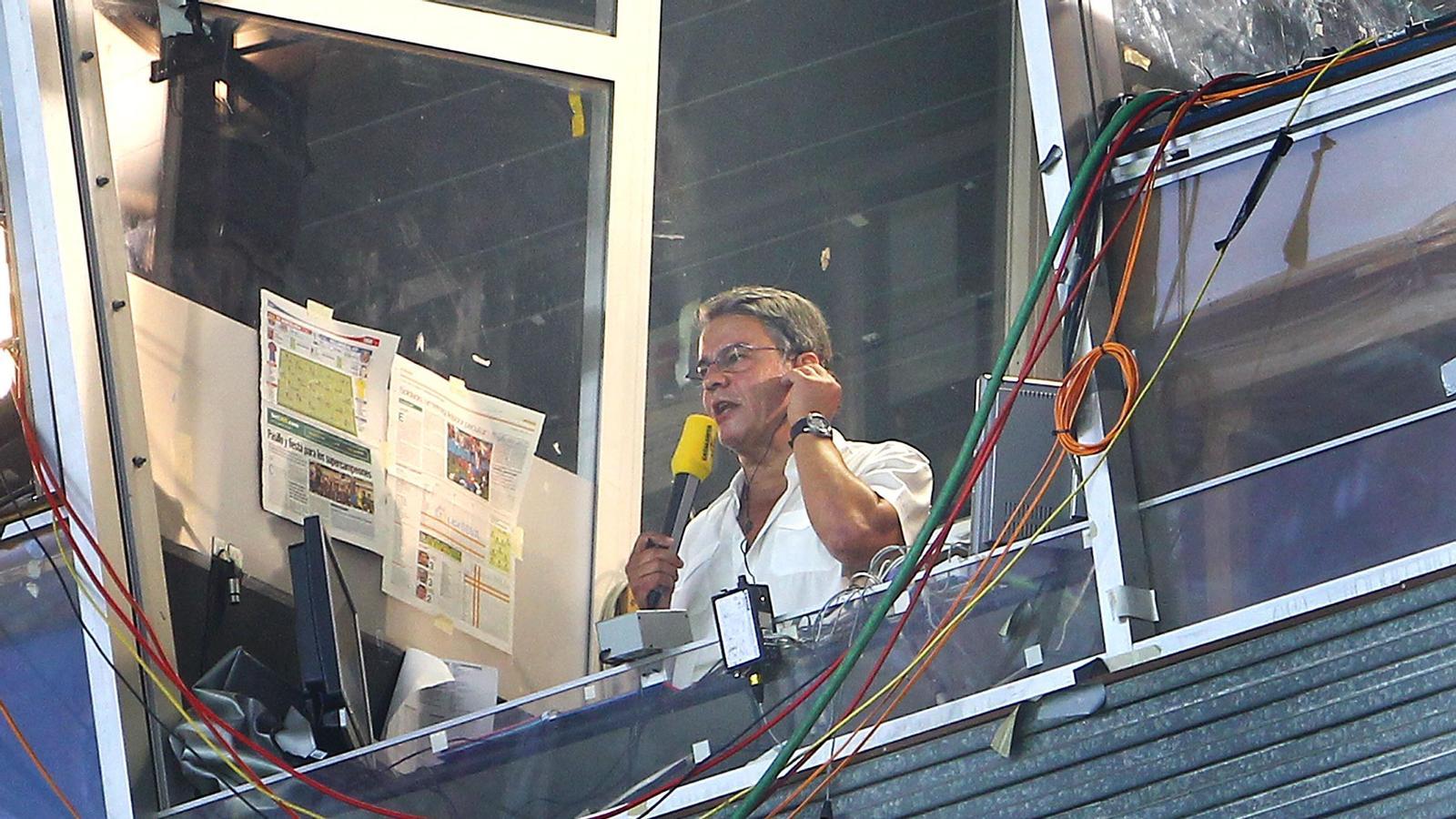

September 5, 1976, today it is 50 years. Five in the afternoon. The FM listeners of Radio Barcelona hear the voice of a determined but responsible announcer greeting them from the Camp Nou. He is about to use Catalan to narrate a football match. It will be the first time since the Civil War. Since all other stations broadcast in Spanish, the broadcast is announced with the name "Football in Catalan". It has not even been ten months since Franco died, the Avui hit the streets in April and Ràdio 4 will begin broadcasting in December. There is a collective desire for the language to occupy the space that has been forbidden to it.There is a rush, but at Casp 6 there is no improvisation: the broadcasts are born sponsored by La Caixa and are the subject of meticulous preparation work to resolve obstacles. The first one, the surprise. Almost no one has ever heard in their life a match narrated in Catalan. All of a sudden, the language of the home turns out to also be useful for broadcasting Barça. Weeks later, in the club's bulletin, Joaquim Maria Puyal will say: “My problem is using the language that the people in the stands speak and that it be correct from a linguistic point of view, and avoiding the feeling that you are not speaking in Catalan but rather translating from Spanish”.
Half a century later, no one announces themselves by explaining that they do football in Catalan because it is taken for granted. And this naturalness is indebted to those rigorous, ambitious, innovative pioneers. They carried it in their blood: “I am aware that I speak a Catalan that must be improved”. “Let them introduce us to someone who speaks Catalan better than you and who is capable of broadcasting a football match”. “Well, that is a compliment if you are satisfied. People who speak on the radio must speak well. I had never been so excited. I really have the feeling that I am doing something more than broadcasting a few football matches”.
Exactly, Quim. You were making history.
