Education: systemic problem
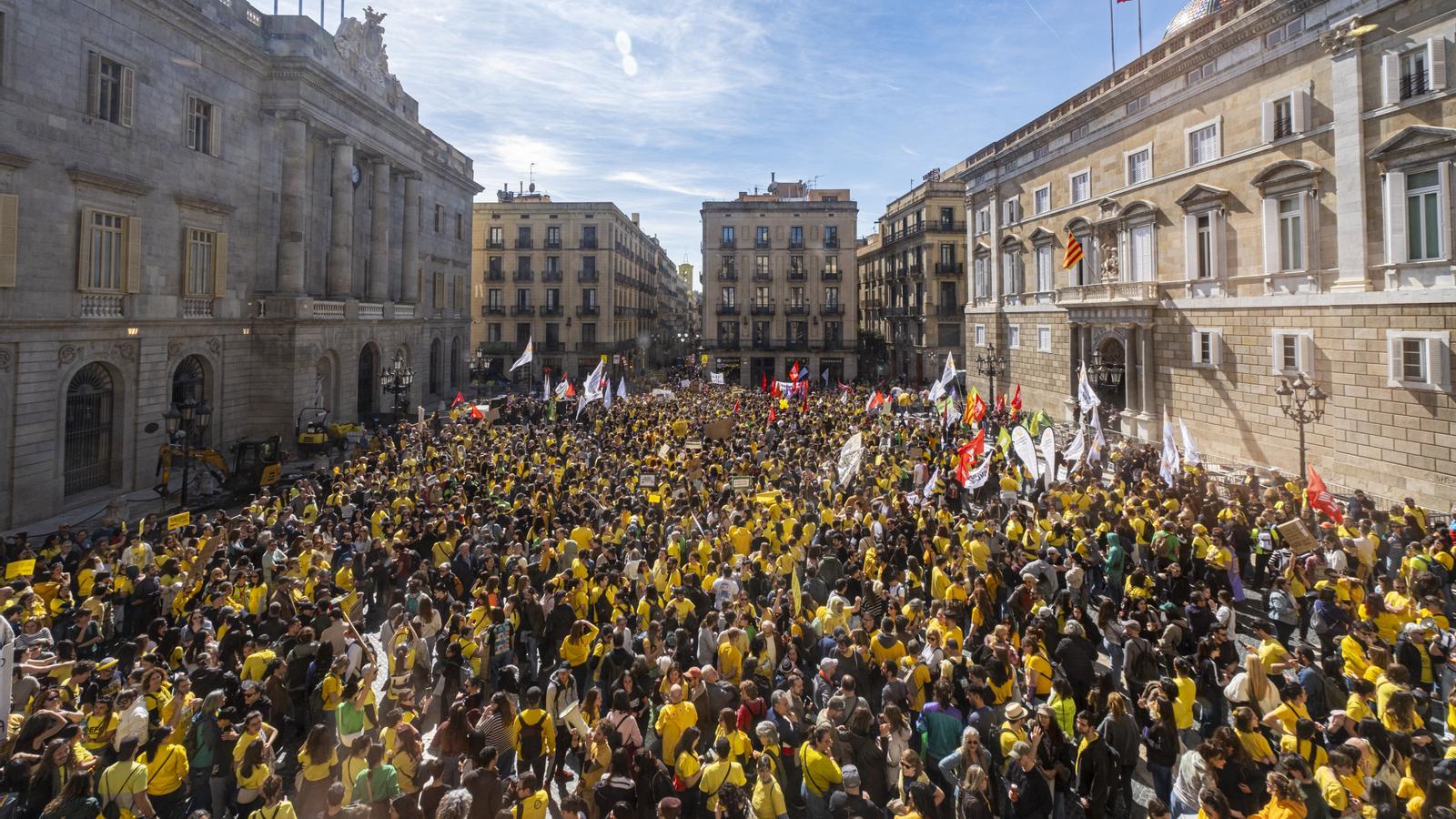

The problem –or at least part of it– of education in Catalonia has erupted publicly and noisily. After tug-of-war with the unions, the collective has called for several days of strike in the sector, with harsh mobilizations that have led to the blocking of streets and communication routes. Educational stoppages create a certain social alarm, as well as practical problems for families. A delicate issue in which the Government has reached an agreement with the less representative unions, but the main one, USTEC, has been left out, which has seized the opportunity to claim and reinforce its hegemony. Educational demands are almost always sympathetic to a good part of the citizenry. It is assumed that these are mobilizations to improve the conditions of their work, and this seems to be beyond discussion, just as farmers mobilize, who always have unquestioned support. Certainly, both education and healthcare have lacked the economic and personnel resources they need for many years, the minimum means to continue playing their role as pillars of the welfare state. Schools have been excessively equipped with technology, but the profession and consideration of teachers has not been dignified, nor has sufficient personnel been provided – reinforcements – to assume the diverse and demanding reality of multiculturalism in schools. The weak point of the mobilization is that it may seem excessively corporatist and dominated by salary concerns. By the way, a reasonable claim to the extent that we want to incentivize the best graduates towards teaching. Communicatively, the convening union has shot itself in the foot by implying that a rapid end to the discussion would be brought about by a monthly increase of 400 euros in their salary.In the context of the current conflict, the issue of the Mossos d’Esquadra in schools has served to worsen the atmosphere. Here the matter is not relevant in itself, but rather due to somewhat deficient communication. A topic prone to demagoguery, as has been seen. That schools should be areas for detecting security problems should not make us cry foul. The Mossos are logically responsible for prevention, and they need to get ahead of some things. The anti-police discourse that has been launched, even from the institutes themselves, is quite stale. Police forces are essential and should not be characterized as if they were still the Francoist “grisos” (grey ones). It is not a topic that yields much, nor is the presence in teacher assemblies, even though they could have avoided it. There has been a lack of tact in the methods, in the information provided, and especially in the lack of discretion. All this has shifted the focus from the educational issue, as if the problem were only a matter of money and public security. Now, these are the trees in the front line; they prevent us from seeing the forest. The debate should focus on the structural and systemic problems of education, on a model that has turned out to be, and not only in Catalonia, a complete failure and that hardly anyone seems willing to address.
The PISA reports say so, and common sense says so. Our educational model has been a failure, no matter what educational level you look at. The abuse of screens has something to do with it, but the problems go much further; they have to do with philosophy and the system. The learning levels in mathematics and reading comprehension are lamentable. And, especially, because they are not anecdotal. We have had these deficits for many years, as well as others that evidence the decline of an educational model structured with psychopedagogical approaches that aim to be modern and advanced but which only serve to perpetuate ignorance. Priority has been given to fads that lead to failure. It starts from the concept that school and educational centers should promote and guarantee the happiness of students, rather than dedicating themselves to teaching. Only competencies and practicality are valued, and knowledge is despised. And, with their disappearance, so have the method, rigor, and promotion of work capacity. Effort, which has been a key value and habit in all the best moments of our society, is no longer instilled. More than teaching, it is now about creating "learning environments." As one of the mentors of the successful Finnish education system explained years ago, "studying has never been fun, nor can it be; what is satisfying is having learned." Certainly, an education system must have a long trajectory and broad political consensus. It will not be possible to recover from this failure if the educational foundations of the future are built by the same advisors who have led us to educational ruin, which means a delay for many years.
