Convergence: legacy and future
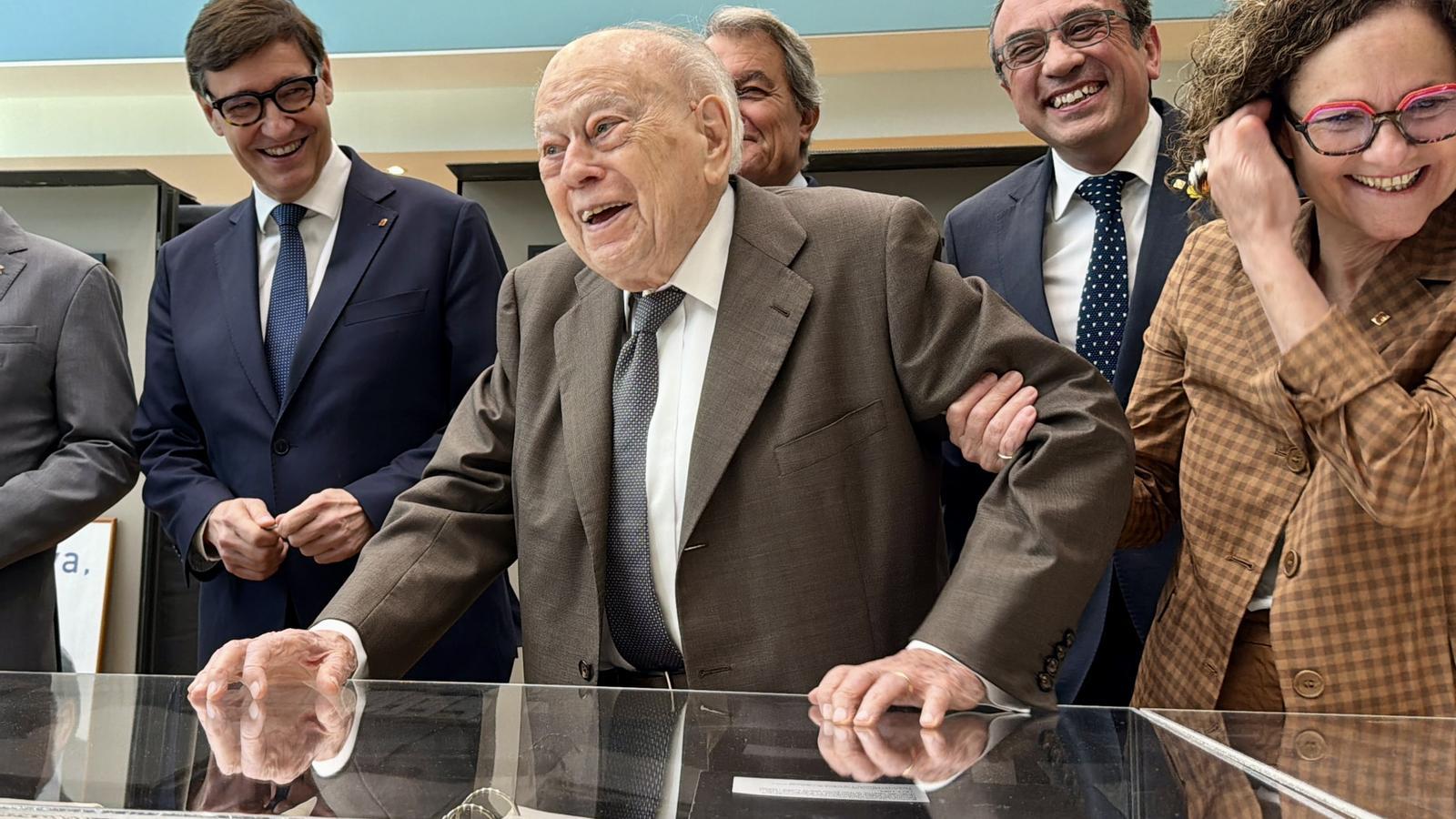

A few days ago, a particularly emblematic event took place: the handover of the documentary fund of Convergència Democràtica de Catalunya to the National Archive, located in Sant Cugat del Vallès. The event was attended by the highest institutional representatives of the country, presidents Salvador Illa and Josep Rull, and had a symbolic and emotional charge, more of feeling than nostalgia, with readings related to the present and future of Catalonia. The fact that President Jordi Pujol attended the event helped to convey a sense of living history and a red thread of a national project, linking recent history with current concerns and challenges.
Convergència no longer exists, and yet the convergent project is more necessary than ever. It is so because years are coming, we don't know how many, in which the most probable scenario will be a PP-Vox tandem in Spain and a left-wing tripartite in Catalonia. To face a situation like this, to resist, but also to advance, a clearly Catalanist project is needed, a bearer of modernity, and with the will to unite society. We must become aware that the foundations of our country are at risk: identity is at risk, the welfare state is at risk, and our economic model is at risk. But we must also be aware of our capabilities, our energies, and our talents to face the mentioned challenges. Let's remember Churchill saying that when danger is far away we must think about our weaknesses, but when it is close we must not forget our strengths. And now, it is very close...
What are our strengths? There are many, but I will highlight three. The first is our identity, with two pillars that sustain it: language and culture. Without these, plain and simple, we cease to be who we are. These pillars have remained solid throughout a long journey fraught with blows, obstacles, and attempts at demolition. That Catalan identity remains alive, and can survive and advance, is the latent proof of a will of iron and a shared commitment.
The second strength is the people, both in their individual and associative or community aspects. This is a great differentiating element from other nations, in which public powers, the State, have been much more decisive. This is not our case. Catalonia has progressed, with few temporary exceptions, without public powers, and often against public powers. Certainly, in recent decades, both the Generalitat and local corporations have done a lot of work to bring the country up to date, and with considerable success if we remember where we came from. However, this reality does not blur the main argument: Catalonia has been made by its people. A few days ago, we had a dazzling example: the papal visit to the Sagrada Familia, an iconic temple in the world, the fruit of a creative genius with unlimited will and commitment, decades of effort and constancy, absence of public money in its construction, in an urban setting, the Eixample, designed by another disruptive genius, Cerdà, and accompanied by the songs of a choir that is the oldest in all of continental Europe. All private, all people, all individuals.
The third strength rests on an open, avant-garde, and modern spirit. Identity and modernity are not opposing poles; they are part of the same sphere. This open mentality is fundamental for progress. Catalonia, a land of passage and welcome, permeable to contributions from people of different origins; Catalonia, an restless and curious people, eager to know the world and project itself to the world; Catalonia, creative, a receiver and at the same time an exporter of talent, with a taste for a job well done, which is that which has no borders. If Catalonia loses its commitment to quality, in all areas, it will become much weaker and more precarious.
Convergència knew how to connect with and respond to these strengths. Today, and for the times to come, we must reactivate them. They will be not only our defense against the onslaughts to come, but also the sources of energy that will fuel our progress and our rise as a country and as a society.
All this responded to a way of being, of understanding our people. However, Convergència was also a way of doing. We could define it thus: enough pragmatism to understand that ideology cannot hijack the country; enough idealism so that the country does not fall asleep in its comfort zone; courage to make decisions far from populism, demagoguery, and hypocrisy; the ability to create consensus and build pacts with those who are different and have other visions; a comprehensive vision and conception of the country, both in terms of people and territories. Surely we were not always faithful, to the letter, to this way of doing things. But we always tended to act with this temperament.
The other day, at the National Archive, we spoke of handing down a legacy. In my opinion, however, what is decisive is to understand the codes of this legacy to decipher the present and the future. And, fortunately, I am aware of the efforts of many people in this regard.
