Angry democracies

-
CAT -
CAST
Today's political game expresses, feeds, and is fed by the growing perception that we live in a society where the gain of some is seen as the definitive loss of others. And all of this feeds anger as the dominant political emotion. This is not a new debate. In the early eighties, in the midst of stagflation, Lester Thurow already spoke of the "zero-sum society" to describe a stagnant economy where every decision meant choosing who won and who lost. Back then, everything became more difficult, as no one accepted being the loser. Post-war democracy had functioned precisely because growth allowed for compromises in which everyone ended up winning, even if they did not win the same thing or at the same time. Here, at home, we experienced this at the end of the Franco regime and at the beginning of democracy. Now, a few decades later, the issue returns with old and new coordinates. We are once again in a clear stagnation of expectations, but now social networks are added to the mix, turning tension into a business and amplifying emotions in the face of any stumble.
Some recent research from Harvard on the situation in the United States puts numbers to all of this. They show, on the one hand, that zero-sum thinking is not inherited from speeches, but from one's own material experience: those who have experienced upward mobility tend to see the world as a game where everyone can win; those who have grown up in stagnation do not see it that way at all. On the other hand, they document that anger in American political communication is at its highest level in a century and a half. And this is not accidental either. Political messages charged with anger obtain about 60% more reach on social networks, while messages of hope receive less. Politicians know this and are systematically more aggressive on social networks than in their ordinary activity. Anger is not, therefore, a simple mood; it is rather a rational strategy in an attention economy that rewards antagonism. We might think that if we had more data demonstrating the falsehood of certain claims and educated people about it, things would improve, but what is observed is that emotions operate beneath information and often overwrite it.
None of this is an American oddity. European generations born after 1985 have been socialized amidst the 2008 crisis, job insecurity, and housing exclusion. Their experience leads them to think in terms of a zero-sum game: what I do not gain, someone else does, and there is no middle ground. On this basis operates the politics of rage, which in Europe manifests itself as what some call welfare chauvinism: the defense of redistribution for those at home, which entails a migratory closure with more or less presence of "nativism." And all of this translates into territorial readings that we know well, with various "they are robbing us" claims that function in all directions.
How can we get out of this? It does not seem that preaching concord is enough. What is needed, first of all, is to channel the conflict, not deny it. If anger mobilizes and hope does not move preferences, a democracy that responds to rage with a kind of technocratic neutrality cedes the monopoly of emotion to those who direct it against scapegoats. It would be necessary to shift the antagonism from the identity axis towards the material axis, where there are real adversaries and possible compromises on issues such as housing, taxation, or salaries. On the other hand, it would be necessary to intervene in incentives, not just in discourses. If the algorithm rewards rage, the problem is one of market design, and here Europe has a lever in digital regulation that can prevent recommendation systems from exclusively optimizing for the most radical content. And it would also be necessary to restore and disseminate the experience that not everything is limited to distributing winners and losers. In many places, cooperation is lived and not just preached. Helping to strengthen these cooperative experiences, these spaces of hope, is essential.
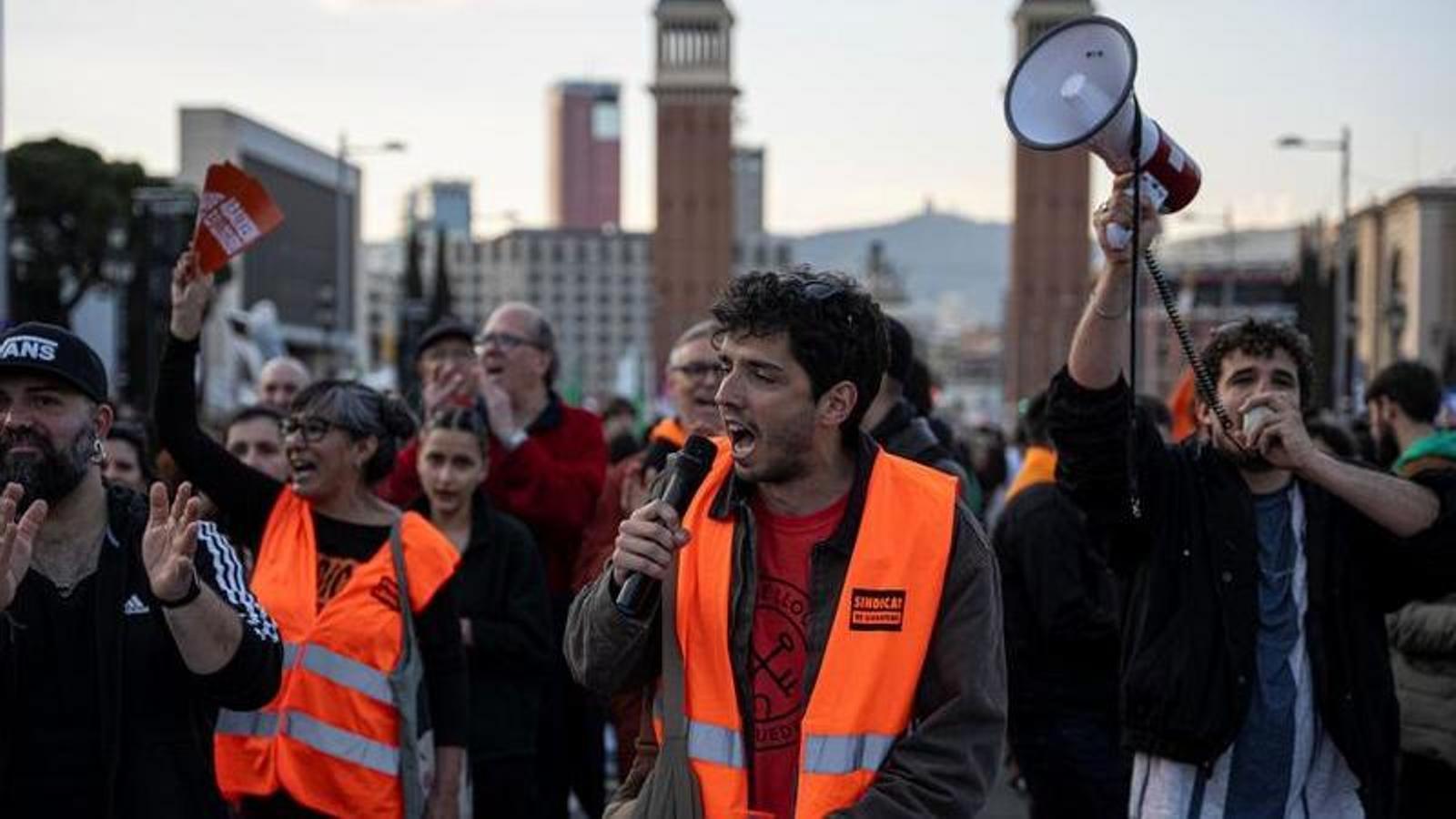
We must remember, furthermore, that anger is not unequivocally destructive. This summer we have experienced, angrily, what the climate emergency is. The rage of those who are not listened to can be a rational response to a real injustice. The question is not whether our democracies get angry, but against what and with which institutions. Without abandoning hope, which also has its virtues in democracy, as it helps us to protect institutions that remain essential. It would be advisable not to confuse the two tasks, and to do them both.
