The hantavirus battle
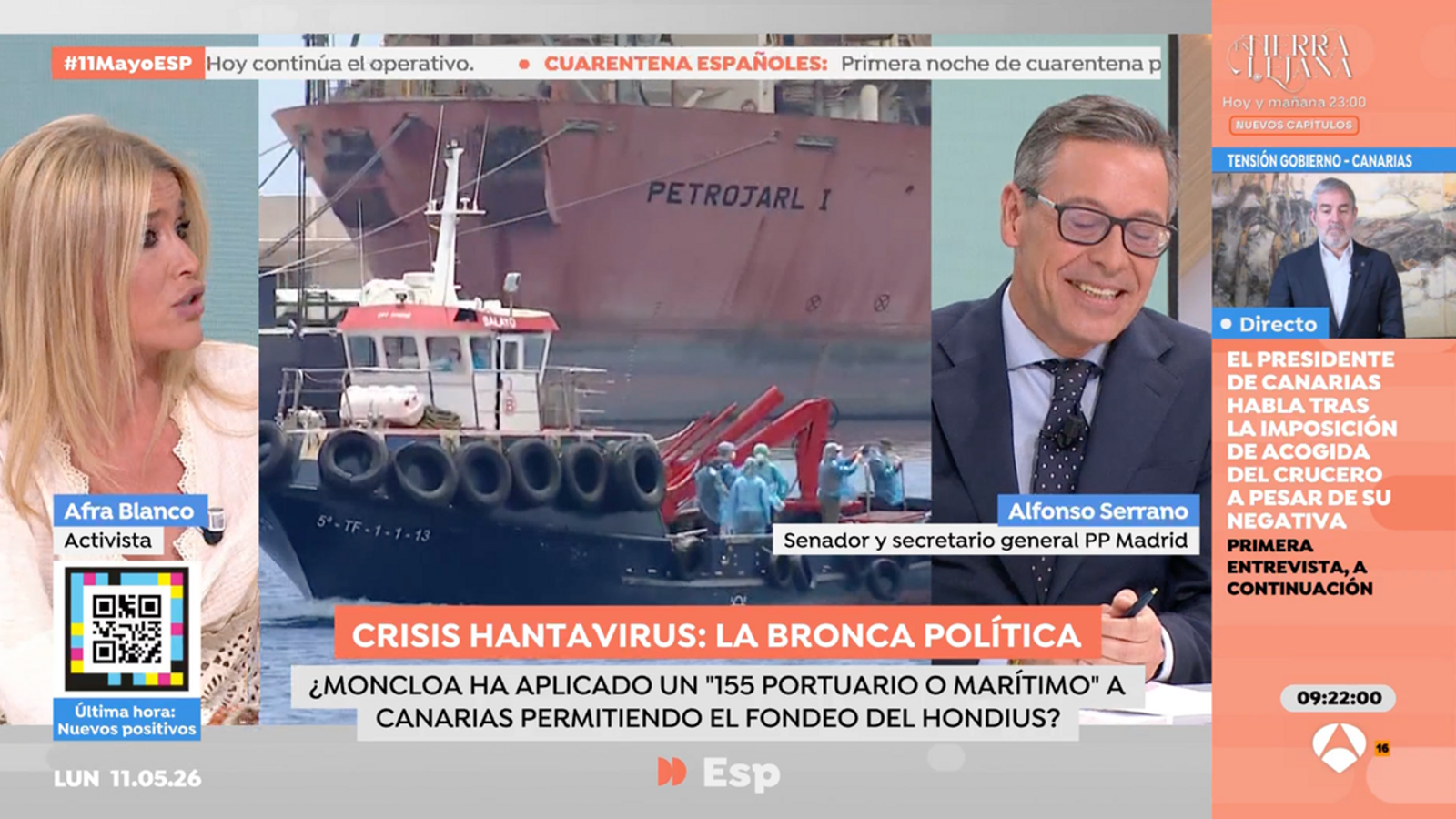

Early Sunday morning, Canal 24 Horas showed the arrival of the cruise ship MV Hondius at the port of Granadilla. The scene from six in the morning was rather calm: nighttime views of the illuminated port and the radar image to see how the ship was advancing towards the coast of Tenerife. We saw the sun rise with the vessel in the foreground. Despite the complexity of the operation to disembark the passengers, the image was one of calm and control. Surely the one provided by the Sunday television schedule, unaccustomed to noise.On Monday morning, the media scandal began. On La 1, the program Mañaneros, unworthy of a public television for its sensationalism and unscrupulous journalistic bias, posed the headlines in terms of a political war. "Hantavirus Management: Who Emerges Strengthened?", "PP's Silence: Success of the Operation?". The narrative revolved around the clash between the PSOE and the PP, and the tensions and disagreements between the Ministry of Health and the Canary Islands government. On La Sexta, on Al rojo vivo, they maintained this confrontation with a bit more subtlety. They highlighted “El PSOE saca pecho” and the headline of the president of the Canary Islands lamenting that they had tried to ridicule him with the hypothesis of swimming rats. In the Atresmedia media, it was striking how they had added graphics to the images of the operation, as if the scene were being observed with a telescopic sight, enhancing the idea of control and danger. As happened with covid, to scenes with people equipped with PPE, masks and other sanitary protectors, action or horror music was added. Since the coronavirus pandemic six years ago, there has been a tendency to take advantage of the post-traumatic stress of viewers in the face of terrible images from hospitals. Infectology has become televisually fascinating, because everything that implies contagion has a very spectacular staging from a sanitary point of view.On Espejo público they incorporated Senator and Secretary General of the PP of Madrid, Alfonso Serrano, to the guest table. Very opportune for analyzing the operation. The most regrettable thing is that while they were discussing with the panelists, they had the President of the Canary Islands, Fernando Clavijo, standing at the edge of the screen for twenty minutes waiting to be interviewed. Standing and with his arms folded, he waited for his turn. Minutes after they dismissed him, he appeared on Telecinco, on El programa de Ana Rosa, to say the same thing. Curiously, in both morning magazines, the PP's directive was noticeable. Serrano on Antena 3 and Quintana on Telecinco criticized the television coverage. “This looks like a reality show!”, “They've set up a studio”, lamented the first, reproaching the presence of cameras and journalists to follow the operation. On El programa de Ana Rosa they titled with sarcasm “Lights! Cameras! Landing!”. It is astonishing to see how those who are supposed to be doing journalism lament the news coverage. And even more so the one that is done from a distance and almost with binoculars. As if the alternative of doing it secretly and without cameras were to be better.
