Sergi Ambudio: "A mossos [Catalan police officer] told a listener: 'We can't do anything but on 'El món a RAC1' [a radio show] they solve many problems'"
Journalist. Publishes the book 'It Could Be You'

-
CAT -
CAST
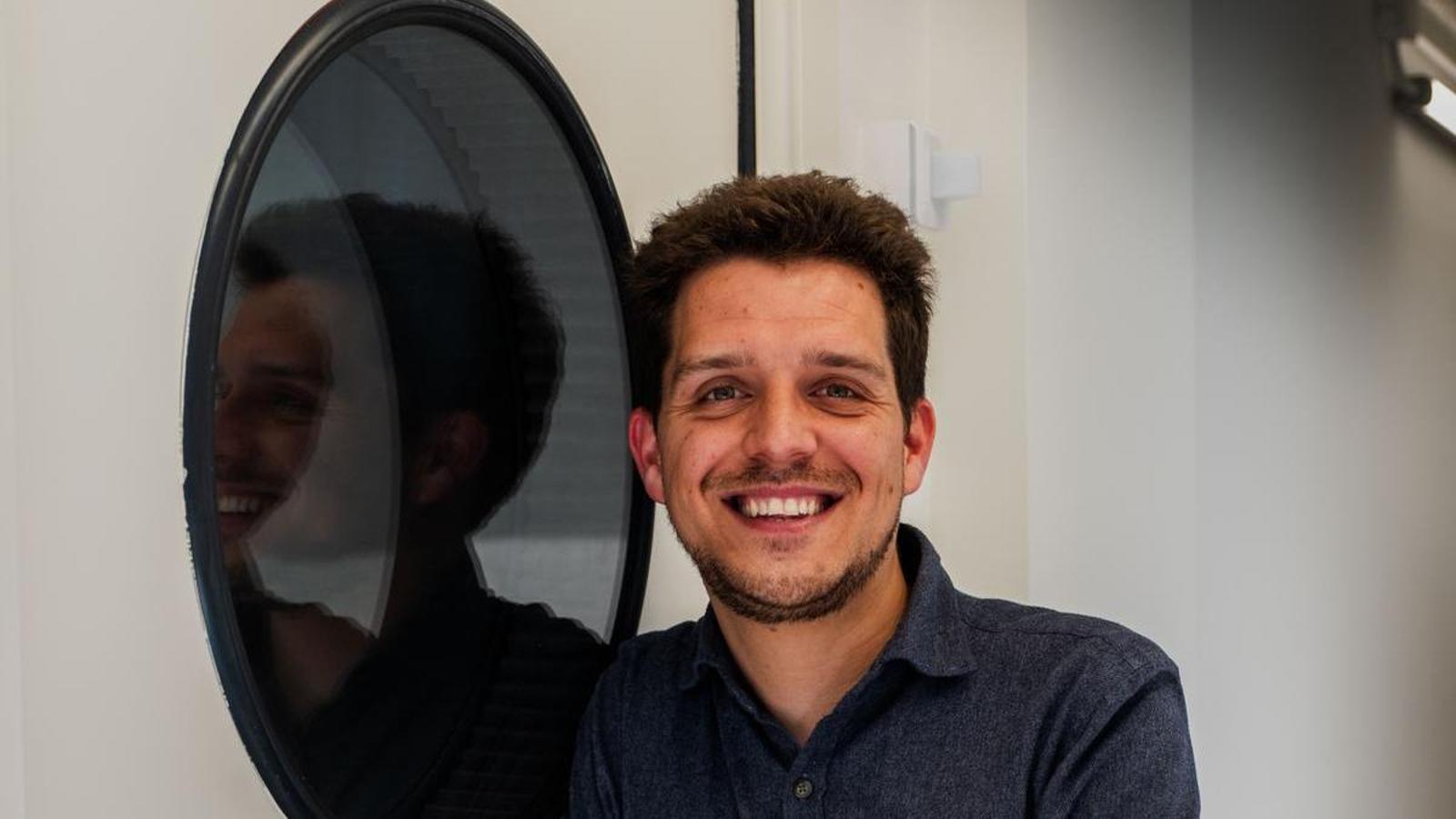
BarcelonaSince September 2021, Sergi Ambudio (Terrassa, 1994) has been in charge of El contenidor, the open mailbox of El món a RAC1 to which listeners can send problems with the administration or private companies. The journalist, who heads the RAC1 morning show in the summer, has collected a good part of these stories – very varied and in very different tones, from truly tragic to surreal – in a book that also serves to understand the work behind the resolution of each case.
You publish Podries ser tu (Ara Llibres), where you collect the most important stories that have passed through El contenidor, one of the reference sections of El món a RAC1. In the book you define it as a public service section. Why?
— Because it is a section that is based on trying to help people. In other words, it is a public service done from a private radio station, because one thing is not incompatible with the other. And it has a double aspect: on the one hand, helping the specific people who write to you and explain their tragedies, and on the other hand, pointing out the flaws in the system. And I believe this latter part is the function we should perform as journalists.
After reviewing so many cases and helping so many people, can you personally continue to believe in the system?
— It's hard to believe. It's true that, from time to time, you have to make an effort and do some cleaning, you know? Disconnect a bit and say: "Well, we get the most extreme and desperate cases, and often, luckily, they are exceptions." But it's true that I have to repeat to myself many times that, in general, what we get are exceptions. Because we don't always get exceptions, let's say. And it's true that El contenedor makes it very difficult for me to continue believing in the system we all live in.
In the book you explain that many times from the administration itself or from the police it is recommended that they call El món a RAC1 because they solve the problems they have. What does that explain about our society?
— Explain the worst. It's very brutal and very sad, but it happens. In the first chapter of the book, that's exactly what happens. A completely desperate person because their mother isn't receiving a retirement pension, because it's pending some paperwork, goes to the Mossos d'Esquadra police station and, just before leaving, an officer stops them and says: "Listen, we've already told you that as police we can't do anything, but here we always listen to Basté's show and they fix many things there." Of course, it ties in a bit with what we were just saying. If the police themselves have to tell a citizen, "Call the radio because maybe then it will be solved," what point have we reached? It's just very brutal and terrible.
Do you think it is a matter of inefficiency or neglect?
— It is very likely a bit of both. We are a society where there are people who practically every day talk to a chatbot and artificial intelligence, and every day there is technological advancement and such, but at the same time we have a public system and bureaucracy practically from the Middle Ages. I think there is one thing that is evident, which is a serious problem that the public system has: it is not effective enough. I am not a politician and I do not understand, but what I clearly see is that resources are perhaps not being allocated where they should be allocated exactly. Many times it is like the game of telephone, and I think this is a matter of resources and organization.
Have you noticed that the citizen is very vulnerable?
— Clearly. Many times we are very unprotected by those who should protect us. And I think this is the great perversion of everything. Many times when you talk to the listener, who tells you they contacted the program because we are their last resort, they thank you for listening to them. It shows you that this person has nothing, they have been left with nothing by the administration, paid for with everyone's money. What the administration should do, in theory, is administer many things, but also protect the citizen. It makes no sense that the unprotected citizen ends up having to call the radio.
Receiving so many stories carries the danger of desensitizing you, but also of suffering more than you should and taking the cases home with you. Has this happened to you?
— Yes, a lot. It happened to me much more at the beginning than now. That's why conversations with Jordi Basté, with the team, and with myself have been very helpful: I've had to tell myself many times that neither I nor the program have to fix the [citizen's] problem. We are here to tell stories, to point out things that don't work, and if it turns out that by acting as a loudspeaker we manage to fix something, all the better. I am not the administration. I am not the general director of I don't know what company. I am not that. I am not the one who has to solve that. Basté is not the one who has to solve that. And it's true that El contenidor is very gratifying, but it is also very frustrating. At one point I considered stopping, but it quickly passed because I enjoy it a lot. I think with El contenidor I go to the purest journalism. But Basté had to take me and said: "Sergi, you are not the one who has to solve that. You will help as much as you can, but there comes a point where the responsibility is not yours." And the message is super clear and super evident, but as happens to us many times, clear and evident messages sometimes have to be repeated for them to sink in, you know?
It is a section that can have an eternal life.
— It's like a funeral home, it will always have work [laughs]. No matter how much you improve the system, there are obviously millions of inhabitants in a country and things always happen and things slip through. And with this, I don't mean to say that the administration is made intentionally badly, not at all. I'm sure there are many people trying to fix it, sure. But, from the biggest to the smallest, things happen to all of us in our day-to-day lives where we believe we are treated unfairly. And this, unfortunately, will always happen.
You said there have been times when you've wanted to stop doing the section. Are you considering an end now?
— Now that I've written the book, I can't put it down. We have to do the second part [laughs]. The other day Xavi Bundó and I were joking because Basté once said we were "the fear". Bundó told me that this had to be the title of the second book. Xavi Bundó because Basté once said we were "the fear". Bundó told me that this had to be the title of the second book.
Have you noticed that The container of The world on RAC1 generates fear?
— Yes, sometimes there are silences on the other end of the phone... It's normal. I would also have it happen if someone called me who has 800,000 listeners behind them and saw the abyss of being exposed to so many people. Many cases are resolved before going on air, and this is explained solely by fear. That something has been stuck for two years and I call at two in the afternoon and receive a call at six in the evening from the listener in question, who tells me: "Sergi, I don't know how you did it, but they just fixed it for me," is understood solely by this fear. And surely because we have also managed to say: "Hey, here you have a problem." Sometimes administrations and companies are so large that they don't know that something is happening.
