Love at first AI
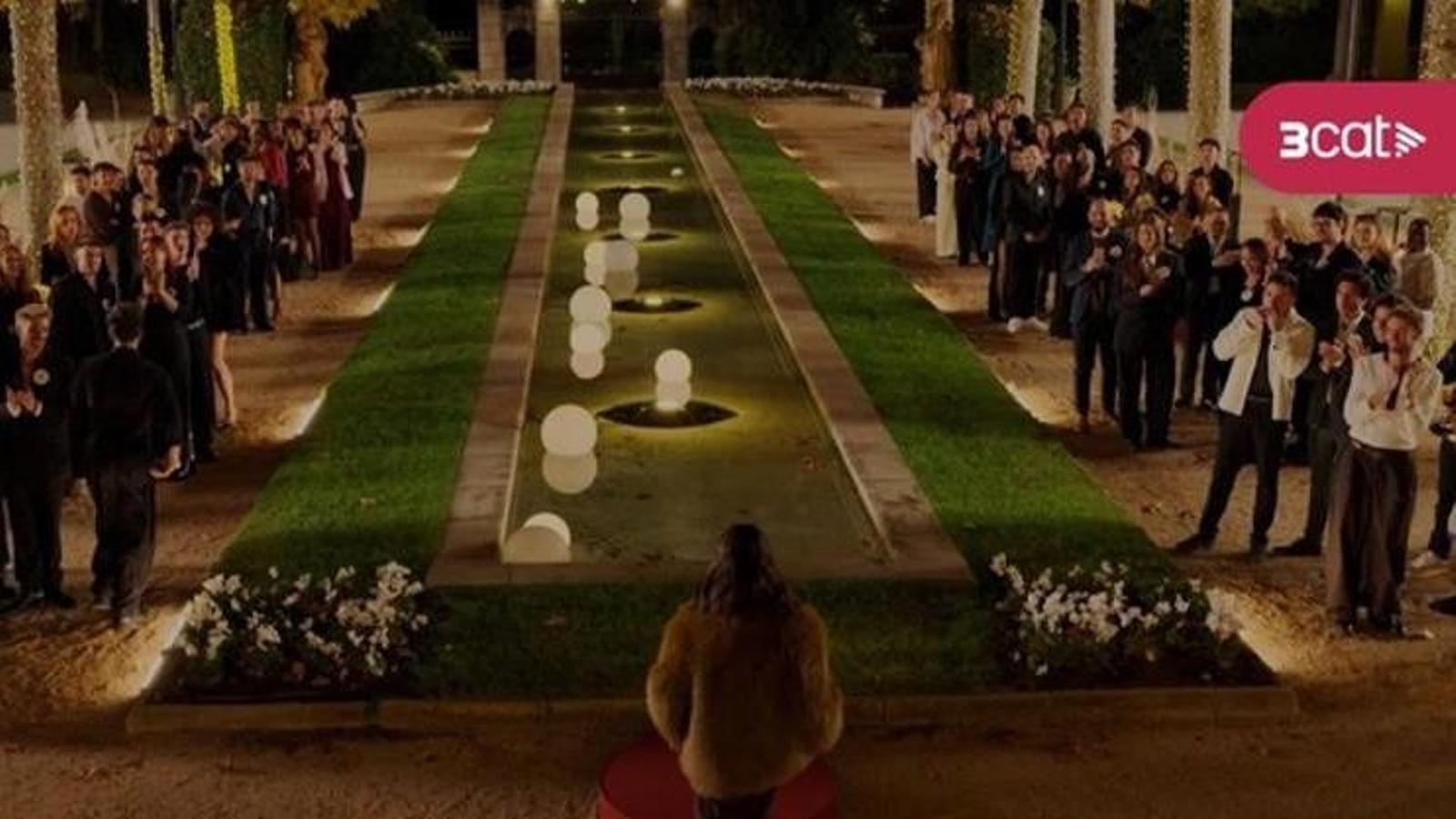

On Monday evening, during the break of Telenotícies, TV3 announced the premiere of La gran cita on the 3Cat platform for Tuesday. But Toni Cruanyes reminded us, on two occasions, that we could already watch the program that same Monday. A lack of coordination within the channel that caused confusion for the viewer.Dulceida, “an expert at organizing parties”, joins the cast ofinfluencers who create content in Spanish but have been awarded a program on public Catalan television. To conceal their fragilities in front of the camera, they have opted for the walk and talk formula, walking and talking at the same time, to reinforce their authority.The big date is a dating show with elements of reality. The one hundred participants who want to hook up have previously been paired through artificial intelligence. They know there is someone highly compatible and will look for them based on the relational dynamics proposed by the show. “It’s an experiment that will change their lives,” assures Dulceida. The format is much more powerful than last season's stale Love Cost. It seems more like a logical evolution of that Thirty Years' Love at First Sight with all the influences of private television and technology.The program has a tacky sheen typical of a graduation party with glamorous pretensions, but it makes up for it with an excellent cast, good direction, and impeccable sound design. It has merit, considering the complexities of the format. The big event is inclusive: it incorporates sexual options and gender diversity without establishing categories, with the virtue of not objectifying or sexualizing the participants. So far, three episodes have been released corresponding to the first stage of the game: the construction of the finalist couples, who will be tested in the following episodes to check their evolution.The big event hooks thanks to the confluence of different factors. On the one hand, the contestants' temperament. Absolutely normal young people, who convey authenticity and are part of our most everyday reality. They thus distance themselves from the artificial and histrionic stereotypes typical of this television genre. On the other hand, the game stimulates the audience, who, from home, becomes a predictor and a judge. It is impossible not to comment or value the contestants' decisions and choices. Any program that provokes a smile from the viewer while watching it has a lot won. The idea of a mirror is also key: seduction exposes the protagonists to a vulnerability and fragility in which, more or less, everyone feels reflected. Excitement, ridicule, shame, disappointment... are emotions that provoke easy identification. And that is why the program becomes appetizing. However, as the program progresses, interest wanes, because the ensemble game is diluted. The conflict becomes individualized, the drama becomes personalized, and the elements of reality are accentuated. It will be interesting to see how it evolves and how it all fits into public television. The most obvious proof is the fear of premiering it on TV3 and limiting it, for now, to the digital platform.
