'Island family': the documentary recorded with two mobile phones under the repression of the Cuban regime
The feature film explains the exile of a Cuban family for four years, with a pandemic and a pregnancy in between
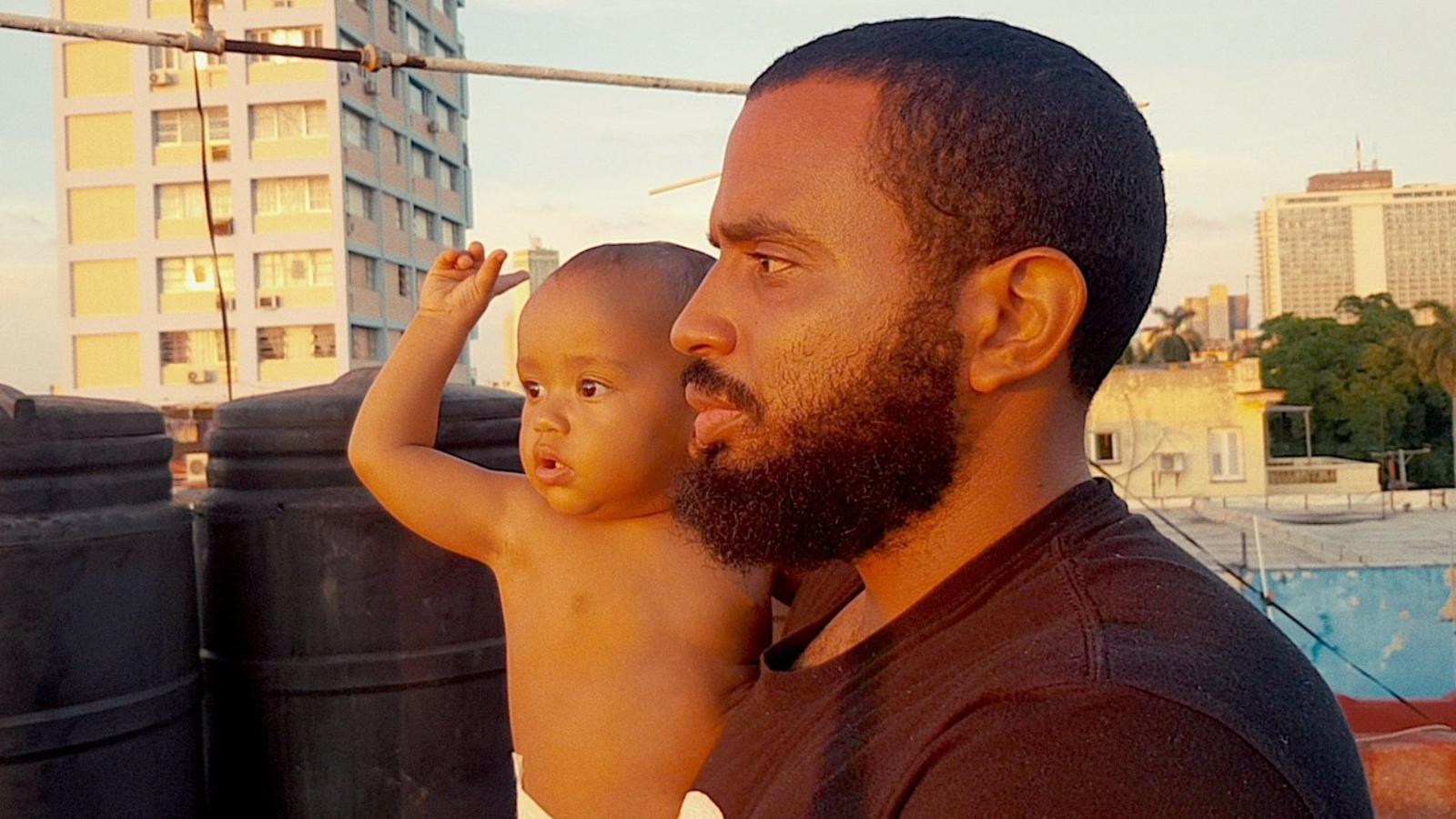
The Filmin platform premiered last Friday the documentary Isla familia, co-directed and starring Cubans Abraham Jiménez Enoa, a recognized –and persecuted– independent journalist, and Claudia Calviño, one of the leading producers of independent Cuban cinema. The feature film, which they recorded with their mobile phones and is the directorial debut for both, narrates how the couple decides to leave their country for Spain after strong repression and harassment by the Cuban regime. All while they await the birth of their first child.

Enoa fell into a depressive state after personally experiencing the institutional persecution he received from the government: interrogations, threats, house arrests, and mistreatment of his family, among others. He was also sanctioned with a regulation that prohibited him from leaving Cuba for five years, not even for an academic or professional event, filling him with deep sadness. His wife took the initiative to start filming his life, not with the goal of these images eventually becoming a documentary, but to help her husband get out of his depression and keep him busy during the confinement in Havana. In November 2021, Enoa received an ultimatum from the government: leave the country or be imprisoned.

"A daily life filmed over four years with two mobile phones: a pandemic, a son, a fractured country, political persecution by a government, and exile." With these words, Enoa defined the work on his X profile at the end of 2024, a story that shows the reality on the island, as well as offering an intimate and poignant vision of the adversities they faced before and during the forced abandonment of the country. The journalist explained in conversations with ARA that neither of them could imagine the journey that "Isla familia" has today. He remembers that the hardest part for him was reliving all those moments in the post-production phase, already in Barcelona,and he mentioned the difficulty he has in watching them again– he was only able to do so at the premiere in New York–.

Enoa won the International Press Freedom Award in 2022, presented by the Committee to Protect Journalists. He is a co-founder of El estornudo, a pioneering Cuban magazine for narrative journalism, as well as a regular contributor to outlets like The New York Times and having worked as a columnist for The Washington Post between 2019 and 2023. Calviño is a co-founder of the production company Cacha Films, and has worked as a co-producer and executive producer on more than ten films and several short films. Notable among these is Juan de los muertos, created by Alejandro Brugués and winner of the Goya for Best Ibero-American Film in 2013. Currently, she works at the production company Fasten Films in Barcelona, through whom she has co-produced La más dulce by Laïla Marrakchi, which will be part of the Cannes Film Festival taking place in just under two months.
Filming began with the arrival of covid in Cuba in 2020 and they show the journey to Spain in an intimate and raw way over four years, which they have condensed into 85 minutes. The documentary premiered in New York in November 2024 as part of America's Largest Documentary Festival (DOC NY), the largest documentary festival in the United States, held annually. Enoa explained to el ARA the memory of having shared seats with other Cubans and everything that moment meant for him and his family. The documentary was also selected to participate in the Miami Film Festival and was part of the competitive section of the Madrid Festival de Cine las Américas, among other international festivals.
Six years after filming began, the couple has traveled the world to present the project until settling in the Catalan capital. The change of scenery has brought great challenges for the family, and during this new phase in Barcelona, their son Theo has transitioned gender, while Enoa and Calviño have had to find ways to continue with their professional careers.

Although he has no intention of pursuing a career in film, Enoa emphasizes the importance of the Cuban people having the opportunity to see their lives reflected and the difficulties they must overcome in an attempt not to have to leave their country. From within, the exiled couple gives visibility to the crumbling of Cuba in recent years. Enoa and Calviño's hope is to ensure that the documentary contributes testimonially, exposing a political regime that silences anyone who dares to dissent. "Even when some may think our story is heartbreaking, we believe it is actually moving. It's about our struggle to see love, hope, and humanity prevail. In our own lives and in the world today, despite it seeming to threaten these basic concepts everywhere," the couple concludes.
