Is it compatible to be a mother with a messy life?
The series 'I Always Sometimes' explores the experience of motherhood in the unstable and precarious environments of Barcelona's alternative cultural scene
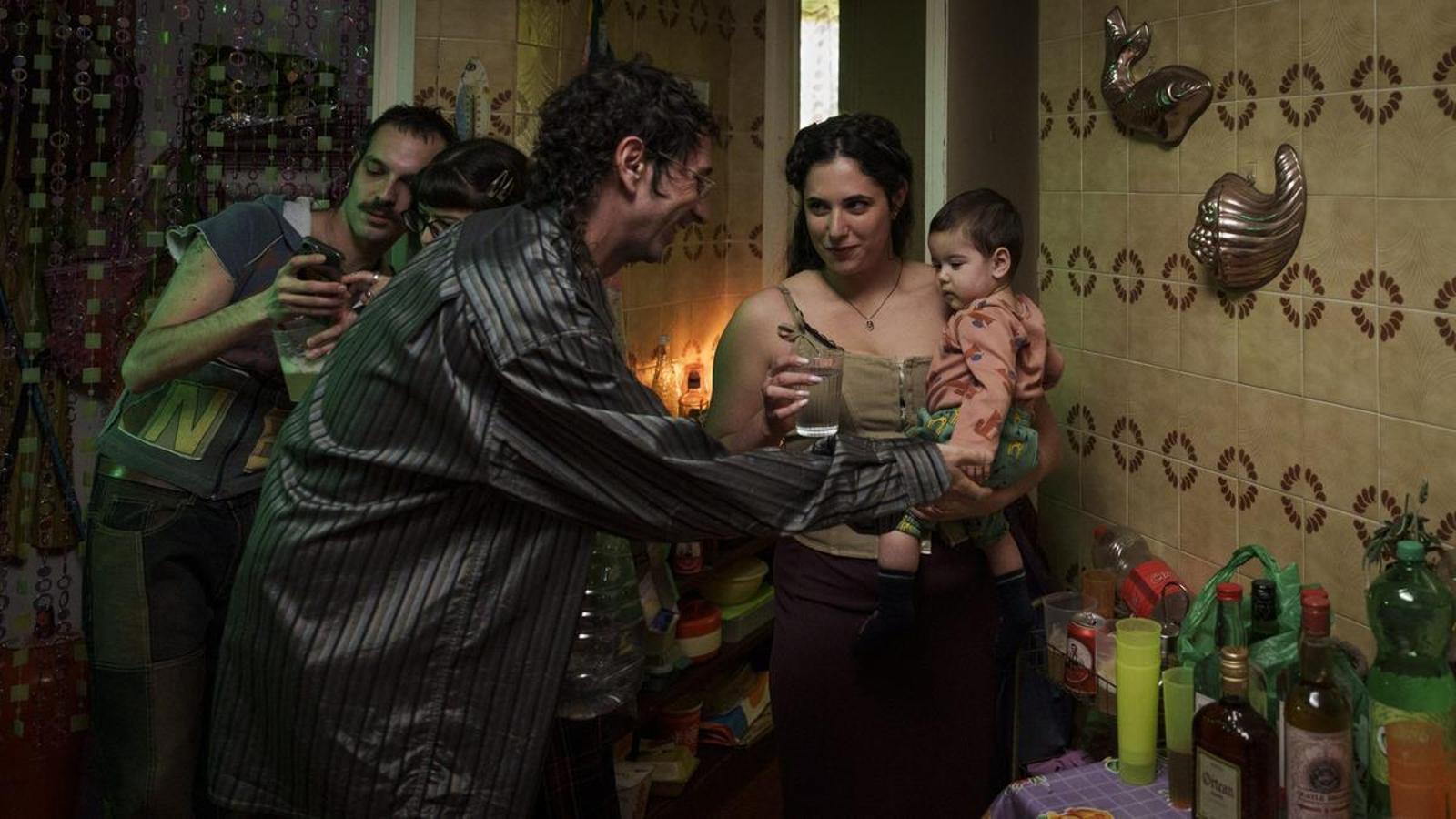
-
CAT -
CAST
- Marta Bassols and Marta Loza for Movistar+Now broadcasting on Movistar+ starting April 23rd
The emergence of an entire generation of women creators of television fiction has originated a subgenre until recently (almost) unheard of: the parenting comedy. Titles like Better things, Catastrophe, Working Moms and The Letdown tackle motherhood from a desacralized perspective that turns humor into the best weapon to face the reality, without Instagram filters, of parenting. In our country, we can place in this trend Mira lo que has hecho, with Berto Romero, and Això no és Suècia, by Aina Clotet and Mar Coll. In some episodes, this latter series brought together in fiction a group of real-life mothers who shared their experiences as such in mutual support meetings. One of these mothers was Marta Bassols, a well-known (and loved) writer, actress, and cultural agitator on the Barcelona scene. Now it is she who is launching another series about the tribulations of motherhood, Yo siempre a veces, co-written with Marta Loza, sponsored by Javier Ambrossi and Javier Calvo, and starring Ana Boga.
Bassols and Loza draw inspiration from their own experiences, as mothers and as daughters, to develop a dramatic comedy about a young woman from Barcelona, Laura, in her early thirties, who gets pregnant unintentionally and has to assume motherhood in a context of professional, emotional, and domestic instability. The father is present but not fully involved. Without abandoning humor, Yo siempre a veces is not so much in the comedic register as in a tradition of indie film and series focused on capturing the emotional process of its protagonist as a sounding board, also, for a whole generational sentiment.
The series places Laura in a key dilemma: it raises whether it is possible to exercise more loving and responsible motherhood without resorting to the traditional nuclear family model and stable civil servant work, nor renouncing a very free conception of understanding life. The series introduces the class dimension to make it evident how professional merits that secure you a job in Berlin do not guarantee you, if you also do not have a family financial cushion, the stability to get by with a child in Barcelona.
Because from the very first episode, which depicts a night out in the city, Yo también a veces also talks about the love-hate relationship with Barcelona that most of its inhabitants feel. The city is present in the series in many of its nuances, from the popular neighborhoods of Santa Coloma de Gramenet to the affluent houses lined up in Collserola, passing through the entire alternative scene where the protagonist moves. But also as a hostile territory surrendered to tourism. The creators also exercise criticism on some discourses from the most transgressive environment and question to what extent real support networks are generated for alternative forms of motherhood.
Very well-tuned on an emotional level, at times you miss the series exploring more of the character's punk side, which shines through especially in the first and third episodes, with scenes like the one with the milk (which the most cinephiles will connect with a similar situation to El futuro by Luis López Carrasco). The quite impeccable, very professional finish of Yo siempre a veces, detracts a bit from the primitive and raw strength that you sense buried. But, as Marta Bassols says, it does point to defending an "erotics of care".
