Apple returns to AI with pending promises on the table
The company presents a Siri powered by Google's AI and renews its six operating systems

-
CAT -
CAST
BarcelonaTwo years ago, Apple dazzled us with the promise of a Siri capable of reading the user's email and calendar to answer complex questions about their life. That never materialized, and the company faced lawsuits for misleading advertising. Apple had crashed into a race in which OpenAI, Google, Microsoft, and Nvidia were already running at full speed.
This week, the company has attempted to settle that debt through pragmatism: instead of spending years and a fortune building its own AI models from scratch, Apple has opted to lease Google's. In exchange for $1 billion annually, they are integrated into Apple Foundation Models, the platform powering everything Apple presented at WWDC (Worldwide Developers Conference) under the Apple Intelligence umbrella. However, without sacrificing its characteristic privacy: everything happens within the user's device or on the Private Cloud Compute cloud, which ensures that data is used only to fulfill each request and is then deleted.
At its core lies a not-so-subtle criticism of its rivals: "Some are running after AI for AI's sake, without considering the people it should ultimately serve." Apple wants to differentiate itself by betting on AI that is naturally integrated into device usage, without any fanfare. Tim Cook has summarized the bet with his usual parsimony: "In a few years, I doubt this delay of ours will even be a footnote."
Renewal of the six operating systems
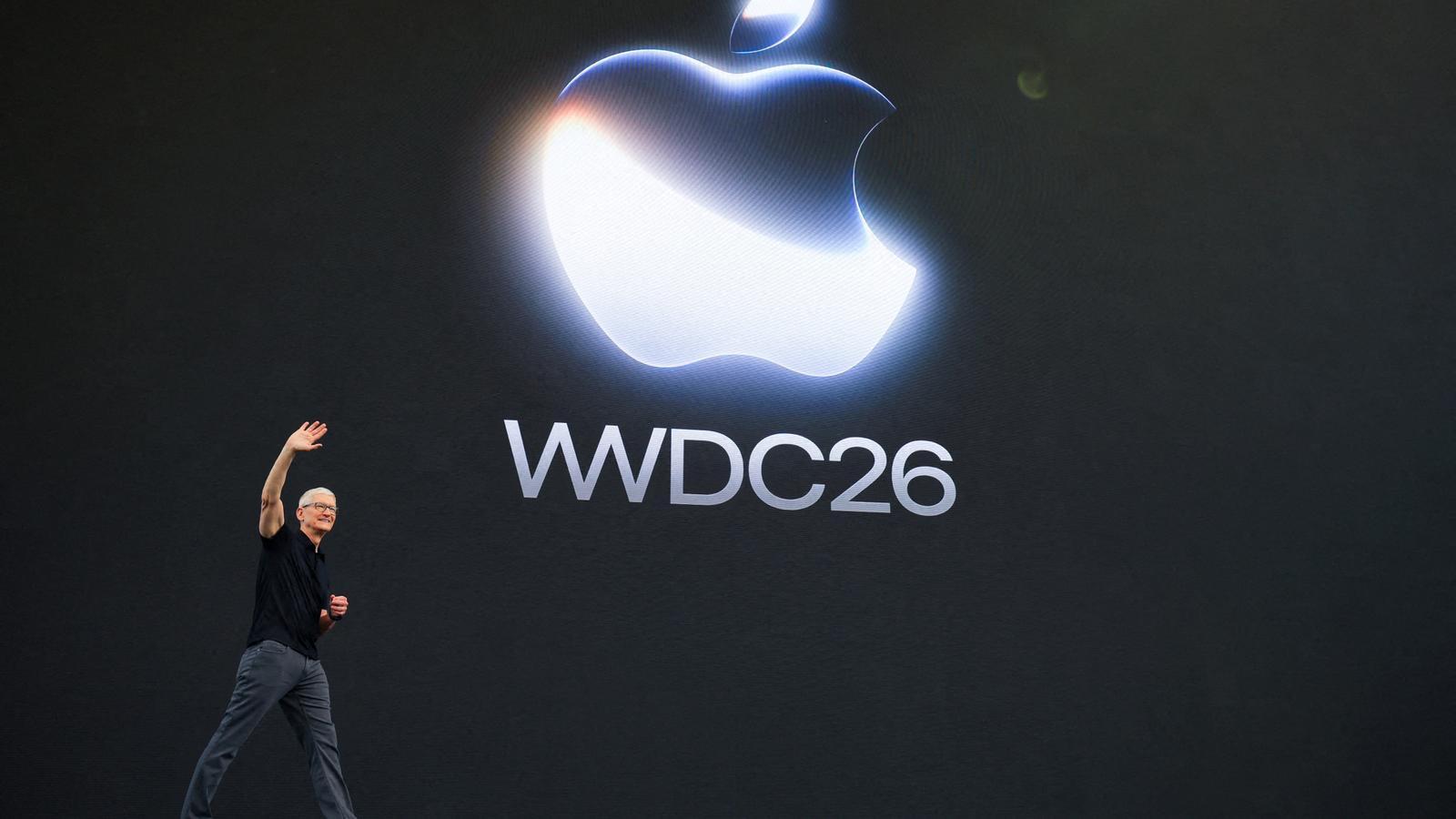
WWDC is Apple's annual conference for app and service creators. This year's edition closes the season of major tech conferences, right after those of Google and Microsoft. It is also the last one that Tim Cook presides as CEO: the inaugural session on Monday the 8th, pre-recorded, was preceded by Cook's exit to the stage, which the audience received standing with a long applause.
Apple has announced the renewal of its entire operating system family, which for the second time share numbering: iOS 27, iPadOS 27, macOS 27 Golden Gate, watchOS 27, tvOS 27 and visionOS 27. Preliminary versions are already available for developers; the final ones will arrive in the fall. iOS 27 maintains compatibility up to the iPhone 11 from 2019, while watchOS 27 represents the biggest cut in support in its history.
Parental controls: much ado about nothing
Apple dedicated a significant part of the session to parental controls. In the face of class-action lawsuits against Meta and Google for harm to minors, Apple has chosen to demonstrate responsibility. However, most of the announced features already existed or are minor novelties.
Basically, there are three. With "Ask to Browse," children will be able to ask for permission to visit websites blocked by family filters and to contact strangers; until now, the function only applied to downloading applications. This closes the loophole through which many children accessed Discord or TikTok through the web browser. "Communication Safety" will expand its filtering to sexual or violent content in messages and FaceTime video calls. Finally, the "Screen Time" limiter can be configured by categories (games, social networks, entertainment) and differentiating between weekdays and weekends.
Apple Intelligence: the invisible engine of everything
The Apple Foundation Models (AFM) are the architecture that powers Apple Intelligence, and Apple Intelligence is what powers almost everything presented at WWDC. It manifests implicitly in the daily use of applications: Photos suggests people; Messages proposes converting text into a reminder; Safari groups open tabs by topic. And explicitly when the user invokes Siri or opens writing tools.
Apple Intelligence also helps users without technical knowledge. Now you can create, by describing it in natural language, a shortcut that combines Maps, Messages, and location to notify home what time we will arrive when leaving work; or an extension for Safari that transforms the content of a web page. AFMs are also available for third-party applications, and here lies the relevance of presenting them at WWDC, which is a programmers' conference.
Siri reinvents itself
Siri is the visible face of Apple Intelligence and the one that carries the weight of the new bet. Siri AI is now an independent application that works without leaving the device, understands personal context thanks to Spotlight's semantic index, can read what we see on the screen and draft messages imitating our style. The demonstrations have shown useful cases: retrieving a friend's address mentioned in an old message, locating the title of a movie someone recommended by email, finding a reservation code while calling the airline, or monitoring a website and notifying when a course registration opens. Another new feature is the bulk management of weak or leaked passwords: the system can automatically change them by logging into each website on behalf of the user.
However, the demonstrations fell short when it came to chaining complex actions like completing a reservation or making a purchase, which are the operations that mark the difference between a useful assistant and an autonomous agent. Deep down, Siri's new app aims to win back users who have become addicted to conversational bots like ChatGPT, Claude, or Meta AI.
Three notable limitations
Apple Intelligence launches with restrictions to keep in mind. The first is hardware-related: the most powerful AI model requires at least 12 GB of RAM, meaning the standard iPhone 17 (with 8 GB) will rely on the cloud for advanced features. Locally, only the iPhone 17 Pro, iPhone Air, iPads with M4 chips and 12 GB or more, and Macs with M3 chips and 12 GB or more will be able to run it.
The second is geographical and affects our readers most directly: Siri AI will not be available on iPhones or iPads in the EU when iOS 27 and iPadOS 27 are released, due to a regulatory block related to the DMA that Apple claims it cannot resolve at the moment. Macs, Watches, and Vision Pros will receive it. Apple has published an unusually combative statement blaming the European Commission, which in turn has responded that the decision is Apple's and Apple's alone.
The third limitation is linguistic: Apple Intelligence initially works only in English. Catalan, like the rest of European languages, will be left out at launch, with no announced date for language expansion.
None of the presented features are technically groundbreaking: many have been available for years on other services. Nevertheless, Apple could end up winning the consumer AI game. The key is its strategic position: Siri AI will be integrated by default into the operating system of most Apple devices in circulation, without the user having to download anything or open any alternative application. No rival can match this level of access.
Instead of promoting the consumption of algorithms and text segments like the big players in generative AI do, Apple is valuing its installed base. Until now, these 2.5 billion devices have been a huge distribution channel for applications and services. From now on, if Siri AI works as promised, they could become the preferred gateway to generative AI for hundreds of millions of consumers who have never opened ChatGPT or Gemini. This fall, we will see if Apple succeeds.
