Time for terraces, from Paris to Barcelona
-
CAT -
CAST
BarcelonaWhen Sergi arrived, it started to rain. He strategically positioned himself at one of the small round tables and ordered a coffee. It's spring. It rains and it's sunny, and it's as hot as it is cold, but here, leaning against the wall under the awning, Sergi is having a blast, watching the world go by right in front of him. Like a movie. Now it's raining hard and a boy walks quickly, covering his head with his backpack; a stylish couple, with matching trench coats, advance slowly under a black umbrella, a bulldog watches Sergi while a huge drool hangs from its mouth, and a girl in flip-flops types on her phone. Today he'll have a spill.
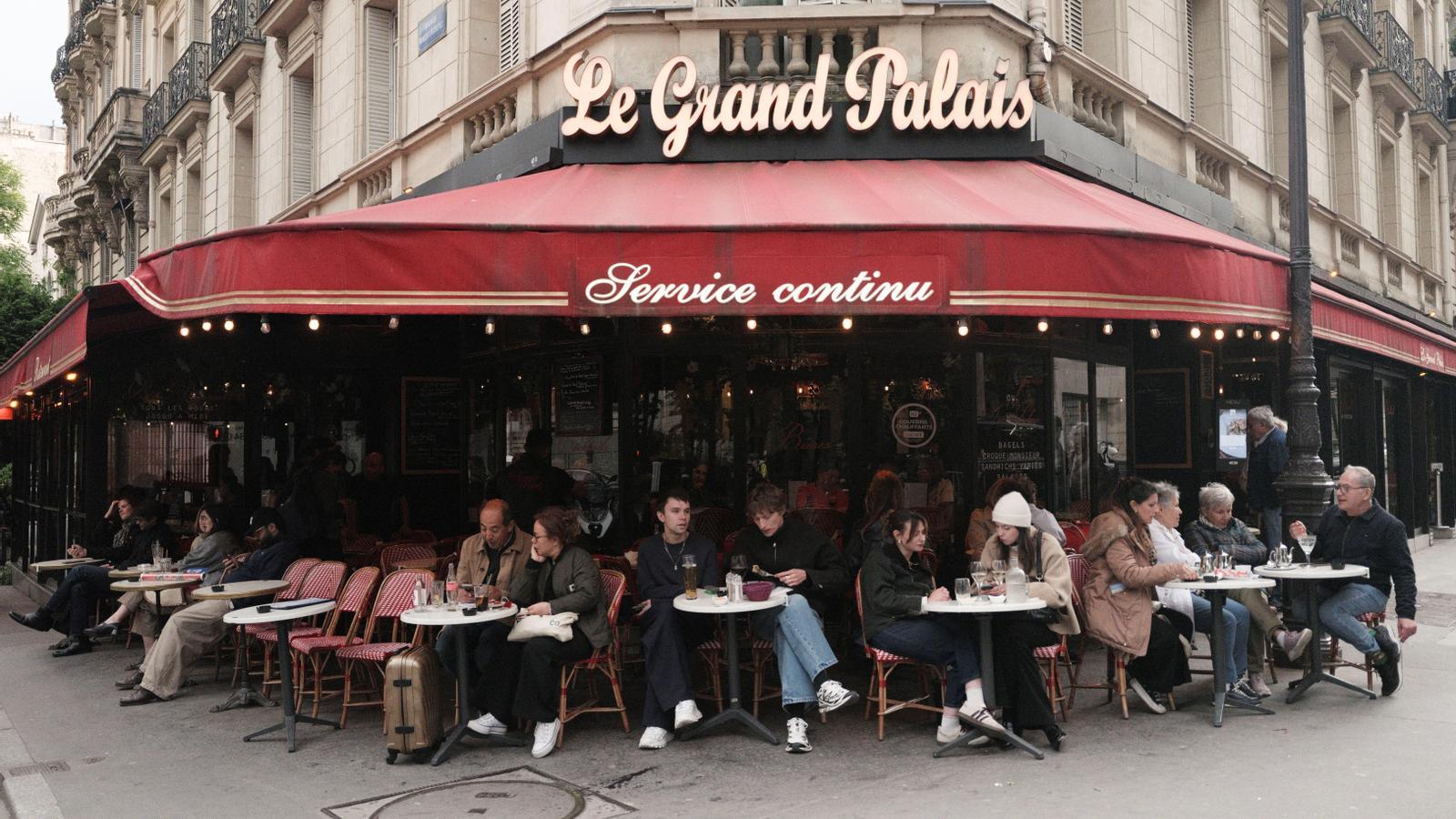
In cities like Paris, tradition dictates that tables are sheltered under awnings, attached to the stone, creating that iconic image of the European café where the customer, protected, looks out at the street like someone watching a parade from a box seat. It's a design full of logic: the waiter takes two steps from the bar, without obstacles, and the customer feels welcomed by the architecture.
But, how do those who can't see manage in these places? Far from being a puzzle, these cities have learned to mark the way without moving any tables. In Paris, for example, they use carpets or small plinths at the base of the terraces; this creates a kind of invisible but real barrier that the cane detects immediately. In London, on the other hand, it's the floor itself that "speaks": tiles with raised dots or stripes guide the person through a safe passage. This way, those who can't see maintain their autonomy and the city doesn't have to give up the charm of the traditional terraces.
Barcelona, however, wanted to go further and changed radically. Here, the terrace has been separated from the facade to be installed next to the sidewalk. It's a model where pedestrians regain the pleasure of walking along shops and doorways without encountering any obstacles in their way. It's the most direct way to ensure that the wall is a clean and surprise-free guide. Of course, the price is high: the waiter has to become an acrobat who crosses people's path with the tray held high, and the customer sits a little more exposed to noise and traffic.
After all, walking through a city is an exercise in coexistence. While some cities rely on tactile signage and floor relief to keep tables under the awning, others prefer to move the obstacle to ensure that no one, no matter how much darkness deprives them of sight, ever has to doubt.
It is certainly bold to say that the stability of a city depends on details like these, which are aesthetic and also orderly. The psychology of space – or as many will better understand it, feng shui– studies how the environment affects our emotions and our behavior. Perhaps a more sheltered city would be an emotionally more stable city, or perhaps this discomfort is good and makes Barcelona more active and unconventional. Who knows...
Just as Sergi arrived, it stopped raining and the sun came out. Spring is like that. The chairs and tables are a little damp. The waiter, in good spirits, dodges, once again, tray in hand, the passers-by who are going about their business. My goodness, how good it is to be here in the middle next to the cars, thinks Sergi, you see the world go by everywhere, surprise after surprise.
