'Mail clubs': the trend that revives postal correspondence among the youngest
In a context marked by digital saturation, this format recovers the tangible experience of postal mail, connecting artists with users through a monthly subscription model
-
CAT -
CAST
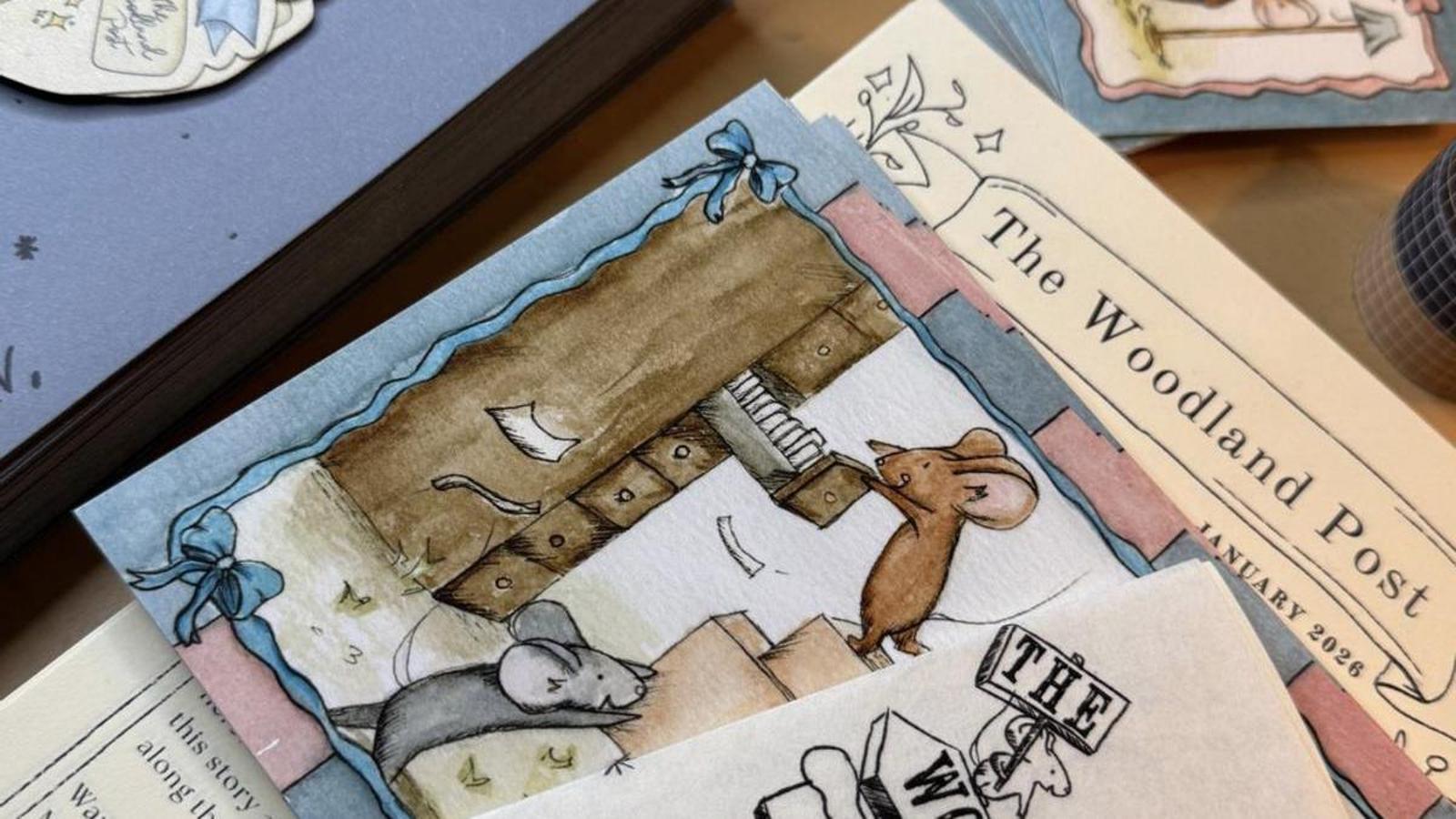
It is an ordinary spring day. Someone, from their home, is preparing a letter. The envelope also contains a series of illustrations. The ritual is repeated, a gesture that transports us to a past century, when algorithms did not yet exist. The one writing could be Mercè Rodoreda; the one receiving the letter, Joan Sales. But we are not in 1960 nor facing a classic literary correspondence, but rather a trend that emerged on social networks, called mail club, which points to a timid return of postal mail in a scenario of digital saturation and the search for analog alternatives.Through a model we already know, that of the monthly subscription, artists and illustrators from all over the world send letters, stickers, illustrations, photographs, or recipes to a group of subscribers. "Receiving a well-cared-for and beautiful letter in your mailbox every month, in a world saturated with information and mediated by screens, seems like a stroke of luck to me," explains Lorena, a young woman who is subscribed to two mail clubs different, Bunny Mail Club and La Mamarrracha. "I believe that, in addition, it is a way to support artists, because their work is often lost in the immensity of content distributed on social networks," she reflects.A new way to connect
While other digital trends are born and stay in the online universe, the mail club, on the other hand, has managed to make the leap to the offline world, and has gained special strength among generations like Z. “We need community in all areas, and this component is especially important for generations like Z. In Spain, 35% of young people between 18 and 24 years old feel lonely; we have a very significant situation of unwanted loneliness. Initiatives like mail clubs can contribute to creating community and connecting with objects in another way,” reflects Liliana Arroyo Moliner, director of the SoReDI (Chair for Socially Responsible Digital Innovation) at Esade.The phenomenon, which has been operating in the United States for a couple of years through crowdfunding platforms like Patreon, has found its niche in Catalonia thanks to profiles like communicator Berta Aroca or illustrator Irina Torres Conejero, creator of Bon Profit Club, who prepares a surprise content each month, often related to a time of year like Valentine's Day, Christmas, or seasons like spring.“I always include a letter written and signed by me, a sheet of A5 cotton paper, and some small details like a sticker, a postcard, a template for journaling, and other surprises”, explains Irina, who started this project in November 2025 and already has over forty subscribers. As with most of these mailings, her letter is much more than a simple piece of paper: “You don’t just open and read the letter, but you also decide what to do with the materials I send”.Unlike a newsletter, which can go unnoticed among countless emails, a paper letter fills a space and accompanies us. “It can be smelled, framed, and can live in a drawer, in the fridge, on a wall, or in furniture. Besides being more subtle and erotic, it is tangible, and we are short on experiences that involve the use of hands, and not just eyes and ears,” explains Bea Salas, psychologist, illustrator, and creativity teacher.Following this line, the artist Laura García, from León, created in June 2024 Garlic Yaya Club, a monthly mail club that combines unpublished recipes, letters, and various artistic objects designed by herself. “I wanted to create something physical that people could touch, collect, and enjoy beyond the screen.” In Laura's case, each edition revolves around a theme and a recipe that inspires her: “When I discovered the format, I realized it had to be about cooking. It was something I hadn't seen before, so I decided that Garlic Yaya Club would have its own recipes to convey my passion for home cooking, slow processes, and carefully made things,” explains this entrepreneur, co-owner of Antisouvenir®, a bookstore specializing in independent publications that she runs with her partner.This slowness, in contrast with the immediate gratification of algorithms, seems to be the key to these postal deliveries. Even though in 2011, with the creation of the first social networks, users acted as true "internet inhabitants", today networks have become a publicity showcase, both of ourselves and of all kinds of products, as Marta G. Franco explains in the book Les xarxes són nostres. Una història popular d’internet i un mapa per tornar a habitar-la, published in Spanish by the editorial Consonni. We scroll without looking, we accumulate links that we never open and, amidst so much digital chaos, we all seek the feeling of belonging to something more real, especially at a time marked by the generation of images with artificial intelligence.“Faced with empires like ChatGPT, Spotify, Google, Amazon, and Apple, phenomena naturally emerge in the opposite direction, in this case, spaces that protect and celebrate our humanity: handmade art, dedicated communication, the use of senses, and face-to-face interaction. Mail clubs seem to be a response to a real need to express ourselves, communicate, and belong without major intermediaries,” explains Salas. mail clubs seem to be a response to a real need to express ourselves, communicate, and belong without major intermediaries,” explains Salas. The value of physical experience
In fact, for Generation Z, the internet is a central element in their daily lives and also their main leisure activity: 90% spend two or more hours a day online, according to the 2023 Youth Survey, collected in the 2024 Report on Youth in Spain. the 2024 Report on Youth in Spain. "I don't know if this model will last as is, but it does respond to a deep need that will probably remain: generations that have grown up with digital find more value in non-virtuality and in what is tangible," confirms Arroyo.Marina, who was subscribed for two months to a mail club from the United States, confirms this theory that we have already seen in trends like Sonny Angels: “I was very excited about opening the letter, not knowing exactly what was coming, discovering the postcards and stickers; more than the letter, it was the whole package that surrounded it. However –she explains–, being in another language, I didn't end up feeling part of the community”.This is not the case for Irina and Laura. They do maintain direct communication with their subscribers: “I always encourage them to write to me whenever they want, even by letter, because I love getting to know them. In fact, I always send a personalized welcome email, encouraging them to tell me who they are, what they like, and what motivates them to cook,” says the creator of Garlic Yaya Club, who, despite not being able to live solely off this format, sees it as a viable alternative. “I always ask in the letter how they are, and I receive quite a few messages replying to me on Instagram, and that’s really cool because I do feel that a different bond is created,” says Irina.Like any trend born on social media, mail clubs cannot be disconnected from their digital component, nor can they foresee the behavior of some users, who will probably limit themselves to photographing the content and posting it on their social networks. Nevertheless, artisanal work and analog creation exist beyond these subscriptions. The format only shows us that, faced with a lack of intimacy and connection, "human beings are more intelligent and creative, and look for ways like these to recover what they miss: connection, contact, and a shared experience," reflects psychologist and illustrator Bea Salas.
