Save world linguistic diversity: the global challenge born in Catalonia
The CIEMEN and PEN Catalan relaunch the Universal Declaration of Linguistic Rights: "If there are no linguistic rights, human rights are devalued"

-
CAT -
CAST
BarcelonaThe linguistic emergency is not solely a Catalan concern. According to the UN, a language disappears worldwide every two weeks, and 40% of the world's population does not have access to education in their own language. In this context, an initiative is being promoted from Catalonia that aims to contribute to saving linguistic diversity and protecting linguistic rights. CIEMEN and PEN Català have relaunched a new Universal Declaration of Linguistic Rights that will update the one presented to UNESCO 30 years ago. The objective is to take advantage of the window of opportunity that opens with the commemoration of the 80th anniversary of the Universal Declaration of Human Rights in 2028.

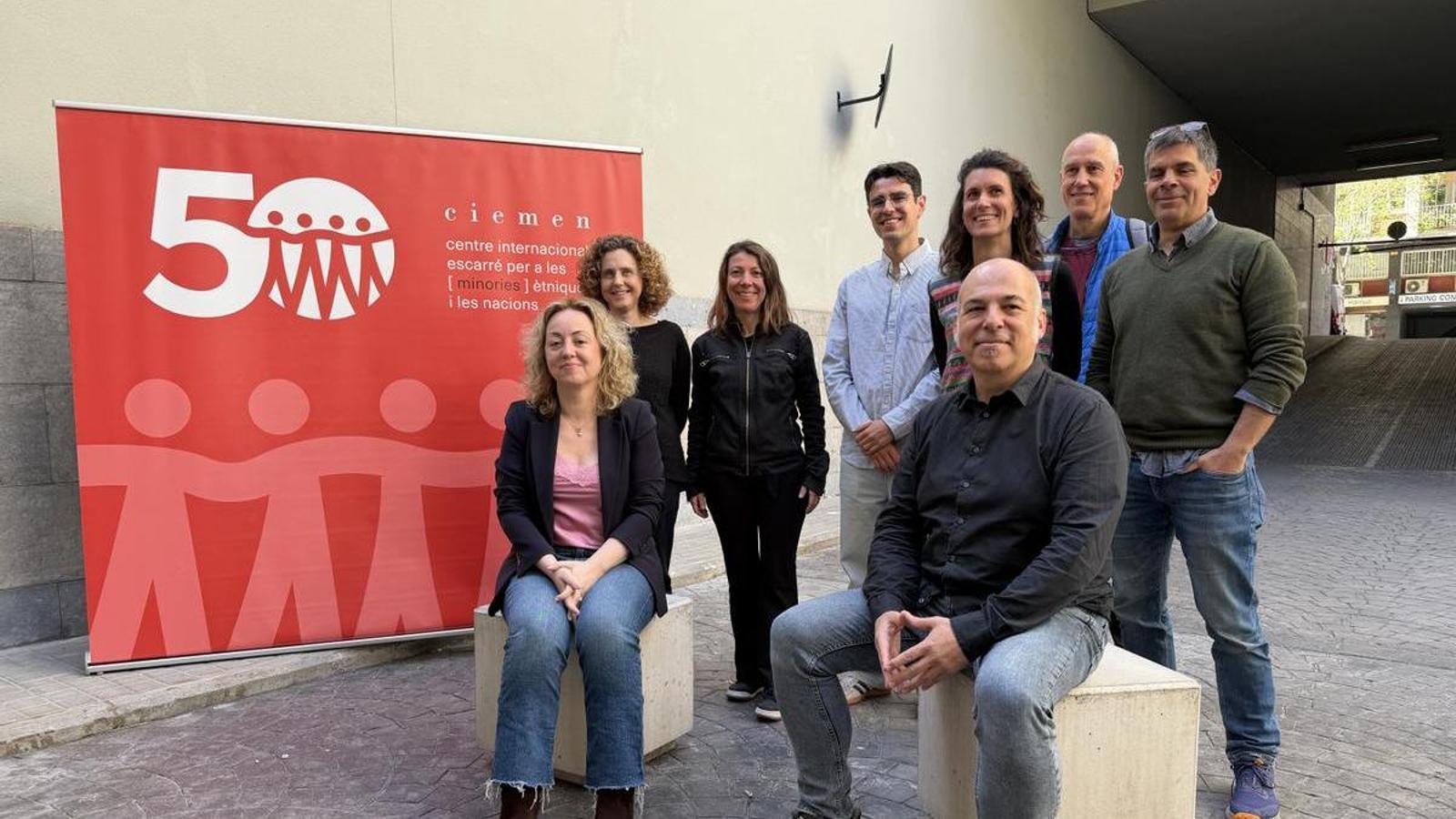
"In the legal architecture of human rights, there is no international normative corpus that can defend linguistic diversity, and there are languages that are losing their structure. Their speakers and their use must be protected," says David Minoves, president of CIEMEN (the International Escarré Centre for Ethnic and National Minorities). Catalan civil and academic society already promoted thirty years ago the Universal Declaration of Linguistic Rights, a consensual document of international scope that was presented to Unesco but which the UN did not accept as legally binding, although it has been used as a roadmap for the protection of linguistic communities. The new declaration aspires to achieve the goal that was not achieved then, which is for the United Nations to "create mechanisms for the protection of linguistic rights and assimilate them to human rights," explains Vicenta Tasa, a member of PEN Català, professor of constitutional law and director of the Chair of Linguistic Rights at the University of Valencia.
Migrations, the digital revolution, and globalization have affected all non-hegemonic languages, including those with the political protection of a state. In some cases, like Catalan, linguistic discrimination is worsening the marginalization, even in the territory where they are natural. The declaration, however, does not focus on specific cases, but must be valid for all linguistic communities, such as migrant communities. "It is a universal contribution that we make from the Catalan Countries," points out Minoves.
The declaration will be drawn up with contributions from entities and experts from around the world through a specific website. In March 2027, the declaration will be signed, it will be debated at a congress in the autumn, and it will be presented to the UN in 2028, after a prior task of cultural diplomacy. "We want to go to the Human Rights Council with the work done so that it assimilates linguistic rights to human rights, because without their prior recognition it is not possible to exercise rights such as full freedom of expression, political and cultural participation, the right to education, to health, and to a fair trial. If there are no linguistic rights, human rights are devalued as a whole," states Tasa, coordinator of the book The right to language (Raig Verd). "We are not starting from scratch. We are optimistic," say the initiators.
In a time of devaluation of international political institutions, CIEMEN and PEN continue to trust the United Nations protection system. They believe that the expansion of the linguistic crisis and the existence of many more language entities than in 1997 (in the pre-internet era, 60 people and organizations signed the declaration) will serve to put pressure on the United Nations and to counteract the reluctance of states and companies. "Rights are conquered from civil society. The protection of linguistic rights will not fall from the sky," says Minoves. In the Catalan Countries, about fifteen language entities already support the declaration.
