The ultra De la Espriella wins the elections in Colombia by a narrow margin
Only 250,000 votes have separated the winner from his main rival, the left-wing candidate Iván Cepeda
-
CAT -
CAST
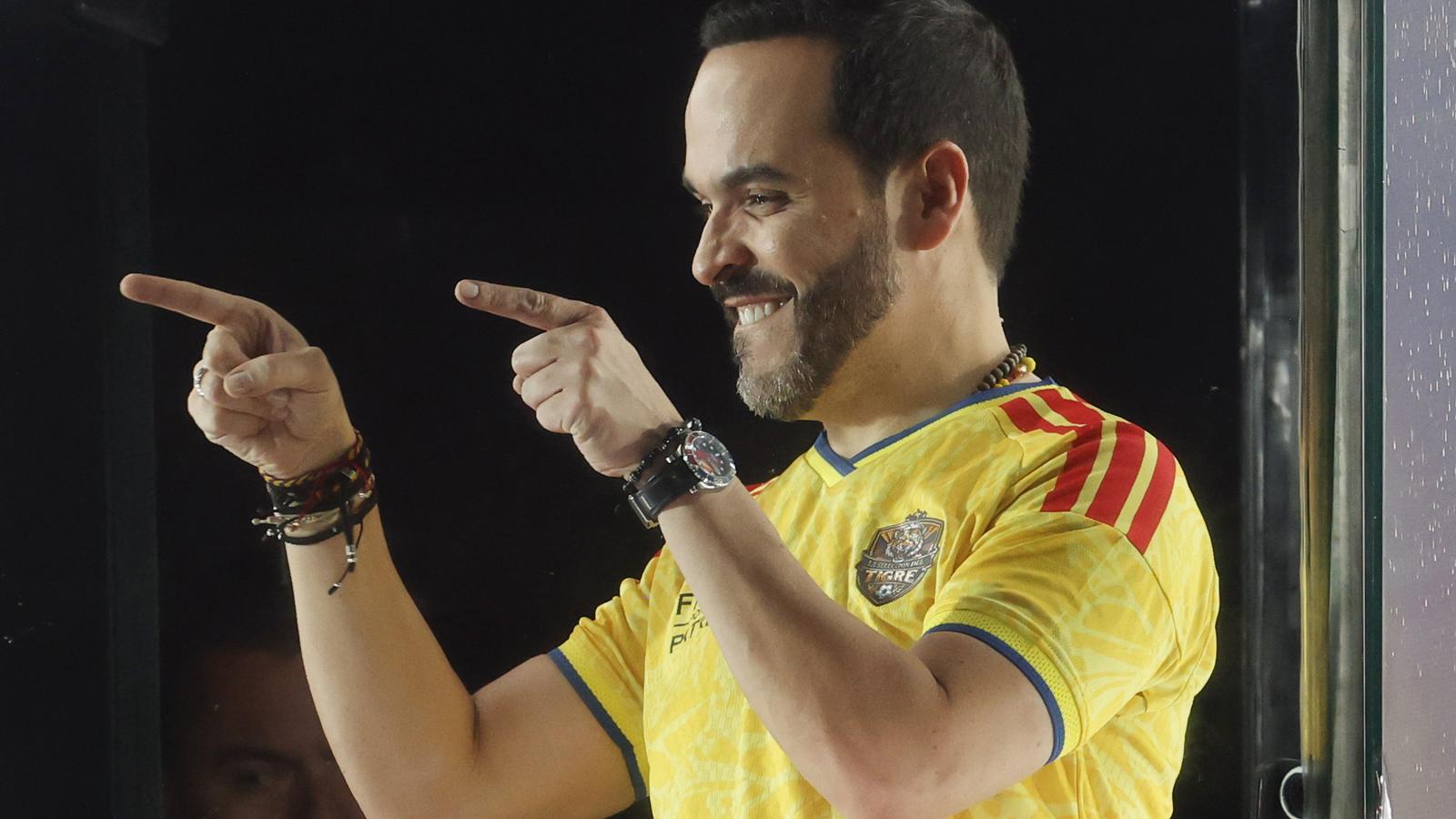
BarcelonaOnly 250,000 votes separated the winner, Abelardo de la Espriella, from his main rival, the left-wing candidate Iván Cepeda, in the second round of the presidential elections held this Sunday in Colombia. De la Espriella, a controversial criminal lawyer who favors following the ultra policies of countries like El Salvador or Argentina, will be the new Colombian president, confirming the radical shift that, election after election, is being shaped in Latin America.
However, the narrow margin of victory (49.6% of the votes to Cepeda's 48.7%) anticipates uncertain days in the country, as the results are not yet official and the final count, which may still take time to arrive, will have to be awaited. The officialist candidate, Iván Cepeda, acknowledged De la Espriella's victory this Sunday, but at the same time stated that it will be necessary to wait and that Sunday's figures "are not binding." President Petro himself, who supported Cepeda, asked for "calm" from the citizens and stated that "no one can proclaim themselves president."
De la Espriella, however, addressed the Colombian citizenry through a video in which he appealed for national unity, while also claiming scrupulous respect for the will expressed at the polls by the more than 13 million voters who supported him. Later, he conveyed a message of calm to Cepeda's followers and assured that their rights and freedoms would be guaranteed. "No one will have to feel threatened for having a different opinion. My intention is to earn everyone's trust with actions and results, not with words," he said, taking for granted that he will be the new president of Colombia.
Cepeda also appeared before his supporters after the results were known. The left-wing candidate claimed the strength of his movement: "We represent an unquestionable political reality in Colombia." While calling for calm as the count continued, he encouraged his followers to remain mobilized in the face of a future right-wing government: "We will assert the strength of democracy so that the social advances we have managed to build are not dismantled."
Later, in a statement to the press, the left-wing candidate announced that his electoral surveillance team has filed 57,189 complaints with the electoral authorities. "With all calmness, with all rigor and in strict respect of the Constitution's law, we are appealing to what the law empowers us to do," he declared. Cepeda reiterated that he will recognize the election results once they are final, but he wanted to make it clear to his rival that he will not be intimidated: "We are a very large political movement. We have defeated many authoritarian governments and many violent politicians. Neither their roars nor their shouts frighten us.
Record participation
This second round of Colombian elections has had a record turnout of 63.59%: more than 26.3 million people went to vote. The far-right candidate took 12.9 million ballots, according to preliminary figures. In fact, the sum of null and unmarked votes equals 0.94%, which is almost the difference between the votes obtained by De la Espriella and the votes obtained by Cepeda.
Historically, in Colombia, electoral participation is between 50% and 55%, which is why these elections mark an important milestone in the country.
De la Espriella, 47, joins the ever-increasing number of far-right leaders in America. A declared admirer of Donald Trump, Javier Milei, and Nayib Bukele, he presents himself as a political "outsider", a strong and transgressive man, backed by his success as a young entrepreneur who built his fortune with businesses selling clothing, whisky, and precious stones in the United States, eventually forming a conglomerate of companies in the real estate, food, and livestock sectors. All this before becoming a media lawyer. Among other clients, he had defended drug traffickers in Miami, or Alex Saab, the Venezuelan extradited to the United States accused of being Nicolás Maduro's frontman, and Colombians linked to paramilitarism or accused of corruption. He has also defended communities affected by the environmental impact of the Cerro Matoso nickel mine.
Among the international reactions, indeed, the one from the United States Secretary of State, Marco Rubio, stood out, which further consolidated his support for a candidate to whom Donald Trump had expressed his "total support" up to three times in recent weeks. "The Trump administration looks forward to working closely with your future government to strengthen regional security cooperation, curb illegal immigration to the United States, and strengthen economic ties between both countries. Better times await Colombia," he wrote on X. The Colombian elections were also marked by Bogotá's relationship with Washington, after Gustavo Petro's government experienced moments of genuine tension with the Trump administration, which had more than once threatened to carry out an operation similar to the one in Venezuela against Colombia.
