Ukrainian attacks on refineries erode Russians' trust in Vladimir Putin
With between 16 and 24 centers affected, Russia faces the worst refining crisis since the nineties

-
CAT -
CAST
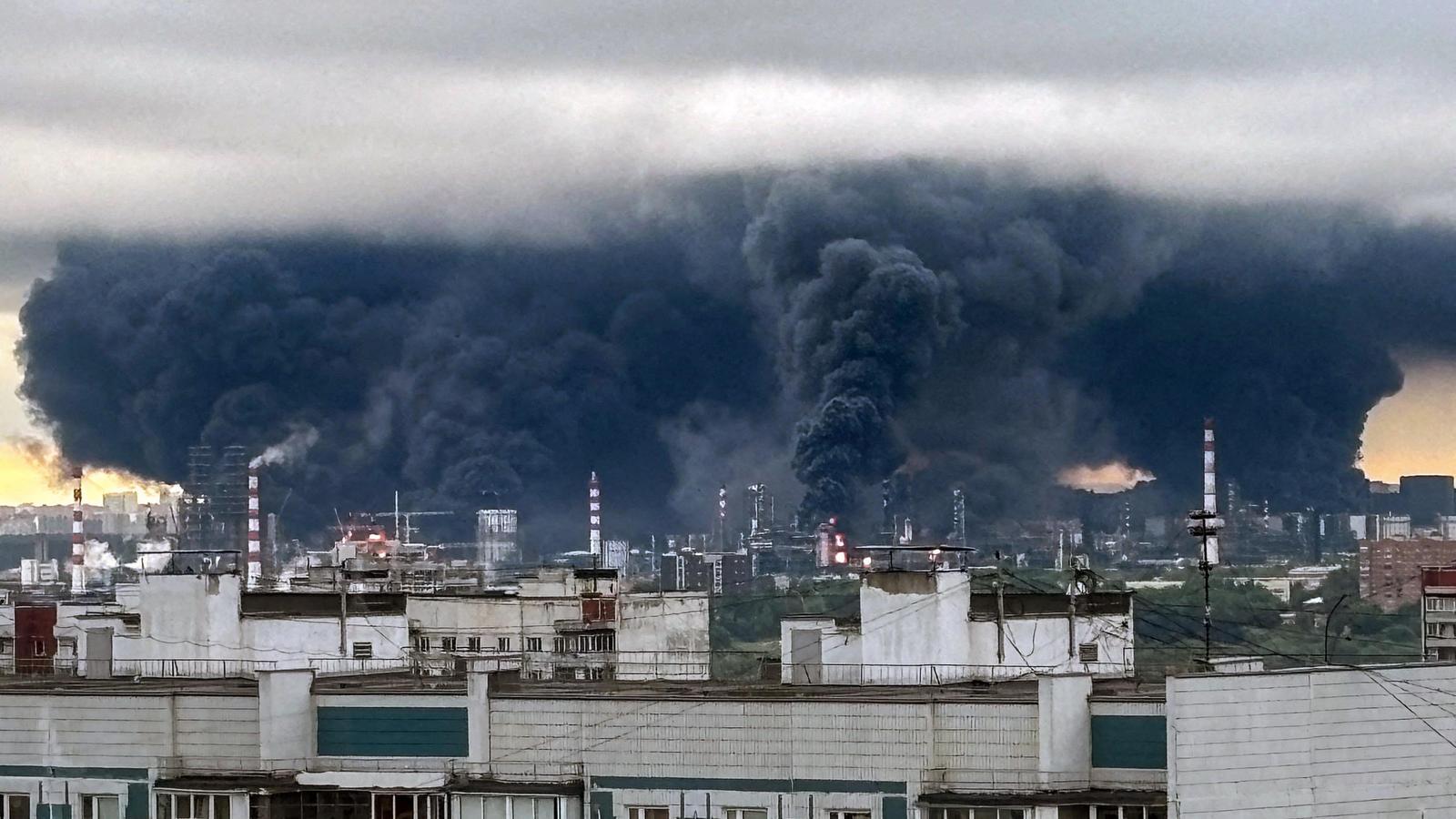
LondonThe fuel crisis shaking Russia can be seen circulating through Moscow: at many gas stations there are queues of cars and trucks. Some longer than others; some stopped, others advancing regularly. What is happening? Is anything really happening? Ukrainian attacks against Russian refineries have become one of the newest – and until recently less visible – dimensions of the recent months of the war in Ukraine. Since 2022, and especially during this year, Kyiv has systematically hit Russian refining infrastructure. The goal is to weaken one of the main material bases of the Kremlin's war effort.
According to various independent counts, a very significant part of the large Russian refineries have been the target of drone attacks: depending on the sources and years, the figure ranges between 16 and 24. The result is a temporary reduction in refining capacity, with disruptions that have forced Moscow to resort to strategic reserves, limit fuel exports, and reorganize its logistics networks. Between 25% and a third of this refining capacity has been affected. It is the worst crisis since the collapse of the former Soviet Union in the nineties.
Russian authorities have partially admitted the impact, but with euphemistic language. Vladimir Putin, for example, has publicly stated that the bombings are causing "problems", while assuring that the situation "is not critical". Authorities have begun to take emergency measures, such as increasing fuel imports from Asia, according to the Reuters agency, subsidizing prices and allowing the sale of lower-quality fuels, with the risk that they may affect engines.
The Russian Ministry of Energy has spoken of "temporary interruptions" in plants such as those in Ryazan, Tuapse, or Nizhnekamsk, while major oil companies have attributed the stoppages to "technological incidents" or "scheduled maintenance work".
Fuel transport by rail
However, regional reports and independent sources indicate that the attacks have caused real damage, production reductions, and supply problems in various areas of the country. Russian media opposed to the Kremlin such as Meduza, The Insider, Mediazona, and Novaya Gazeta have documented the effects of this campaign. Their investigations point to damage in facilities such as those in Ryazan, Tuapse, Slavyansk-on-Kuban, Yaroslavl, Ufa, and Nizhnekamsk, as well as tensions in the internal distribution of fuels. The Russian railway network has had to assume a growing share of the transport of fuel from distant producing regions, such as Siberia, towards the areas closest to the war front.

The list of targets has been progressively expanded as the technology of Ukrainian drones has evolved. And the attacks have extended into Russian territory. One of the most significant cases, which took place last Monday, is the Omsk refinery, of Gazprom, located in Western Siberia and one of the largest in the country. The symbolic importance of this attack is high because it is about 2,500 kilometers from the Ukrainian border and shows the growing reach of Kyiv's drones.

The military dimension of this strategy is central. Modern warfare depends on refined fuel: diesel for armored vehicles, kerosene for aviation, and special fuels for missiles and drones. When a plant like Nijnekamsk, Ufa, or Omsk suffers serious damage, the impact is not just industrial: it affects the capacity to transport troops, maintain mechanized operations, and sustain air activity. Furthermore, Russia continues to depend partially on Western technology to repair certain advanced refining equipment, which can prolong the effects of Ukrainian attacks.
The logistical dimension is particularly visible in southern Russia. Refineries in Krasnodar Krai, such as Tuapse, Slavyansk-na-Kubani, Afipski, and Ilski, play an important role in supplying Crimea, which already suffers from shortages, and the Russian forces deployed on the southern front. Attacks on these facilities have increased pressure on alternative supply routes, including the Kerch Bridge – which connects Russian territory with the illegally annexed peninsula of Crimea–, which has become a critical element of Russian logistics.
Human and political dimension
The production of military kerosene is concentrated in a limited number of plants, and attacks against facilities such as those in Moscow, Yaroslavl, or Ufa have forced Russia to redistribute reserves. Independent sources have indicated that, at certain times, fuel availability has conditioned the pace of some Russian air operations, although the Kremlin has not publicly admitted it.
Beyond the military effect, the refinery attack campaign has a human dimension, as Russia has turned directly against Ukrainian civilian targets, especially in Kyiv, which has been heavily hit in recent weeks.
On the other hand, from the perspective of Russian internal politics, Kyiv's strikes have broken the Kremlin's narrative that the war was a distant and controlled conflict. The vulnerability of industrial centers located in the heart of Russia has forced regional authorities to request more air defense and has introduced the feeling that the war can also affect daily life within the country.
This crisis is beginning to have an impact on public perception of the government. According to the independent Levada center, support for Putin has dropped to around 74%, while the percentage of Russians who believe the country is moving in the right direction has fallen from 61% to 52% since May. Other polls point to growing economic pessimism: Gallup indicates that 60% of Russians consider the economic situation in their environment to be worsening. And the state center VCIOM, the oldest demographic institution in post-Soviet Russia and one of the country's leading companies in sociological and market research, registers a drop of 3.4% in confidence in Putin in just one week.
