Trump leaves China with announcements of "fantastic deals" but without concrete results
Xi remains silent on the war in Iran as Trump assures they think "very similar things"
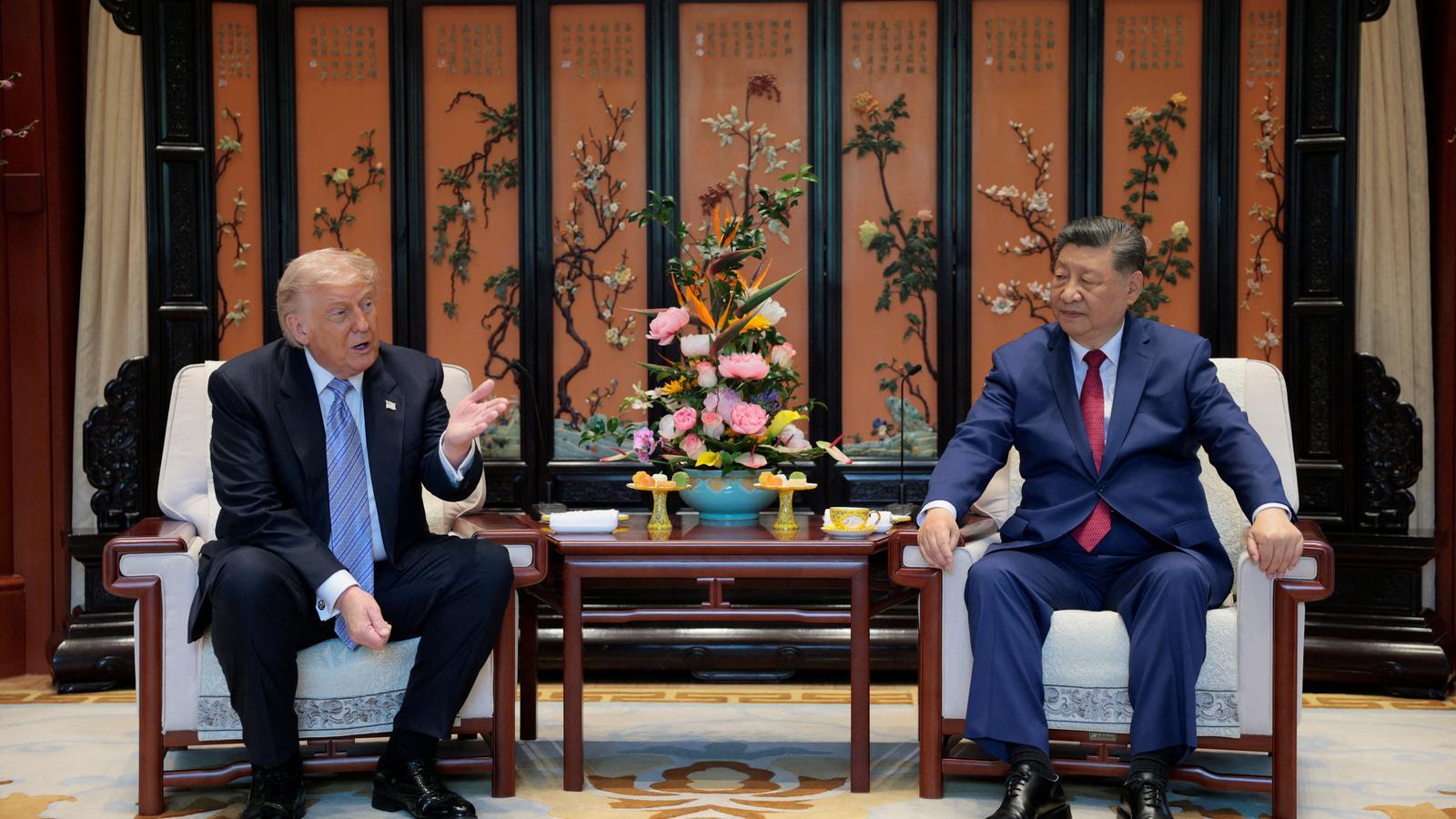

BeijingDonald Trump said goodbye this Friday to China and Xi Jinping with apparent satisfaction and grandiloquent words, but with few concrete announcements. Both leaders wanted to highlight the visit as "historic" and assured that it lays the groundwork for stabilizing relations and increasing cooperation between the two main world powers. But, despite the good chemistry, no concrete agreement has been announced and "differences or ambiguities on issues such as Taiwan" and Iran have been evidenced.
In a statement, China highlighted the importance of the visit and that Xi Jinping values having reached "a new positioning for a constructive and stable strategic relationship". Xi also said that both countries should now implement the "important consensus" they have achieved.
For Trump, obtaining economic results was a priority. "We have closed some fantastic trade deals, good for both countries," said the President of the United States, sitting next to his Chinese counterpart. For now, the agreements reached have not been officially made public, but Trump has advanced some details in an interview with Fox. He explained, for example, that China has agreed to buy 200 aircraft from the American company Boeing. The figure, however, is much lower than what was being discussed, 500 aircraft, which has caused a drop in the company's shares. China is also expected to increase its purchases of agricultural products and oil from the United States.
One of the keys will be to know if Trump and Xi have closed any agreement regarding the tariff war, now in a truce since October, when the two leaders agreed to suspend tariffs, which had reached three digits.

Xi's silence on Iran
The war in the Middle East was one of the main topics that loomed over the official trip. In fact, Trump had to postpone it, as it was initially scheduled for early April. And the meeting has made it clear that Beijing and Washington have slightly different versions. Trump maintains that the United States and China "think very similarly" about how to end the war. According to the Republican, the two countries want the Strait of Hormuz to be reopened and Iran to not have nuclear weapons. The Chinese version is more nuanced and President Xi has not commented on the matter.
It was the Ministry of Foreign Affairs that, via a statement, limited itself to maintaining China's initial stance of demanding the opening of the strait and keeping the “door to dialogue” open. The text also states that "this conflict, which should never have happened, has no reason to continue." China considers the war to be “illegitimate” and has opposed sanctions against Iran. It is not known what kind of pressure Beijing can exert on Tehran, although the United States has asked them not to finance the regime by buying oil and not to supply it with weaponry.
It was surprising that no progress has been made in artificial intelligence, where the two countries compete and at the same time need to establish rules of collaboration. Only Treasury Secretary Scott Bessent explained on Thursday that conversations will take place in the future. The goal is to establish protocols that prevent the most powerful AI models from evading state control.
Trump content with the press
China has kept the red carpet until the last moment of Donald Trump's visit and has seen him off at the foot of the runway with a military parade and students waving flags. Foreign Minister Wang Yi accompanied him.
The last day of Donald Trump's state visit to China concluded with a meeting in Zhongnanhai, the seat of the Chinese government, and the most protected place in Beijing, as it is where all high-ranking officials live and work. It is separated from the Forbidden City by a lake, and in ancient times it belonged to the imperial precinct, which is why it is popularly known as “the red forbidden city”. Xi Jinping walked with Donald Trump through the gardens to admire the ancient trees and rose bushes. In response to Trump's praise for the roses, Xi offered to send some seeds as a gift to the White House. After the relaxed atmosphere, the two leaders had tea and a working lunch. The meeting in Zhongnanhai is a deference to Trump, as few leaders are invited to enter the precinct. The meetings and gala dinners take place in the Great Hall of the People.
Trump began the day with a positive message on his social media platform Truth, in which he wrote: “I hope our relationship with China is stronger and better than ever!”. The US president has not tired of showing optimism throughout the trip, and on Friday morning he described the trip as “incredible” and stated that it “has brought many good things”.
The US president has shown the deference while in China of not publicly answering questions from the accompanying journalists. And it is a relevant deference because Xi Jinping does not speak with journalists and does not hold press conferences.
For example, despite being asked, he has said nothing about Xi Jinping's warning that supporting Taiwan's independence would provoke a conflict. For the moment, it has been Secretary of State Marco Rubio who has told the US media that "the United States' policy on the issue of Taiwan has not changed." It remains to be seen whether in the United States it will be clarified how far Xi's pressures have gone and whether they have managed to freeze arms sales to Taiwan.
Following the summit with Donald Trump, Beijing's entire administrative apparatus is preparing to receive the next guest: Vladimir Putin. The Russian president will make a one-day visit next Wednesday.

