'Top Gun', Nintendo and SpongeBob: the White House shows the Iran war as a video game
The Trump administration imposes a narrative of informational and humorous saturation on social networks to divert public debate about the war

-
CAT -
CAST
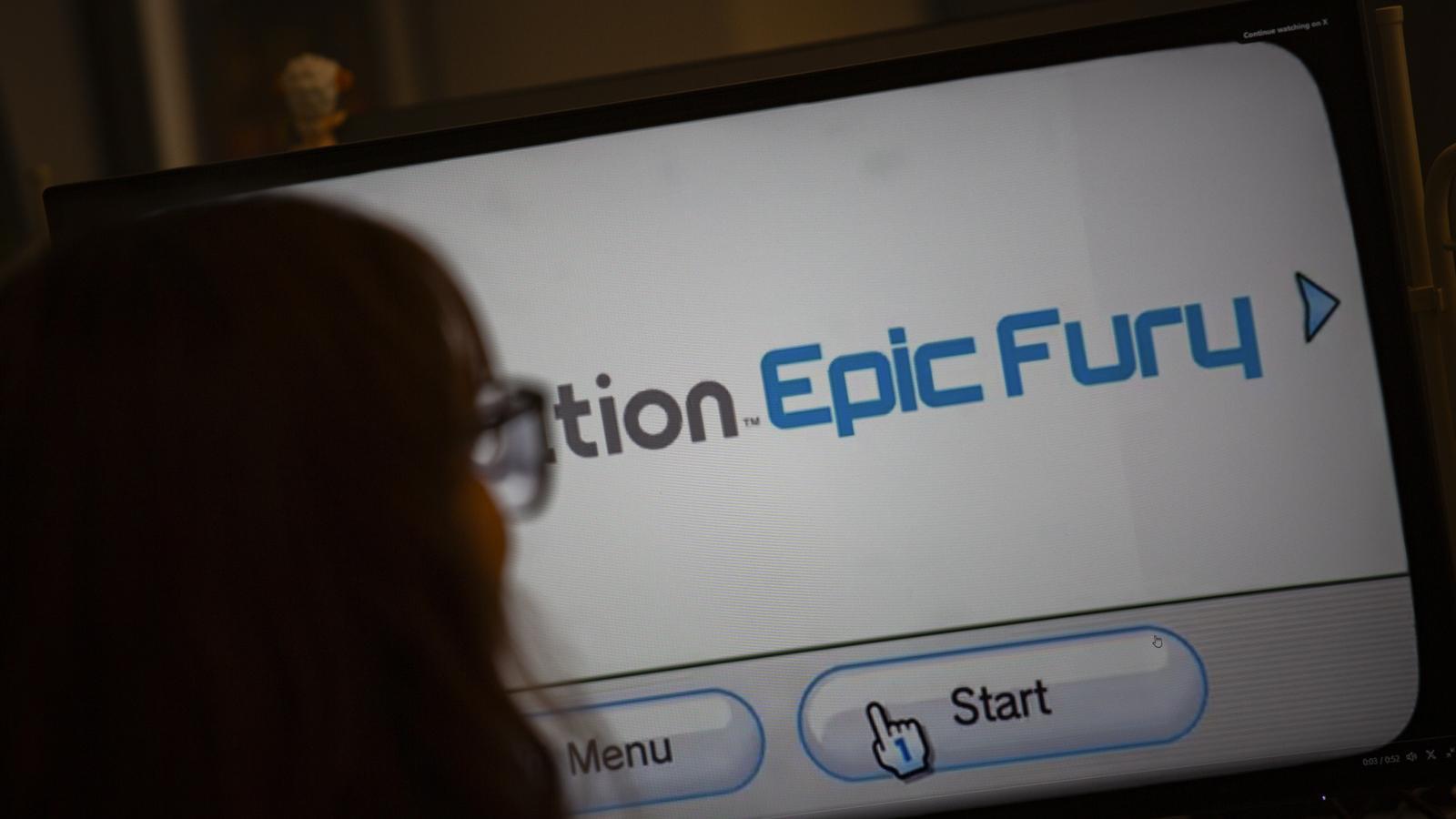
Barcelona"There is method in his madness," says Polonius, the king's advisor, referring to Hamlet. In Shakespeare's play, Hamlet pretends to be mad. But he only pretends to be so to gain time and prepare revenge against his father's murderer. With this metaphor, Christopher Tulloch, a professor of communication at Pompeu Fabra University, defines Donald Trump's communication strategy, also with the Iran war. In recent weeks, the official White House account has shared several videos on social media referring to video games like Call of Duty or Nintendo's Wii Sports. And with clips from movies like Braveheart, Superman or Top Gun. Frenetic scenes mixed with declassified images of attacks on Iranian facilities.
It is presented with meme aesthetics: in one video, a puppet hits a baseball with a bat that appears to impact Iranian military installations. In another, the character SpongeBob celebrates a military attack saying: "Do you want to see me do it again?". "+100 points!", a voice celebrates after the impact of a projectile. These videos, designed to become provocative memes, end up having a very important resonance, amplified by algorithms and Trump's follower network.
This video game aesthetic presents war as something clean and aseptic, which is not frightening because it resembles references from pop culture. "It seeks a war with a video game aesthetic that can be done from the sofa —Tulloch recounts—. It wants you to have the experience of being in a shootout. It seems violent, but in reality we know nothing about where the missiles fall." In this way, it manages to hide the real violence. Iranian targets are only successful explosions against an invisible enemy, with no trace of real images of attacks on medical centers or schools, where people die.
From sobriety to saturation
The Biden era, marked by sobriety, formality, and decorum, has been buried by a whirlwind of information saturation. Data has been replaced by contradictory statements; press releases, by messages from Truth Social, Trump's social network, and cautious daily press conferences, by impromptu statements in front of the toilet in the Air Force One or by AI-generated video montages. But behind this apparent chaos lies an objective.
The White House spokesperson, Karoline Leavitt, alluded to it in a recent appearance. A journalist asked her about the president's significant media presence, as he was granting interviews left and right. "Aren't you afraid people will get tired of hearing him so much?" he asked. "That's the plan," replied Leavitt. Instead of interpreting the saturation as something negative, explains Tulloch, "it's precisely what they're looking for: to monopolize all the space and the entire information spectrum on whatever medium and platform available." This deactivates public debate and generates a sense of unpredictability. "Analysts don't dare to get out the crystal ball; Trump is capable of throwing it out the window," argues Tulloch.
Through these codes, the White House manages to connect with a young, predominantly male audience that inhabits these digital environments. "Trump's advisors know very well how young people get their information today. This explains the use of video games and that touch of dark humor," points out Tulloch. The analyst emphasizes that Trump has established himself as the "president of social media dominance" by practicing communication so direct that it breaks any diplomatic protocol: the message arrives from "mobile to mobile" without institutional filters.
However, this communicative chaos has on more than one occasion clashed with legal reality, which has forced the US administration to rectify. The Pokémon company sued, stating that it had not authorized the US government to appropriate its visual identity, after they posted the slogan "Make America great again" in a montage that emulated the game's lettering. Another of the controversial videos mixed images of attacks on Iran with frames from the war video game Call of Duty. They ended up withdrawing it, but only after more than 50 million people had already seen it. Even Hollywood personalities have spoken out: actor Ben Stiller demanded the removal of an image of himself taken from the film Tropic Thunder, arguing that "war is not a movie" and stating that he did not want to be part of any "propaganda machine".
Beyond copyright, the communication strategy poses moral problems. Nick Robinson, a specialist in politics and video games at the University of Leeds, warned on LBC radio that this narrative fuels "the myth of clinical warfare" that trivializes conflict. According to Robinson, "not only is [war] presented as a form of entertainment and violates intellectual property rights," but it also conceals the reality of attacks that are more widespread than they seem. In this regard, Tulloch recalls that the US administration fears the same as in the Iraq or Afghanistan wars: "The moment a plane returns full of American coffins." With 56% of Americans against the war, according to the most recent polls, the barrage of videos is an attempt to manufacture a popularity that politics does not generate.
A biased perception
However, some fear that this gamification of violence is not just a facade, but the president's very perception. According to the American network CBS, Trump receives a daily video summary each morning with the most impressive images of the bombings that the United States Air Force has carried out on Iran the previous day. This, coupled with the fears he harbours by surrounding himself with analysts who never contradict him, raises doubts about the president's ability to discern human tragedy from a mere power game.
