Thousands of sick Palestinians wait to leave Gaza while Rafah only opens for a few.
The reopening excludes the entry of humanitarian aid and goods and is being carried out with many controls on the passage of people.


-
CAT -
CAST
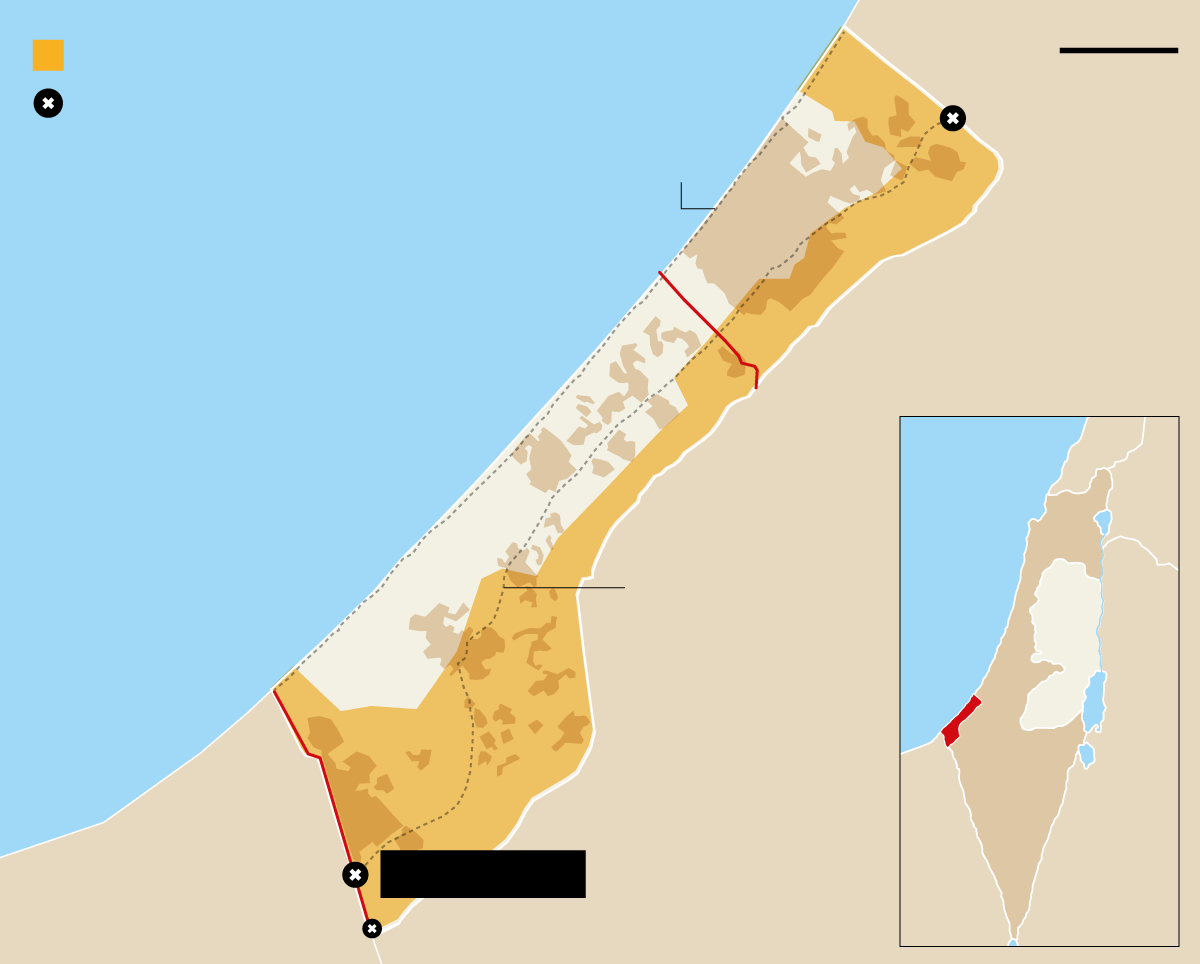
BeirutOn its second day of partial reopening, the Rafah crossing between Gaza and Egypt has confirmed that the reopening, for now, does not imply a substantial change in mobility from the Strip. After a first day focused almost entirely on technical tests and list verificationThis Monday, the crossing began operating effectively, albeit at a very slow pace and with extremely limited reach.
The day was marked by medical evacuations. Only a small number of patients—five sick people and ten companions, according to humanitarian sources cited by EFE—were able to leave the Gaza Strip for Egypt. They are mostly seriously ill or wounded individuals who needed specialized treatment outside of Gaza. The movement was staggered, with long waits and thorough checks, leaving the impression that the crossing functions more as a filter than a regular exit route. In the opposite direction, to enter Gaza, fifty people had begun the process of entering the Strip this Monday, according to Egyptian television Al Qahera News.
5 km
Zona militar controlada per Israel
Passos fronterers
Erez
carretera
de Rashid
Jabalia
Ciutat
de Gaza
mar
Mediterrània
corredor de
Netzarim
Wadi Gaza
LÍBAN
Deir al-Balah
SÍRIA
carrer de
Salah Dine
CISJORDÀNIA
Khan Yunis
FRANJA
DE GAZA
corredor de
Philadelphi
ISRAEL
ISRAEL
Rafah
JORDÀNIA
EGIPTE
pas de Rafah
EGIPTE
Kerem Shalom
Zona militar controlada per Israel
Passos fronterers
LÍBAN
Erez
SÍRIA
CISJORDÀNIA
Jabalia
ISRAEL
carretera
de Rashid
Ciutat
de Gaza
JORDÀNIA
EGIPTE
corredor de
Netzarim
Wadi Gaza
ISRAEL
Deir al-Balah
carrer de
Salah Dine
mar
Mediterrània
Khan Yunis
corredor de
Philadelphi
Rafah
pas de Rafah
Kerem Shalom
EGIPTE
5 km
Zona militar controlada per Israel
Passos fronterers
LÍBAN
Erez
SÍRIA
CISJORDÀNIA
Jabalia
ISRAEL
carretera
de Rashid
Ciutat
de Gaza
JORDÀNIA
EGIPTE
corredor de
Netzarim
Wadi Gaza
ISRAEL
Deir al-Balah
carrer de
Salah Dine
mar
Mediterrània
Khan Yunis
corredor de
Philadelphi
Rafah
pas de Rafah
Kerem Shalom
EGIPTE
5 km
The figures clearly reflect this imbalance. While barely a dozen people have managed to leave Gaza, local health authorities estimate that around 20,000 patients need medical attention outside the enclave. At this rate, the reopening can barely address a tiny fraction of the needs that have accumulated after more than a year and a half of near-total movement restrictions.
The strict filter at the border crossing
The logic of the crossing remains strictly selective. Rafah functions as an exceptional mechanism, not as a broad humanitarian corridor. Only those on pre-authorized lists are allowed through, usually patients with one or two family members. There is no room for other profiles, nor any indication that the flow will be expanded anytime soon. Each crossing depends on prior authorization and controls focused on individual verification. On the Egyptian side, hospitals and emergency services remain on alert to receive evacuated patients. The first ambulances transporting the wounded and sick from Gaza have begun to arrive, but the journey, which normally takes about 30 minutes, is now taking up to five hours due to the strict controls. Ambulances and medical teams have waited for hours in the vicinity of the crossing. The reopening is taking place under a joint monitoring scheme involving Egypt, European representatives, and the Israeli authorities responsible for civil coordination in the Palestinian territories. Rafah is operational again, but it has not regained autonomy. Every movement is subject to authorization and review, which keeps the population of Gaza in a situation of almost total dependence on external decisions.
From the Strip, the atmosphere has been one of restrained expectation and frustration. Many families had complete medical reports weeks or months ago, without knowing when their turn would come. Gaza's hospitals continue to operate at their limit, with scarce resources and exhausted staff, while the departure of a few patients, although vital for those who have managed to cross, does not alter the general collapse of the healthcare system.
Humanitarian aid and goods are banned.
The partial reopening does not include the passage of goods or humanitarian aid through Rafah. The crossing remains reserved almost exclusively for the movement of people, and even then, only to a very small group. For most Gaza residents, the possibility of leaving the enclave remains exceptional. On this second day, Egyptian and Israeli authorities initially authorized around 50 people to cross daily in each direction, with strict security checks overseen by the EU mission, and no goods or significant assistance entering the country so far. The reopening, while a key step within the US-brokered ceasefire, is perceived by many as a "pilot program" with very limited capacity to alleviate the severe humanitarian crisis in Gaza. The lack of clear timelines and persistent uncertainty keep thousands of patients and their families in agonizing limbo, unsure when they will be able to leave or receive treatment outside the Strip. Meanwhile, Gaza's hospitals remain on the brink of collapse, with insufficient resources and exhausted staff, highlighting the fragility of any progress made so far.

