The Venezuelan Barcelona that wants to get rich with oil
The city is the capital of the region where the world's largest crude oil reserves are concentrated

-
CAT -
CAST
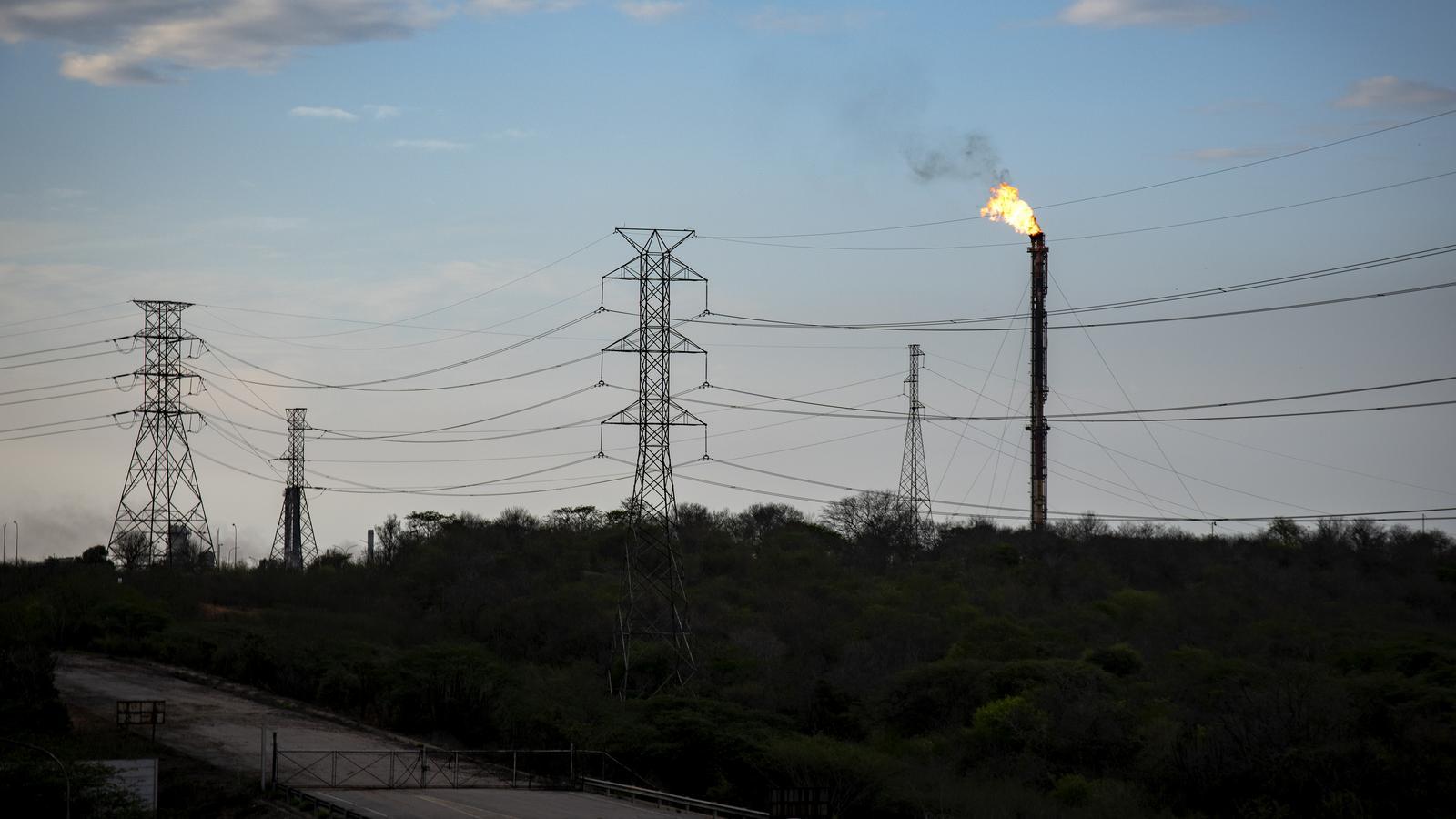
Special correspondent in Lechería and Barcelona (Venezuela)In Barcelona it is impossible to find someone who knows anything about Barcelona. The general response is total silence. Only a young man, after thinking a lot, says: "Ah, yes, you have Barça". Possibly, however, the same would happen in the Catalan capital if we asked what people know about Venezuelan Barcelona. Venezuela, in the same way as Catalonia, has a city called Barcelona. It is the capital of the Anzoátegui region, in the northeast of the country, where a good part of the so-called Orinoco Belt is located, which concentrates the largest oil reserves in the world and which is expected to become the center of foreign investments now after the partial lifting of American sanctions. There, for example, the American Chevron operates.
The Venezuelan Barcelona is a city with a beautiful historic center of colonial houses painted in vivid colors. In fact, the city was founded by a Catalan, one Joan Orpí i del Pou, whose name has been Hispanized in Venezuela. On the other hand, Catalan surnames like Serra are indeed preserved in the city, and part of its architecture has clear Mediterranean reminiscences. Currently, in the town hall building, there is an enormous banner with the photograph of Nicolás Maduro and his wife Cilia Flores, which occupies the facade from top to bottom and says: "The empire kidnapped them, we want them back. We will win." It makes one think that the mayor's office wants nothing to do with the United States.

However, the Chavista mayor of Barcelona, Sugey Herrera, states bluntly that they are not only interested in foreign investments, including American ones, but have also begun to offer tax advantages to companies, created a platform to facilitate staff recruitment, and plan to transform the city into a hub for the oil sector. There is already a large refinery in her municipality.
"In the city there are more than 3,600 hectares of available land – she highlights –. We are close to oil activity, major highways, and we have an airport." In fact, starting Tuesday, June 2nd, the Panamanian company Copa Airlines will offer direct flights between Barcelona and Miami. The idea is for the city to grow from its current 600,000 inhabitants to almost one million.
The area intended for urban development is known as Nova Barcelona, which is next to another locality called Lechería. Nova Barcelona will be built precisely in the image and likeness of Lechería "for people with a certain purchasing power linked to the oil sector," explains the mayor, even though this diametrically opposes Chavismo's ideals of equality.
The Venezuelan Venice
Lechería is a town that has nothing to do with the image that is had of Venezuela from abroad. Much smaller than Barcelona, with about 70,000 inhabitants, it is a kind of modern Venice: it has 20 kilometers of navigable canals with access to the sea. It was built in the seventies with the aim of being a tourist, residential, and recreational place for people with a certain social status.
Specifically, Lechería comprises several gated communities, with security, which form the so-called El Morro tourist complex, which extends over nine of the twelve square kilometers of the town. El Morro has 1,600 single-family homes and several apartment buildings. In total, there are over 15,000 owners. There are also tennis and paddle tennis courts, two golf courses, two large shopping centers, six hotels –some five-star with helipads–, private docks so that those who live there can have their yachts in front of their homes, and a super-exclusive area called Las Villas, where there are mammoth mansions of up to 600 square meters. In fact, it is surprising that all this was maintained with Hugo Chávez in power.

"We were afraid he would expropriate it," admits engineer Daniel Camejo Guanche, whose father was the promoter of this urban development, referring to the only undeveloped land remaining in the area where a third golf course was planned. Now they want to turn it into a park. "Lechería is a bubble within Venezuela. Even outside the complex, there are no extremely poor neighborhoods either," says Sergio Ramos, a member of the board of directors of the Association of Owners of the El Morro Tourist Complex.
Faced with the prospect of lucrative foreign investments, just over two weeks after Nicolás Maduro had been arrested, the mayor of Lechería, opposition member Manuel Ferreira, approved granting tax incentives to companies with the aim of turning Lechería into "the new energy hub of Venezuela", in clear competition with Barcelona. The problem is that in Lechería there is barely any land left to build on. In Barcelona, on the other hand, there is.
Increase in property prices
In Lechería, however, energy companies like Chevron and Repsol already have their administrative headquarters there, meaning their operations center. Furthermore, after Donald Trump's meeting with the executives of the world's largest oil companies at the White House in January, the value of high-end properties located within the El Morro tourist complex skyrocketed, according to Juan Carlos Hernández, president of the Anzoátegui Real Estate Chamber and vice president of the regional Chamber of Construction.
“They went from costing $40,000 to climbing up to $120,000”, he details. The buyers were Venezuelans, Colombians, Spaniards, Argentinians, and also some North Americans of Latin origin. Likewise, Mexican businessmen from the oil sector have started buying offices there. "62% of Anzoátegui's real estate operations are concentrated in Lechería. In Barcelona, only 14%", he adds.

The reform of the Venezuelan hydrocarbons law at the end of January opened the door to the arrival of foreign investors, because it reduced the percentage of profit that companies have to pay the Venezuelan government for each barrel of crude from 33% to 20% and because companies can now resort to international tribunals in case of conflicts of interest. However, oil production continues to be light-years away from what it was in the past. In 1998, it reached 3.5 million barrels per day, before Chávez came to power. Currently, it is 1.1 million.
"No matter how good a law is, it is not enough if it is not accompanied by signals indicating a certain political and economic stability of the country. No one will invest in a place where there is risk," explains Rafael Quiroz, oil economist and professor at the Central University of Venezuela, who thus justifies that international companies have shown little interest so far. However, there has been a change: since January, Venezuela no longer exports oil to Cuba, nor to China since April 1st. Now a large part of the production goes to the United States.
Electricity cuts
Another added inconvenience is that, no matter how much of a bubble Lechería may be, the town does not escape some of the country's hardships. For example, the recurring power outages: suddenly you can see the town's traffic lights stop working. In Barcelona it's even worse, because there are also water problems: there is only supply every three days. In some areas, every fifteen.
Some residents of Lechería have large electric generators, but this doesn't completely solve the problem either, because it is very difficult to get diesel fuel to run them. In fact, one of the things that catches your eye during the almost five hours it takes to travel by road from Caracas to Lechería is that every now and then you come across a lot of trucks stopped on the shoulder, one after another, waiting for diesel fuel at a service station. Inside Caracas, long queues of vehicles also form: every day dozens of buses, coaches, taxis, and even fire trucks and ambulances wait up to three hours to fill their tanks. From the coast of Lechería, in the distance, on the horizon, you can see oil tankers that are also waiting offshore, but in this case to take crude oil to other countries.
In Venezuela, where the Chavista government claimed to promote equality between social classes, there is now even a class difference for buying gasoline. There are three types of service stations. The first type, those subsidized by the state, where gasoline only costs 11 bolivars per liter – one euro cent –, but to fill the tank you need to register on the government website and arm yourself with patience because supplies are very limited and run out quickly. The second type of gas stations, which is where most Venezuelans go, are more expensive: a liter of 91-octane gasoline costs half a dollar per liter. And the third, at an even higher price, the gasoline is of better quality, 97-octane, but it costs a dollar per liter and you have to pay with cash dollars. "I put in fifteen liters of the very expensive one, and twenty of the one that's a little cheaper," says a driver, who has just bought a new car and is filling up the tank at one of these super-premium gas stations.

Anderson is 37 years old, has dedicated his whole life to fishing and lives in Lechería, but his house is not inside the El Morro complex, but next to the beach, in a humble area that is not even paved. He has just finished his workday and is counting a wad of bills that, although they seem like a lot of money, do not add up to even 50 euros. "Before we exported fish to other countries, or a person with money would come and buy a whole box of fish at once. Now none of that happens," he laments. He doesn't aspire to work in the oil sector, nor to get rich with foreign companies, nor by any means to buy a mansion in a select place, but he states: “Let the Americans or whoever come, but let someone come”.
