The other Danish islands threatened by Putin and which now also fear Trump
The Faroe Islands aspired to have more autonomy from Denmark until the US interest in Greenland
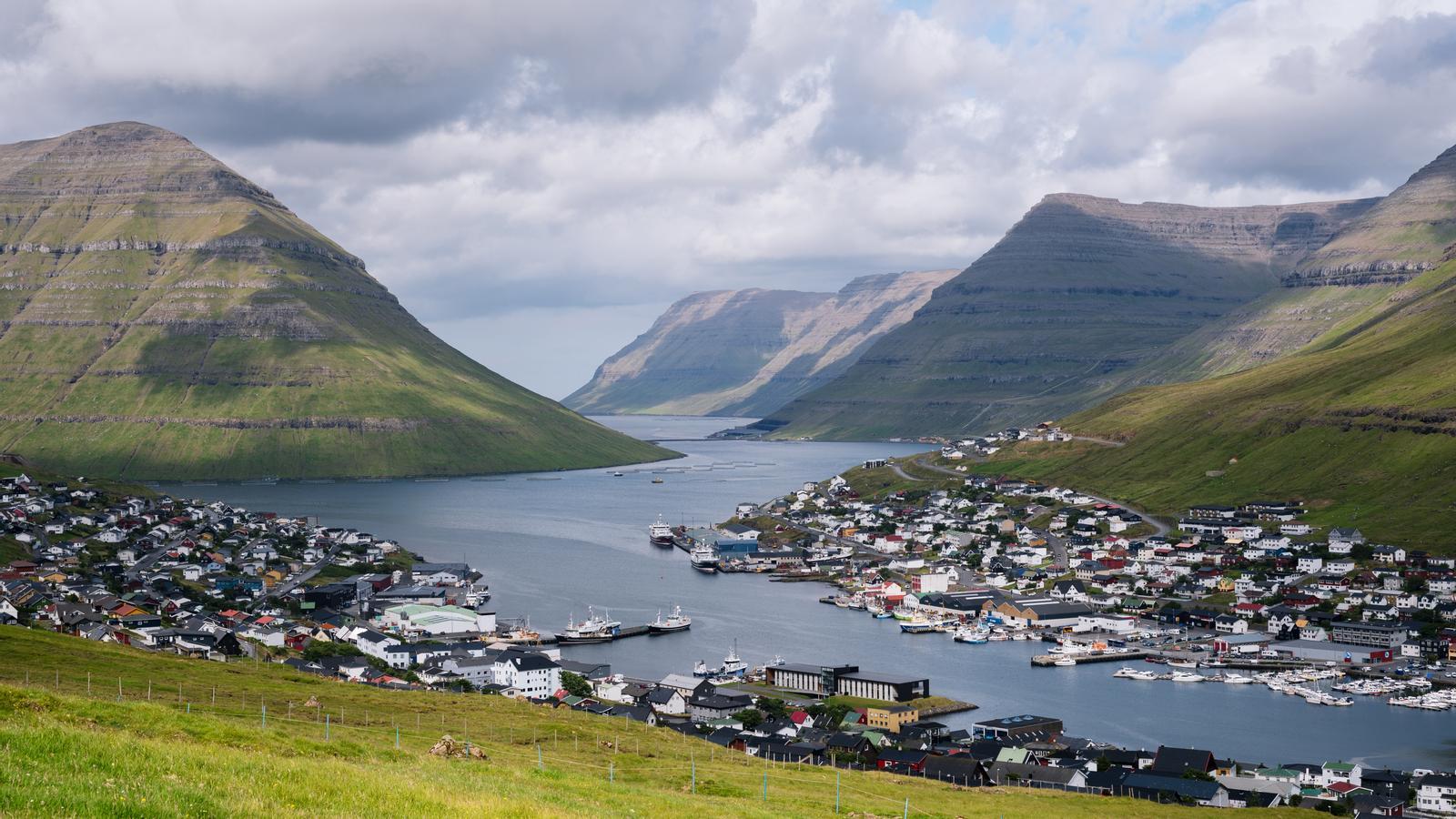

Geographically isolated and with an inclement climate (it rains 300 days a year and the wind reaches hurricane-force gusts), the Faroe Islands are another piece of the Kingdom of Denmark that has gained growing importance on the geopolitical chessboard. This archipelago, made up of eighteen islands, is in a privileged position to monitor the North Atlantic, where world powers compete for control of the Arctic gateways. European fishing fleets and American warships converge in its waters. At the same time, the Faroe Islands maintain a controversial trade agreement with Russia on fishing, the heart of an economy that does not depend on donations from Copenhagen (as is the case with Greenland). The Faroe Islands are part of NATO through Denmark, but they are not part of the European Union, as the autonomous government is not interested in entering into community fishing regulations.In these circumstances, the Faroese (55,000 inhabitants) elected a new government at the end of March to manage their extensive autonomy, while Denmark retains powers over defense, security, foreign policy, currency, and courts. The victory of the Conservative Party at the polls opens the door for Beinir Johannesen, 29 years old, to become the youngest prime minister the country has ever had.At a time when Donald Trump's desires for Greenland have generated anxiety in the region, the elections have set aside geopolitics and have focused on the economy, which is in expansion. The Atlantic nation's GDP per capita exceeds that of Denmark, thanks to salmon farm exports, which are worth one billion euros annually. The unemployment rate is around 1%, and the country has modern infrastructure, such as the world's first roundabout built under the sea.However, housing prices in the capital, Tórshavn, are a headache for those who want to live there, at the same time as the islands face a serious depopulation problem. Among 25-year-old Faroese, 40% choose to move abroad and approximately one in five never return. Another controversy is the largest construction project in their history: a 23-kilometer subsea tunnel that will cost the equivalent of 20% of the country's GDP.In the background of the elections, there has also been independence with Denmark, an option defended by five of the six main Faroese political formations. In 1946, the Faroese voted by a narrow margin to separate from Denmark, but at that time the Danish king Christian X did not approve it. Finally, self-government powers were expanded in 2005, after the Faroe Islands and Denmark had been connected for more than 600 years.At the beginning of this year, the Faroese government was set to reopen negotiations with Copenhagen with the intention of pushing for greater autonomy. But that was before Trump triggered the worst diplomatic crisis in the Danish kingdom over control of the Arctic island of Greenland. Faced with this situation, the Faroese leaders decided it was not the time to enter into in-depth negotiations with Copenhagen over their sovereignty: “Given the climate that was generated, it was seen that it was not opportune to start negotiations on the condition of a new state, as everything was unpredictable”, reasons Heini í Skorini, an expert in international relations at the University of the Faroe Islands.The expert explains that the reasons for independence are based on the will to have a voice of our own on the international stage: “For us, the fact of not being a sovereign entity makes it very difficult for us to negotiate new and better free trade agreements because this is done between states”, he argues. Skorini also points out that “there is a political consensus that the next step is to achieve statehood, without this necessarily implying leaving the Danish Commonwealth”.Increase in geopolitical tension
While the issue of sovereignty has been put aside, the Faroese government has extended the controversial fishing agreement with Russia year after year to exchange quotas, despite the war in Ukraine. This cooperation in fishing has irritated Copenhagen and Brussels, even though from Tórshavn it is justified that food products are not subject to sanctions. They also recall that Norway has ratified similar agreements with Moscow: “On the one hand, all EU sanctions against Russia have been adopted because we want to be part of Europe and NATO, but, on the other hand, the decision has been made to maintain fishing cooperation with the Russians,” details Skorini.Although the Faroe Islands have attracted much less attention than Greenland, the Faroese perceive the growing interest of superpowers: “Some years ago it would have been science fiction to see a North American nuclear submarine surfacing in a Faroese port, but today it is no longer the case,” assures the expert. The archipelago is located in the so-called GIUK gap between Greenland, Iceland, and Scotland, a point that NATO keeps a close eye on because it represents the exit to the Atlantic for the Russian submarine fleet based in the Arctic. Faroese politicians have also expressed their concern that Russian fishing vessels anchored in the islands may be carrying out espionage operations. To monitor all this, the United States will install new radars to observe what is happening in the archipelago's waters, “although the increase in US military presence also creates some suspicions,” acknowledges Skorini.

