The number of migrants entering the EU has fallen by more than 25% due to agreements with third countries.
The only migration route that is growing is the one through the Balearic Islands, and most of the new arrivals using it set sail from Algeria.


-
CAT -
CAST
BrusselsThe number of irregular migrants entering the EU continues to decline steadily. The latest report from the European Union's border control agency, Frontex, shows a 26% decrease last year compared to 2024, reaching 178,000. This is the lowest figure since 2021 and less than half the number recorded in 2023. This decrease, however, is mainly due to the outsourcing of migration management through agreements with third countries, which means that entries are subject to the current relations between EU member states and these countries. Blanca Garcés, a migration expert at CIDOB, explains this in an interview.
In fact, the only migration routes that are growing are those through the Balearic Islands and the southern Iberian Peninsula. Both the Frontex report and Garcés herself attribute this to Algeria no longer acting as a barrier. Specifically, the use of this route has increased by 14%, and most of the migrants using it arrive from Algeria, and to a lesser extent from Morocco and Somalia. Throughout last year, just over 19,000 newly arrived migrants irregularly reached Europe via this route.
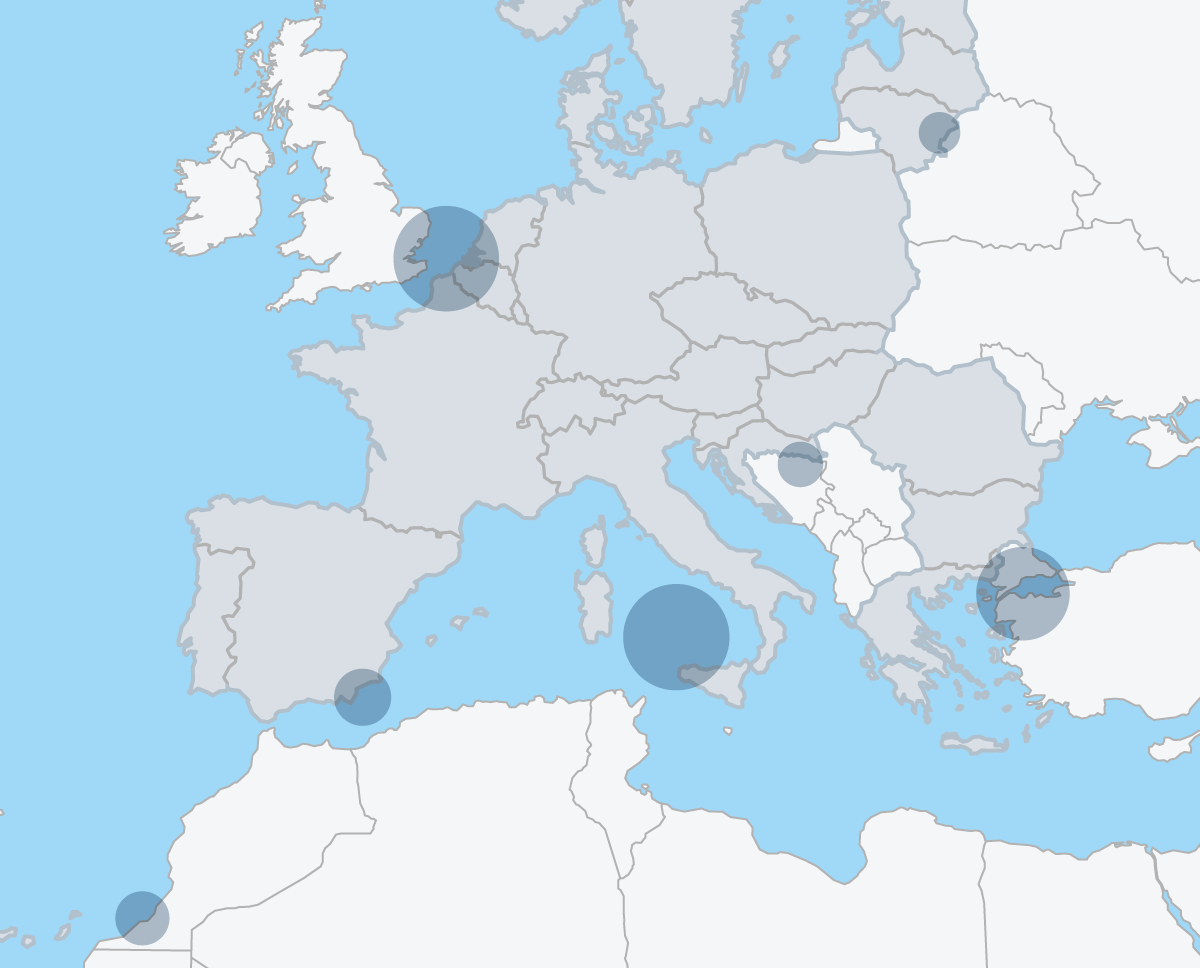
Sortides cap al Regne Unit
65.861
Frontera terrestre oriental
-3%
10.846
-37%
Balcans occidentals
12.525
-42%
Mediterrani occidental
19.403
+14%
Mediterrani oriental
51.399
Mediterrani central
-27%
66.328
Àfrica occidental
-1%
17.280
-63%
2
1
3
4
6
5
7
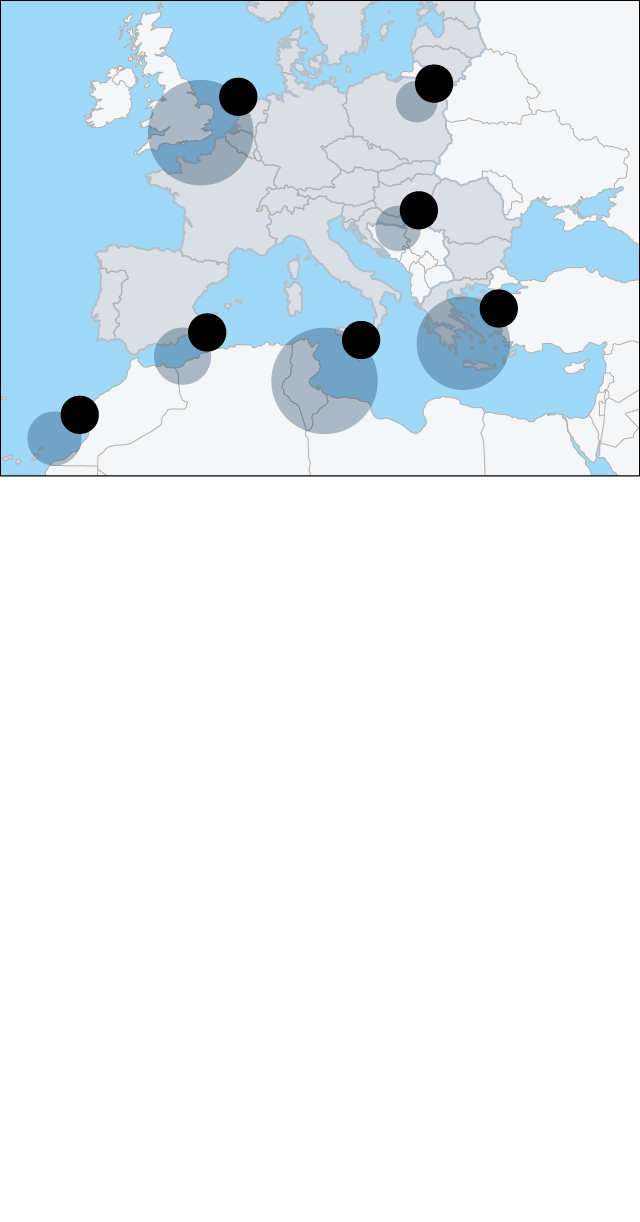
1. Sortides cap al Regne Unit
65.861
-3%
2. Frontera terrestre oriental
10.846
-37%
3. Balcans occidentals
12.525
-42%
4. Mediterrani oriental
51.399
-27%
5. Mediterrani central
66.328
-1%
6. Mediterrani occidental
19.403
+14%
7. Àfrica occidental
17.280
-63%
2
1
3
4
6
5
7
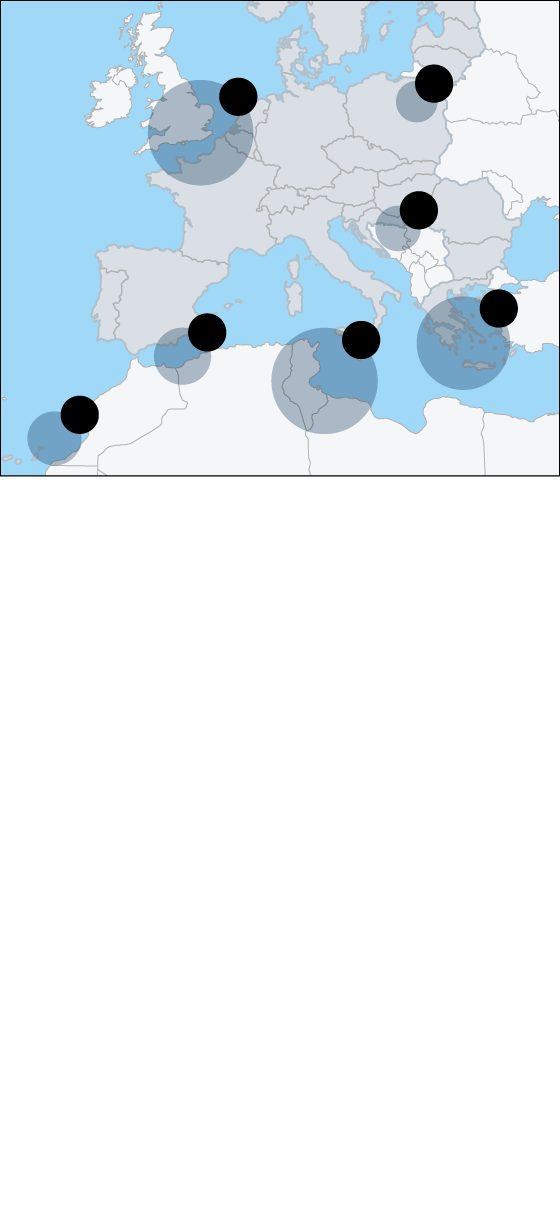
1. Sortides cap al Regne Unit
65.861
-3%
2. Frontera terrestre oriental
10.846
-37%
3. Balcans occidentals
12.525
-42%
4. Mediterrani oriental
51.399
-27%
5. Mediterrani central
66.328
-1%
6. Mediterrani occidental
19.403
+14%
7. Àfrica occidental
17.280
-63%
Conversely, the West African migration route, which ends in the Canary Islands, decreased substantially during 2025, by 63%. Approximately 17,000 migrants arrived. The reason is the exact opposite of what caused the increase on the Balearic Islands route: political agreements with countries such as Mauritania, Morocco and Senegal
After the West African migration route, the one that has decreased the most is the Eastern Balkan route. In 2025, 42% fewer migrants entered via this route, approximately 12,500. The Frontex report attributes this to increased border controls on the ground and, above all, to migration control agreements with Bosnia and Herzegovina, one of the states on the waiting list to join the European Union.
The eastern Mediterranean route has also decreased significantly despite the increase in departures from Libya: 51,000 entries were recorded, 27% fewer than in 2014. However, despite the harsh migration policies of the far-right government of Giorg, a total of 66,000 people, primarily from Libya, have entered the European Union via Italy.
One of the effects of the decrease in irregular entries into the European Union is the reduction in deaths at sea. In 2015, 1,878 people died trying to reach European shores, compared to 2,573 the previous year.
A "temporary" situation
The European Union often celebrates the reduction in irregular immigration, but the CIDOB immigration expert warns that this is a "temporary" rather than a structural situation, despite the tightening of the bloc's migration policies. "Entries depend heavily on the state of relations with third countries," explains Garcés. The expert points to Spain's relationship with Morocco as one of the clearest examples. Rabat often uses immigration as a tool, demanding and obtaining significant concessions in Madrid in exchange for halting migration routes to Spanish territory. Beyond the influence these third countries ultimately wield over EU member states, Garcés also notes that the humanitarian cost is very high. In fact, state governments and the European Commission have no guarantee that these regimes treat migrants properly, and several non-profit organizations and journalistic reports have shown and denounced that they systematically violate fundamental rights.

However, one of the main points of new EU migration and asylum pact It is the expansion and pursuit of these agreements, both by the European Commission and by individual member states. Currently, Brussels has already signed this type of pact in exchange for multi-billion euro investments with countries such as Tunisia and Morocco, among others.
On the other hand, Garcés rules out a reduction in the entry of irregular immigrants cancel the anti-newcomer rhetoric of the European far right and which has become an "obsession" in European institutions. "The far-right discourse is not only linked to irregular arrivals, but also to issues related to coexistence and integration," the expert points out.
