Russia turns the fight against Satanism into state policy
The Russian Orthodox Church uses the fight against the devil as a catch-all to persecute everyone who does not agree with traditional values
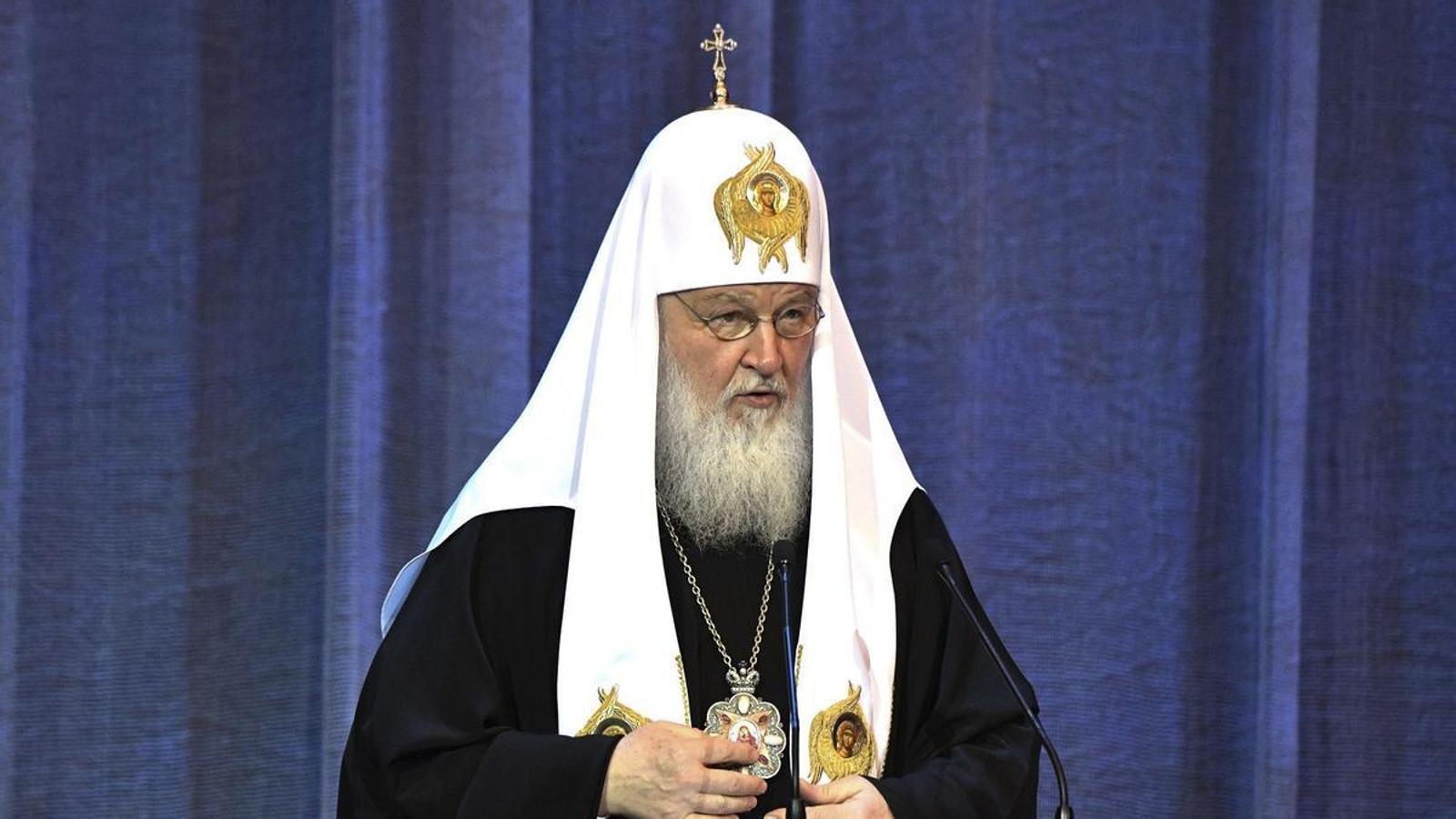

MoscowIn Russia, the fight against Satanism is not a relic of the past, but a state policy. The powerful Russian Orthodox Church has promoted the persecution of this belief as a catch-all to accommodate an ultraconservative agenda and repression of identities that deviate from traditional Russian values. Heavy metal bands, Halloween festival organizers, or psychics are the latest victims of a crusade that authorities also use to demonize the LGBTI community and justify the war in Ukraine as a "de-Satanization" operation.
A year ago, the nonexistent "international Satanist movement" was banned. According to the prosecution, members of this extremist organization hate traditional religions, desecrate Orthodox churches, and have ties to neo-Nazism. Since then, wearing a five-pointed star, whether in a tattoo, a patch, or an image on social media, is equivalent to wearing a swastika and can lead to fines of 20 euros for disseminating Satanist content to prison sentences for alleged membership in devil-worshiping groups.
Under this law, Orthodox fundamentalist organizations like Sorok Sorokov have dedicated themselves to searching for signs of Satanism everywhere. In November, they succeeded in canceling a Halloween costume party in Saint Petersburg because it featured "blasphemous dances with the cross, outfits promoting LGBTI sex, and artists with horns." Its director, Georgy Soldatov, defends this in statements to ARA: "Not condemning evil is equivalent to accepting it. Without red lines, any state would end up plunged into chaos." Other collateral victims of the anti-Satanism fever are metal musicians. One of the most high-profile cases was a raid on a concert hall in Moscow in February, where four bands of this genre were performing, resulting in ten arrests. They were accused of displaying five-pointed stars, inverted crosses, and other extremist symbols.
Although justice has not outlawed fortune-tellers, tarot readers, or sorcerers, Patriarch Kirill I claims they are also guided by a “demonic power” and demands their services be banned. The head of the Orthodox Church’s concern is explained by survey data showing that 52% of Russians admit to reading horoscopes and having consulted astrologers, and 37% claim to have paid for predictions of their future. Sociologists attribute this growth to anxiety caused by the war and economic difficulties.
For the director of Sorok Sorokov, esoteric activities are “the basis of Satanism” and represent “the main problem of social and religious life in present-day Russia and a genuine spiritual epidemic.” He laments that “people who trade in the souls of others make billions of rubles in profits each year” and “involve hundreds of thousands of citizens in destructive spiritual practices.”
At war against Western values
By prohibiting the “international satanist movement”, the precedent was set by the 2023 ban of the “international LGBTI movement” because the most conservative sectors claim that both “ideologies” feed off each other. And this rhetoric is not harmless: that same year, in the Ulyanovsk region, a doctor was arrested accused of being part, simultaneously, of the “international LGBTI movement” and the “satanist movement”, and of “promoting the idea of same-sex relationships among subordinates as a way to initiate them into devil worship”. Although he denied it, he was sentenced to three years in prison.
The main Russian leaders also employ this discourse that links any non-normative gender expression to Satanism. The Minister of Foreign Affairs, Sergey Lavrov, described the opening ceremony of the Paris Olympic Games as “one of the most evident examples of moral degradation” due to the inclusion of “inhuman and satanic” elements, referring to the appearance of drag queens and, recently, he dismissed Russia returning to Eurovision because the performances represented there are of a “blatant Satanism”.
The war to "desatanize" Ukraine
Months after justifying the invasion of Ukraine as an operation to "denazify" the country, some Russian leaders began to speak of "desatanization," surprising many. For example, former Russian President Dmitry Medvedev defined the war as a "sacred conflict with Satan," while the deputy secretary of the Russian Security Council, Aleksei Pavlov, wrote that, since 2014, Kyiv had established itself as a global center for satanic sects with the help of the United States. From there, with the aim of proving this diabolical drift of the enemy, there have been recurrent reports of the discovery of supposed satanic altars in villages conquered by the Russian army.
Sergei Chapnin, a former employee of the Moscow Patriarchate, is not at all surprised by these argumentative subtleties. He was the first to warn, in 2015, that the Kremlin, with the support of the Orthodox Church, would transform the war in Ukraine into a holy war. In a conversation with ARA, he recalls how, even then, Patriarch Kirill I assured that the pro-Russian rebellion in eastern Ukraine had been motivated by the desire of local young people to get rid of gay pride parades. "Russia was presented as the side of light and good. It was fighting not only against Ukraine but also against the collective West, which had betrayed Christian values," he explains. In his opinion, the head of the Church, who has unequivocally supported Putin's war from day one, "does not act according to Christian principles," but rather, for him, "the most important thing is to be loyal to the state" and, therefore, "to accept violence."

