London Bridges: impassable, in critical condition and deteriorated
A 2023 report already pointed out that the 32 crossings over the Thames suffered from an endemic lack of investment

-
CAT -
CAST
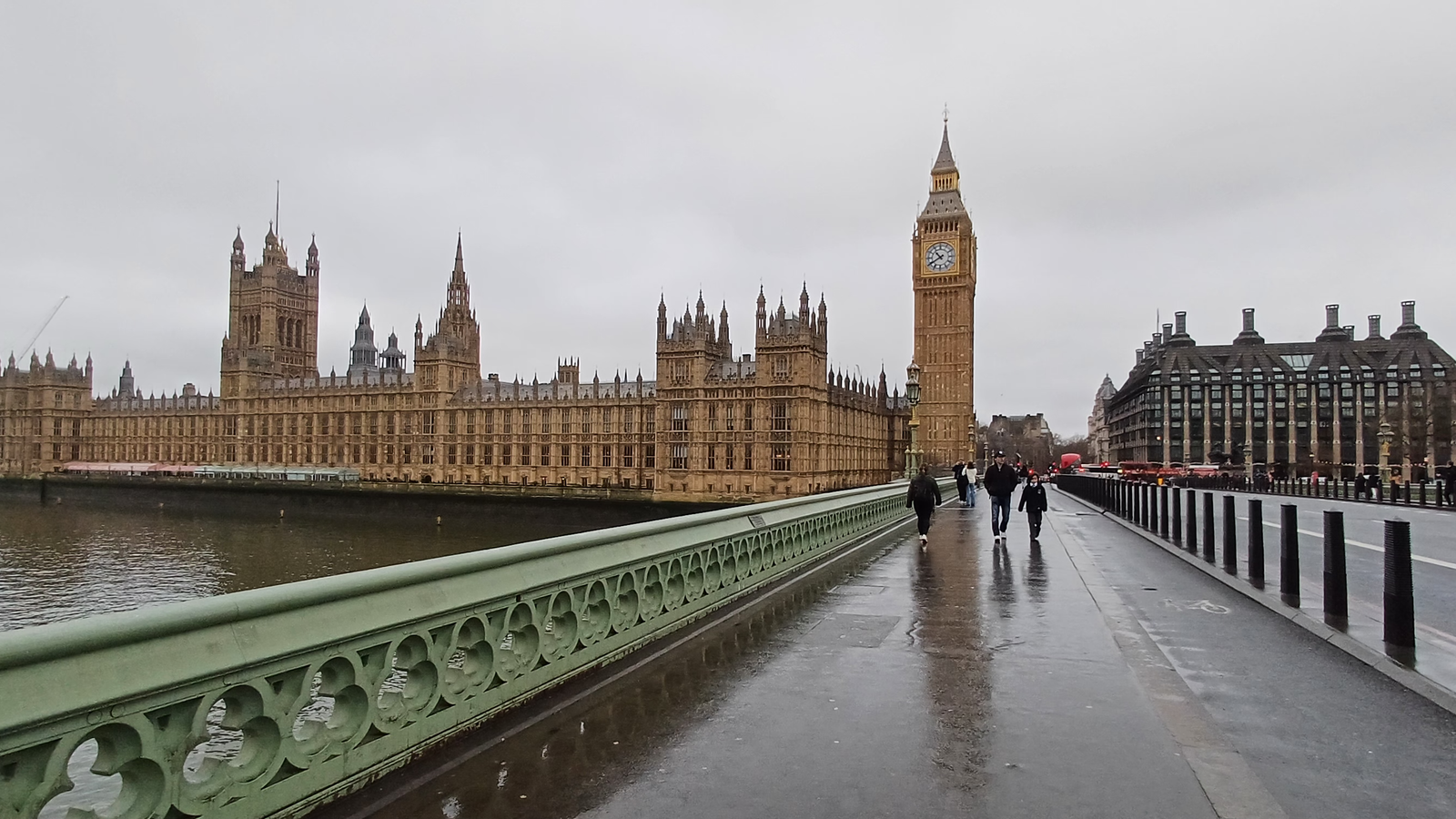
LondonOne of the most evoked poems to highlight London's uniqueness is by the romantic William Wordsworth. It is titled Composed upon Westminster Bridge, September 3, 1802, and it is a lyric sonnet that reflects the calm that emanates from the city at dawn as seen from Westminster Bridge. Wordsworth wrote it after crossing the Thames near the Houses of Parliament, and not, as the title suggests, that he "composed" it from the bridge.
Now, more than two hundred years later, even at dawn the experience would be very different. And perhaps not even Wordsworth could highlight "the beauty of the morning; silent, bare…" knowing what has just been made public: that Westminster is one of the three central city bridges included in the list of the capital's transport infrastructures in "critical" condition. The others are Lambeth and Vauxhall, the next two following the river's course westward.
According to a report from Transport for London – the body that regulates public transport – all three are in a "very poor condition" regarding their essential load-bearing structural components. None are at risk of imminent closure, however.
Since 2023, no official status of London's bridges has been published. The "State of the City" report from that year spoke of "controlled degradation". It also indicated that 238 million pounds per year needed to be invested in the maintenance of the 32 river crossings in Greater London to preserve their current conservation levels. Between 2010 and 2021, only one hundred were spent.

The crisis of London's bridges seems endemic. It has a couple of episodes more worrying than those of the three steps mentioned above. The most recent affects Albert Bridge, to the west. In March, its closure to car and heavy vehicle traffic for a year was announced. Considered the most beautiful in the city, it is known by the nickname of the "Trembling Lady" due to the vibrations that were noticed when many people crossed it at the same time or there was a lot of traffic. It is a hybrid construction that combines suspension bridge and cable-stayed bridge techniques.
Albert was inaugurated in 1873 as a toll passage – the toll booths are still preserved – and its original design was conceived so that it would oscillate slightly and easily withstand the phenomenon of expansion due to temperature changes. Even today, the historic signs can be seen warning the army that, if crossing in formation, the soldiers had to break step to avoid too many vibrations.
suffers from the same ailment as Hammersmith Bridge

The Trembling Lady suffers from the same ailment as Hammersmith Bridge, its neighbor upstream, closed in April 2019 to traffic. It is affected, above all, by a surprising lack of maintenance. It wasn't until 2014 that the Hammersmith and Fulham district, to which it belongs, carried out the first complete inspection in "many decades" (1970), as stated in the 81-page official document, which assessed its condition. Seven years after it was closed, it remains barred to vehicles. In the summer of 2020 it also had to be closed to pedestrians and cyclists, and it wasn't until a year later that, following an emergency intervention valued at 54 million pounds, it could be stabilized and partially reopened.
To authorize road traffic on Hammersmith Bridge – and to make a journey between the two banks of the Thames in five minutes that now takes almost fifty – would require an investment of about 250 million pounds. But there is no money and, furthermore, the different administrations, the local one, the Metropolitan Transport for London authority, and the Ministry of Transport, are washing their hands of responsibility. The bureaucratic problems began in 1986, when the Greater London Council was dissolved and the ownership of the bridges was fragmented. Now, five belong to municipal districts, which in theory are responsible for their maintenance; thirteen to Transport for London, although they share preservation tasks with local authorities; five more belong to the City Bridge Foundation, and the remaining nine, railway bridges, belong to Network Rail.

The City Bridge Foundation has great resources —nearly £1.5 billion— and can maintain its infrastructures, including, among others, the famous Tower Bridge. On the other hand, many city councils – those of Kensington and Chelsea (Albert Bridge) or Hammersmith and Fulham (Hammersmith Bridge) have serious difficulties in financing their basic obligations. Municipalities regret that roads used by everyone have to be funded with local money. Now, to try to remedy the most urgent cases, and avoid a degradation that could lead to more closures, the Ministry of Transport is seeking a billion pounds to undertake the works. Finding them takes as much time as repairing them. The famous children's song London Bridge is falling down could come true any day.
