Iran threatens to block the Red Sea if the US continues in Hormuz
The White House denies having "formally" requested a ceasefire extension while diplomatic efforts for a new round of talks accelerate

WashingtonIt is no longer Donald Trump's apocalyptic ultimatum that is in overtime, but a fragile truce that expires next Tuesday. After peace talks in Islamabad between the United States and Iran reached a dead end last weekend, the priority now is to achieve a new round before time runs out. The White House has shown itself on Wednesday "optimistic" about the possibility of reaching an agreement in the next meeting and has denied that Washington has "formally" requested an extension of the truce. "Right now, that is not true," stressed the press secretary, Karoline Leavitt.
But that the Trump administration now denies having submitted the request does not close the door to it happening in the future. While Leavitt dismissed the extension, a delegation from Pakistan – a mediating country – landed in Tehran to convey a message from the Americans to the Iranians and try to reactivate the negotiating table.
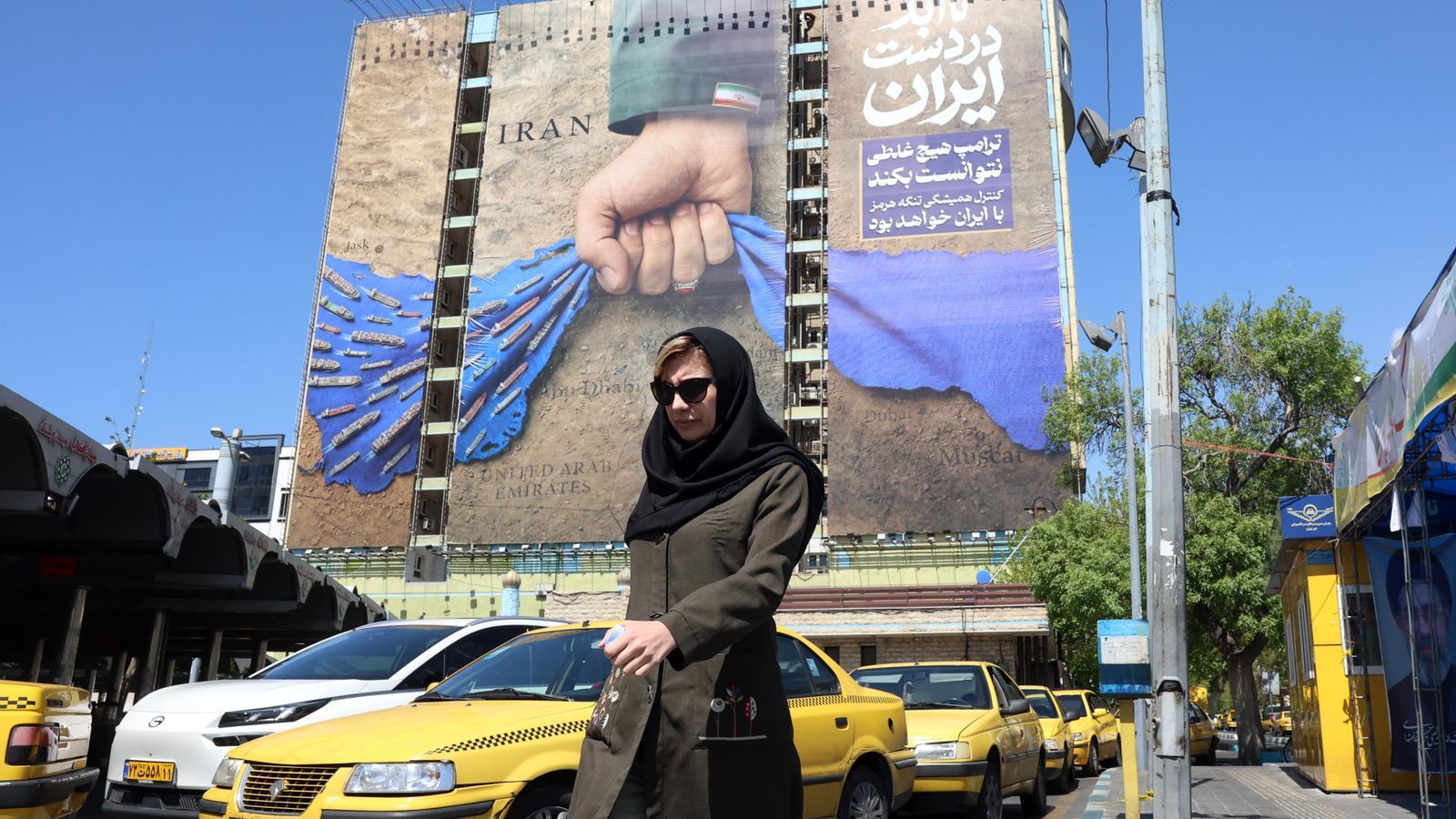
The new diplomatic moves come amid escalating tensions over the US blockade of the Strait of Hormuz. After seeing that bombs have not been enough to bend the ayatollahs, Trump is once again opting for economic pressure, this time by replicating the Iranian regime's tactic. The military cordon has been in effect for more than 48 hours and has already intercepted at least six Iranian ships. In response, Iran has threatened to extend the siege it has imposed on Hormuz so far to the Red Sea. In parallel, the country's top military command has also warned that if the US continues to block Iranian ships, they will consider it a breach of the ceasefire and will resume attacks.
Military sources also informed the Washington Post on Wednesday that the Pentagon has ordered the mobilization of approximately 6,000 additional soldiers to the region to reinforce the naval blockade. A large part of this new contingent is on board the aircraft carrier USS George H.W. Bush. These 6,000 soldiers are in addition to 7,000 more already mobilized with the USS Tripoli, the USS Boxer, and the 82nd Airborne Division. These 13,000 soldiers are added to all the personnel mobilized in the region since the conflict began, approximately 50,000 troops.
Awaiting new talks in Islamabad
Meanwhile, the White House is confident that Pakistan will be able to unlock a new round of talks and assures that the second meeting will again be held in Islamabad. The Pakistani delegation responsible for mediation includes Marshal Asim Munir, Pakistan's Chief of Staff, who rarely makes such visits. Munir's personal involvement in the talks highlights the fragility of the ceasefire and the urgency of the situation. Beyond being considered the de facto supreme authority within Pakistan, the Marshal is also a figure close to Trump. de facto within Pakistan, the Marshal is also a figure close to Trump.
However, Munir's presence could also be related to another issue. Sources familiar with the talks tell Al-Jazeera that significant progress has been made in recent hours regarding the nuclear issue. In fact, before traveling to Tehran, the Pakistanis reportedly met with the region's other major mediators – Egypt, Saudi Arabia, and Turkey – and Munir is also scheduled to travel to Qatar in the next 24 hours.
Overall, Pakistanis hope that communication lines will remain open. The Pakistani military chief has also been speaking with the U.S. administration, particularly with Vice President J.D. Vance, according to these same sources to Al-Jazeera. Washington has strived to highlight the nuclear issue as the primary reason for deciding to initiate this war, and it was also the reason Vance cited for walking away from the negotiating table. Experts and analysts consider it very difficult to reach an agreement on Iran's nuclear program in the short term, but if one is achieved, the White House would have a clear victory to claim and withdraw.
However, even though Washington strives to point to Iran's nuclear program as the origin of this entire mess, the urgency right now is concentrated on Hormuz. The Strait's blockade for over 40 days has severely impacted the global energy market and made the possibility of a new crisis more real than ever, as warned by the IMF this week. While it is true that the U.S. does not directly depend on the oil passing through Hormuz – 20% of the global market – it has been impacted by its closure.
This very Wednesday, Leavitt appeared accompanied by Treasury Secretary Scott Bessent to try to alleviate concern. In his speech, Bessent sent a message of calm, saying he expects the price of gasoline to fall again below 4 dollars per gallon – a figure not seen since 2022 – by autumn.
The problem of Lebanon
The other major issue now looming over the board is the situation in Lebanon. Iranian sources told the Tasnim news agency that a possible ceasefire agreement between the United States, Israel, and Lebanon would be interpreted as a "positive sign" that would facilitate the continuation of dialogue. However, Tehran demands that Washington adhere to a "reasonable negotiation framework" and not hinder the process with excessive demands or fail to meet previously acquired commitments.
Although the American media emphasize the White House's willingness to resume talks immediately, the Iranian delegation has reiterated the need for the United States to respect certain fundamental principles to ensure the viability of any negotiation. According to Tasnim, Tehran's official position is one of "strict caution," warning that Washington's willingness to dialogue will not be sufficient if it is not accompanied by moderation in its diplomatic pretensions and scrupulous respect for the agreements set before the current ceasefire. Tehran believes that the blockade of the Strait of Hormuz does not help.

