Europe discovers extreme heat and realizes it is not prepared for what is to come
The episode of high temperatures affecting a large part of the continent is breaking records and is the result of global warming
-
CAT -
CAST
Paris / London / Brussels / Berlin / Copenhagen / BarcelonaEurope is facing a new climatic reality. Extreme, long, and historic heatwaves are becoming increasingly frequent and are one of the most evident faces of a climate crisis that demands urgent responses. The episode of high temperatures affecting a large part of the continent this June (also in places where it was previously unthinkable) is breaking records in several countries and is the result of global warming caused by human activity and the accumulation of greenhouse gases. And it is no coincidence: Europe is the continent that is warming fastest on the planet and the impacts are already visible on health, agriculture, ecosystems, and water availability.
The heatwave experienced in Central and Western Europe is another example of a trend that experts have been warning about for years: heat is intensifying and episodes are lasting longer. These situations are due to the presence of persistent anticyclones that block the entry of cooler air masses and extend towards the center and north of the continent, favoring many consecutive days of sun and high temperatures. Furthermore, incursions or flows of very warm air from North Africa, which transport extreme temperatures towards central Europe, are becoming increasingly frequent.
The paradox lies in politics. These days, in many shops in European cities, stocks of fans and other cooling appliances, such as air conditioning, have been depleted. Governments here and there have promised to improve the air conditioning of public spaces to cope with these heatwaves, which are expected to become increasingly common. In contrast, in almost no political space in Europe are measures to address the climate crisis a priority or do they occupy relevant positions in political debate spaces.
France, overwhelmed hospitals and alcohol ban
Summer has barely begun, but France is already experiencing a heatwave that has broken all records. Thermometers have never risen so high. The heatwave has been going on for twelve days, but the heat has been particularly intense this week: for three consecutive days, the average maximum temperature for the whole country has reached 30°C, the highest figure ever recorded. In cities like Bordeaux or Paris, the maximum temperatures have exceeded 40°C, unusually high temperatures. In a normal summer, the thermometer does not usually exceed 26 degrees in the French capital,, which these days has recorded higher temperatures than those recorded, at the same time, in Cairo or Bangkok. In a country not accustomed to heat, high temperatures have caused problems that have altered the lives of the French: schools closed (the school year does not end until July 3), trains canceled, power outages, roads blocked because the asphalt is melting, as well as the cancellation of concerts and outdoor sporting events. This weekend, for example, several LGBTI Pride parades and the solidarity techno music festival Solidays, which was to be held in Paris, have been canceled.

A week and a half after the intense heat began, hospitals are saturated, especially those in Paris and its entire metropolitan area. Hospitals and emergency services across the country have activated the health crisis plan this week, which allows for the mobilization of all kinds of additional resources and extra staff, such as medical students. There is still no official data on the number of heat-related deaths, but hospital emergencies have skyrocketed and four children – one of them an 18-month-old baby – have died this week in different cities after being hours inside a vehicle. Funeral services have warned that they are at their limit.
To avoid further saturating emergency services, Paris has taken an exceptional and quite surprising measure: it has banned the consumption of alcohol on the street this weekend, as well as selling it in supermarkets and shops. Bars and restaurants can also not sell it unless it is for consumption on the premises. The government argues that alcohol consumption when temperatures are high increases the risk of fainting and other health problems. According to forecasts, the heatwave will end from Monday onwards and there will be a generalized drop in temperatures, but experts warn that from July 10 onwards France could experience a new and intense heatwave.
The United Kingdom is no longer a climate refuge
The United Kingdom has this week recorded three consecutive days of record temperatures for a June, an unprecedented event that has forced the Met Office to maintain the red alert for extreme heat in London and the southeast of England. In Cavendish, Suffolk, the thermometer reached 37.3°C, the highest temperature ever recorded in the country on these dates. Locally, maximums were also measured in Bute Park, Cardiff, and Castlederg, Northern Ireland.
The impact on social and health services has been immediate. The London Ambulance Service experienced its busiest day in recent history on Thursday, with almost 650 category 1 emergencies in just 24 hours, a volume never previously recorded: in addition, they received 8,000 emergency calls, more than 50% than on a normal day. Ambulances and firefighters have also had to face new risks arising from extreme dryness: in Derbyshire, emergency services have struggled to contain a vegetation fire in Tintwistle Moor, fueled by the heat and low humidity. Furthermore, at least six hospital trusts in England have declared critical incidents, with medical equipment – from MRI machines to scanners – operating at their limit or directly failing due to the high temperatures.
The first political claims have not been long in coming: different parliamentary groups have called on the government for urgent measures to combat the overheating of hospitals, schools, and prisons. Three hundred schools have closed and up to a thousand have changed their hours. The University of London has modified its classes and moved them from in-person to remote, precisely to avoid travel.

The transport network has once again shown its fragility: deformed tracks, speed restrictions, and widespread delays have affected long-distance rail services, while in London, the Underground registered temperatures close to 40°C on the Central Line. All of this has led Transport for London to recommend avoiding non-essential travel.
The lack of air conditioning, both in homes and public buildings, has reopened a debate that the country had so far avoided: the need for a national strategy to adapt to heat episodes that are no longer exceptional.
The heatwave has also had economic effects: productivity has fallen in industrial and logistics sectors, working days have been shortened, and the aforementioned transport disruptions have affected workers and companies. There is not yet a clear estimate of the impact on GDP, but economists agree that episodes like this have a cumulative effect on activity and public services. The balance of these days leaves an uncomfortable conclusion, evident for too long: the United Kingdom is no longer a climatic refuge in Europe, and it remains unprepared for a changing climate.
Belgium: the fan fever
The fan has become a prized possession in Brussels. Many people don't have one – let alone air conditioning – and, in a hurry, they've gone to buy one. But not everyone has found one. In the first days of the record heatwave, queues of people with fans in hand were seen in department stores and Asian bazaars. However, stocks ran out very quickly and many Belgians have been left without.
This servant was not lucky until the fifth shop he visited, and during the search, people were seen opting to take the office fan home, or the more desperate ones even tried to buy the ones on display. There were also shopkeepers who took advantage of the need and raised prices, although the vast majority did not ask about the cost and had no problem being fooled.

The fan fever is quite reasonable. Belgians are not at all used to this heat and, in fact, have surpassed the temperature record registered in the last fifty years. In some parts of the country, temperatures have reached 40 degrees, where they are on red alert, and all of Belgium is under orange alert. The Belgian government sent an alert this Friday to all mobile devices asking for caution, avoiding physical exertion, and staying hydrated regularly.
Festive events and all kinds of gatherings have been suspended – both outdoors and indoors, as most spaces are not air-conditioned – trains and buses have been cancelled and rescheduled, and some garbage collection services have been postponed. Even the TGV from Brussels to Paris has slowed down its speed – it will go from 300 km/h to 170 km/h – for fear that metal elements of the infrastructure will expand and cause an accident, and the Eurostar from Brussels to London has offered travelers the option to cancel or change their travel date.
Homes are also not prepared for the heat. They do not have shutters and hardly any curtains. Some families – in no case the majority, but it is symptomatic – cover the windows with sheets or cardboard to block the sun during the day, and open them wide at night. This journalist does not know anyone who has air conditioning at home, and bars and restaurants that have installed it are the exception. In fact, these days a list of Brussels establishments offering it is circulating on WhatsApp and has gone viral among the inhabitants of the Belgian capital.
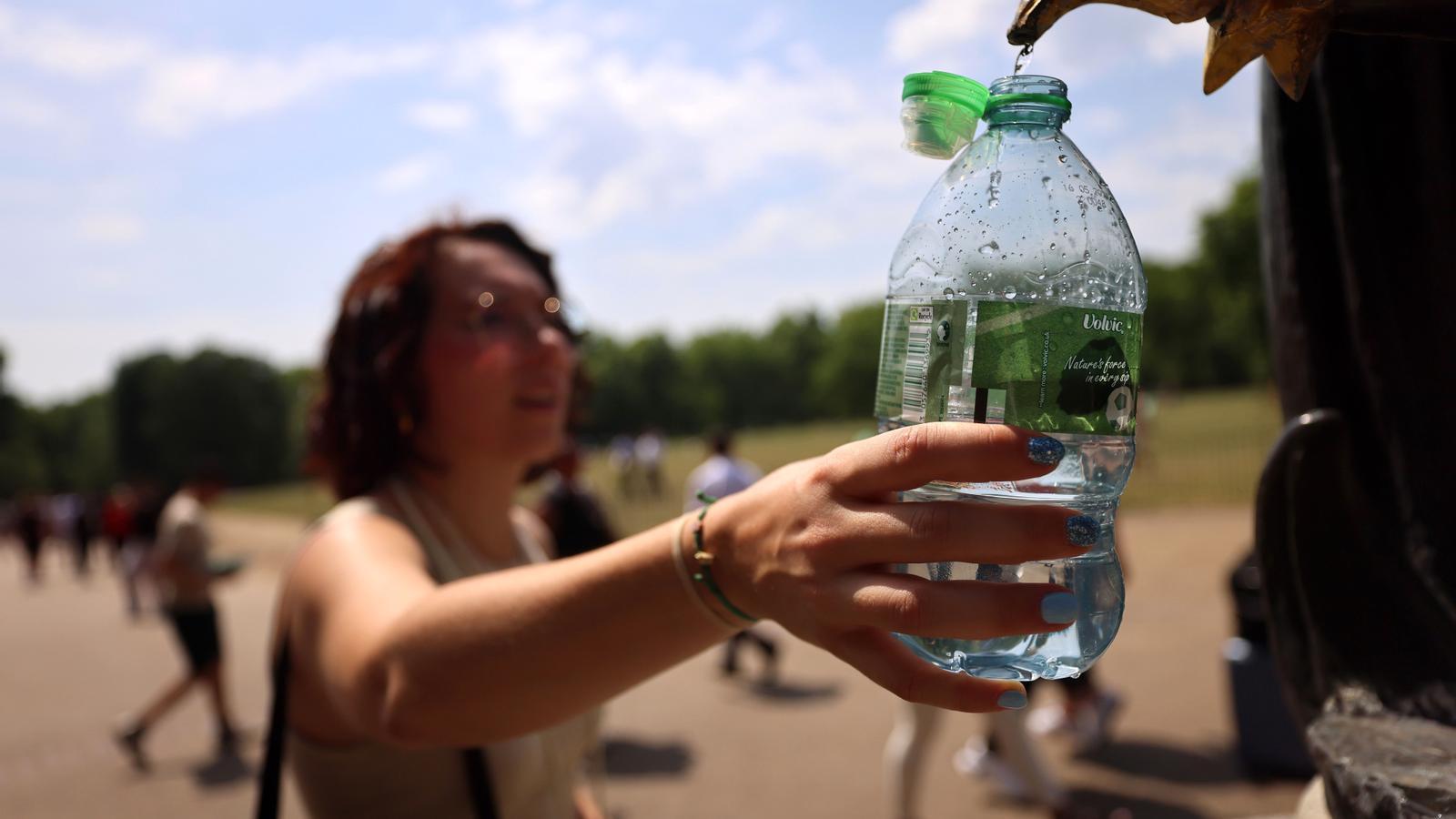
But it's not much better outside the home either. It's very difficult to find public fountains in the streets, there are not many trees and shades to take shelter for a while. Fortunately, the large parks – which do not have irrigation systems and, therefore, it quickly shows when it hasn't rained for a few days – serve as climate refuges and you can still see people exercising, although they are also not used to waking up early or waiting until dusk to avoid heatwaves.
More heat in Germany than in Mallorca
Germany is also facing an unprecedented heatwave. These days it is hotter in Germany than in Mallorca. The island is one of the Germans' favorite holiday destinations, to the point that many consider it the seventeenth Land (federal state) of Germany. The German Meteorological Service (DWD) registered 41.3 degrees Celsius in Saarbrücken-Burbach on Friday, the highest temperature ever measured in the country. A new record could be reached this weekend, with temperatures up to 42 degrees. It will be the warmest June in Germany since records began. Meanwhile, in Mallorca, temperatures will reach 34 degrees.
Although a Climate Change Adaptation Law already exists at the federal level, German cities are barely prepared to cope with increasingly frequent and prolonged heatwaves. Many of the measures to protect the population from high temperatures remain fragmented. In the German federal system, these measures are the responsibility of the federal states and municipalities. The Green Party is calling on the federal government for a program of 5 billion euros to improve heat protection in Germany.
According to Clean Energy Wire, it is estimated that only 19% of German households had air conditioning in 2024. In comparison, in the United States, the figure is around 90%. This is explained by the fact that, historically, Germany only used to have a few weeks of intense heat each year. In contrast, homes are better prepared for the cold. Many Germans, however, prefer to save the expense of air conditioning or directly forgo it for environmental reasons: according to experts, these appliances consume a lot of electricity and contribute even more to aggravating climate change.
Nordic Countries: unaware of the heat
The heatwave in the Nordic countries mainly affects Denmark, where temperatures are expected to climb between 28 and 35 degrees this weekend, and southern Sweden. In Copenhagen, the swimming areas set up in the canals are filling up with people looking to relieve the heat, while fewer cyclists are seen on the streets, as many avoid physical exercise during the central hours of the day, following the recommendations of the Danish Meteorological Institute (DMI), which has issued an orange alert, the second highest level of warning.
Besides this, the feeling among Danes is that the city is poorly prepared for heatwaves, as the average temperature in June is 19 degrees, about fifteen degrees less than what has been recorded in recent days. Experts also warn about the lack of trees and public fountains in the capital's streets, while few bars and restaurants, shops, and offices have air conditioning or an efficient fan system.

On a metro exit from the city center, Margrethe Zacho Haarde explained, overwhelmed by the heat, that the carriage was full and without air conditioning because "it is not normally necessary in the summer". Haarde called for public transport to be adapted: "We have to accept that this is the new standard summer climate," she lamented.
For Philippa Sophie Fraas, an employee of a government office, working these days has become a challenge: "The office is not prepared. We have to open the windows and share a fan, and even so, the temperature reaches 27 degrees inside," she explains. Fraas argues that, just as employees are recommended to work from home during heavy snowfall, this measure should also be applied during extreme heat episodes. Beyond the cities, in the Nordic country, the heatwave has also caused a high risk of fire throughout the territory, something unusual until now.
In Sweden, the effects of the heatwave, which could bring record temperatures of 36°C to the south of the country, are being strongly felt in public transport. In Scania County, several users have complained that the temperature inside the buses was 37°C, while the authorities have warned that the train network will be affected with delays and cancellations due to the heat.
These episodes highlight the conclusions of a report published this week by the Climate Adaptation Council, which warns that "Sweden is not sufficiently prepared for a warmer climate." The document points out that many workplaces do not have protocols for managing work when temperatures rise and that, in general, "awareness of the effects of heat is still low," warned Karin Lundgren Kownacki, from the Swedish Meteorological Service.
