Anne Hidalgo, the farewell to the mayor who has made Paris more sustainable and more social
The commitment to cycling, speed reduction, and the promotion of social housing divides Parisians

-
CAT -
CAST
ParisAt any traffic light in Paris at 8 a.m., a crowd of bicycles gathers in the front row. On some streets, like Rue Rivoli, in front of the Tuileries Garden, the enormous number of bikes at any time of day is surprising. They far exceed the number of cars. The fight against private vehicles and the promotion of sustainable transport methods have been one of the pillars – and, surely, the most visible one – of the twelve years of socialist Anne Hidalgo as mayor of Paris, the first woman to hold the position. "It is essential to transform the city to adapt it to climate change," she argued in the early years of her mandate.
Hidalgo, 66, will hand over the reins this Sunday to the new mayor of the city, also a socialist, Emmanuel Grégoire. The Frenchwoman of Spanish origin – born in San Fernando (Cádiz) and emigrated to France with her parents when she was two years old – leaves behind a less polluting city thanks to her plan to convert streets into pedestrian zones, promote cycling, reduce parking spaces, increase the price of parking areas – which cover almost the entire city – and reduce speed.
Paris has almost 500 kilometers of bike lanes – many of them created in recent years – and, in a decade, bicycle use has tripled. The progression is so significant that in 2024, trips by this two-wheeled vehicle (11.2%) surpassed those made by private vehicle (4.3%). To compare it with Barcelona, bike trips account for only 2.3% while private vehicles represent almost 20% of trips. In 2024, the magazine Time included the mayor of Paris among the 100 most influential people in the world for the climate.
While Hidalgo has championed all these mobility changes to favor the fight against climate change, some decisions have been controversial and have divided Parisians. A large proportion of residents who must travel by car and transporters do not approve of the mayor's management.
According to an Ipsos survey, only 49% of Parisians are in favor of reducing the speed limit to 50 km/h on the belts surrounding the city and only 58% are in favor of the limitation to 30 km/h within the French capital. The increase in street parking rates has also caused discontent, which can cost up to 18 euros per hour in the city center for the most polluting vehicles.
Public housing
Anne Hidalgo will also be remembered for having created the municipal police, for having made it possible for citizens to bathe in the Seine, and for her commitment to social policies. During her 12 years in office, she has been involved in welcoming immigrants and has promoted public housing at accessible prices, both for rent and for purchase. In the city, around 25% of housing is social housing, a figure higher than in most European capitals.
But public housing policies have not prevented – far from it, nor solved – the problem of housing prices in Paris. As in other major European cities, the extremely high prices are driving families and the middle classes to the suburbs and are one of the main obstacles to living there. The price per m² is between 30 and 40 euros, but in some neighborhoods it can soar to 50 euros.
Among the most negative points is the debt that the city has accumulated. Hidalgo is leaving behind a historic debt of around 9.7 billion euros, 133% more than twelve years ago. The balance of the mayor's term also divides Parisians. According to an Ipsos poll, only 46% of the city's inhabitants rate her management as good or excellent, while 54% believe it has been mediocre or bad.
Uncommunicative and authoritarian
Hidalgo has always projected an image of a kind and approachable mayor, but her political rivals have accused her of having an uncooperative demeanor and being too authoritarian. She defends herself and assures that the criticisms have been amplified by the fact that she is "a woman of the left, an environmentalist, and of immigrant origin." Nevertheless, the mayor has been criticized by people in her own party, including Emmanuel Grégoire. The new mayor was her second-in-command for five years, but then distanced himself from Hidalgo and had bitter public confrontations.
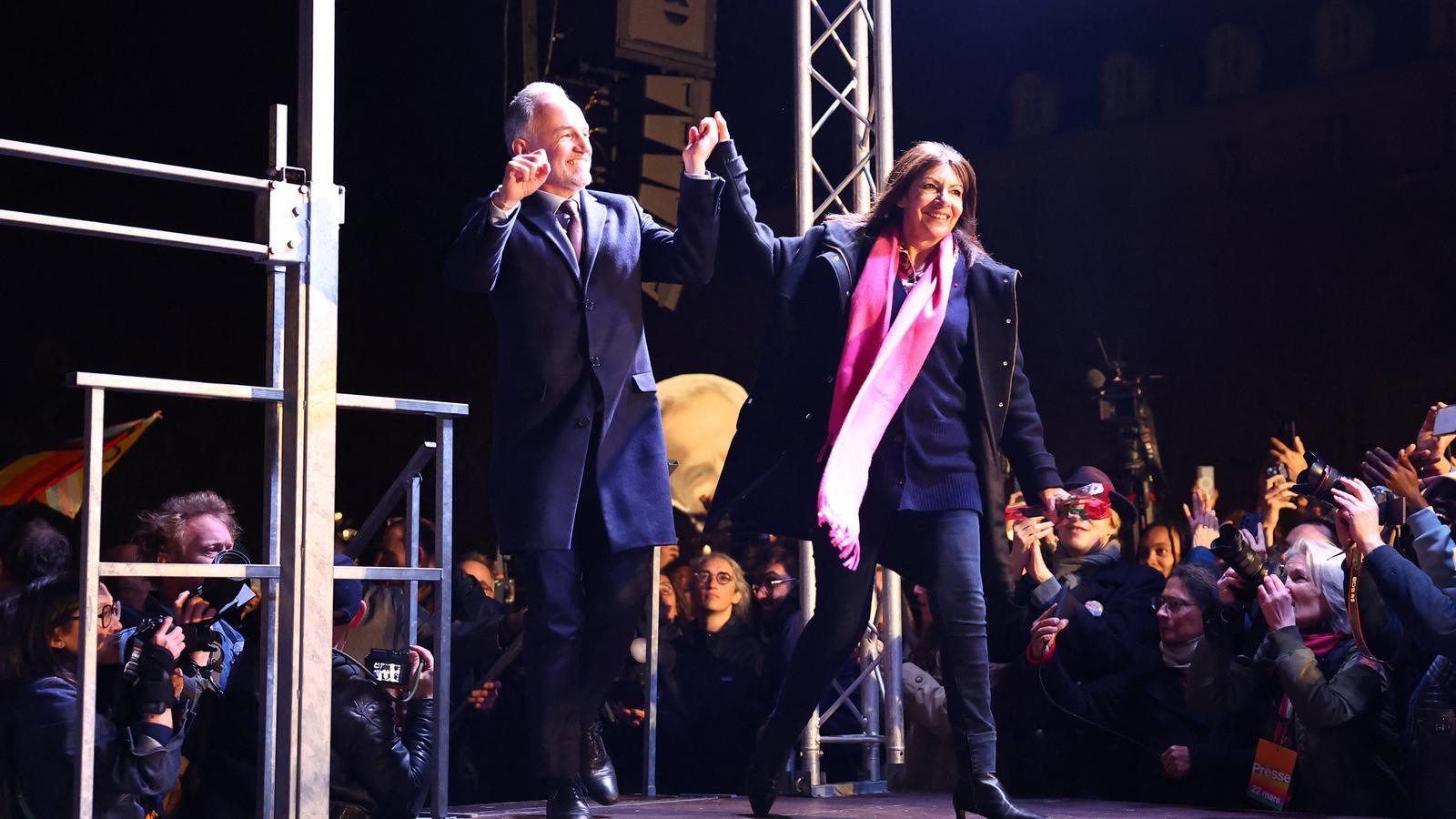
Last Sunday night, when Grégoire won the municipal elections and cycled to the town hall, Hidalgo was waiting for him to hand over the keys to the city. Both shared an emotional hug, leaving behind the confrontation that had marked their relationship in recent times. There's nothing like an electoral victory to put an end to distance.
