"After nineteen days of war, today I finally cried": the personal diary of the Iranian president's son
Yousef Pezeshkian shares personal reflections on the internet about how the Iranian population is experiencing the conflict

BarcelonaWriting a diary in wartime often responds to the need to preserve humanity in the face of barbarism and to bring order to chaos. From Anna Frank's to Victor Klemperer's, these are documents for posterity and a portrait of daily life amidst the bombs. With the advent of the internet, these writings reach the world in real time. Now some Iranian citizens share their reflections daily with internet users in the midst of war. But if it is about the son of the president of Iran, his testimony has a special meaning.
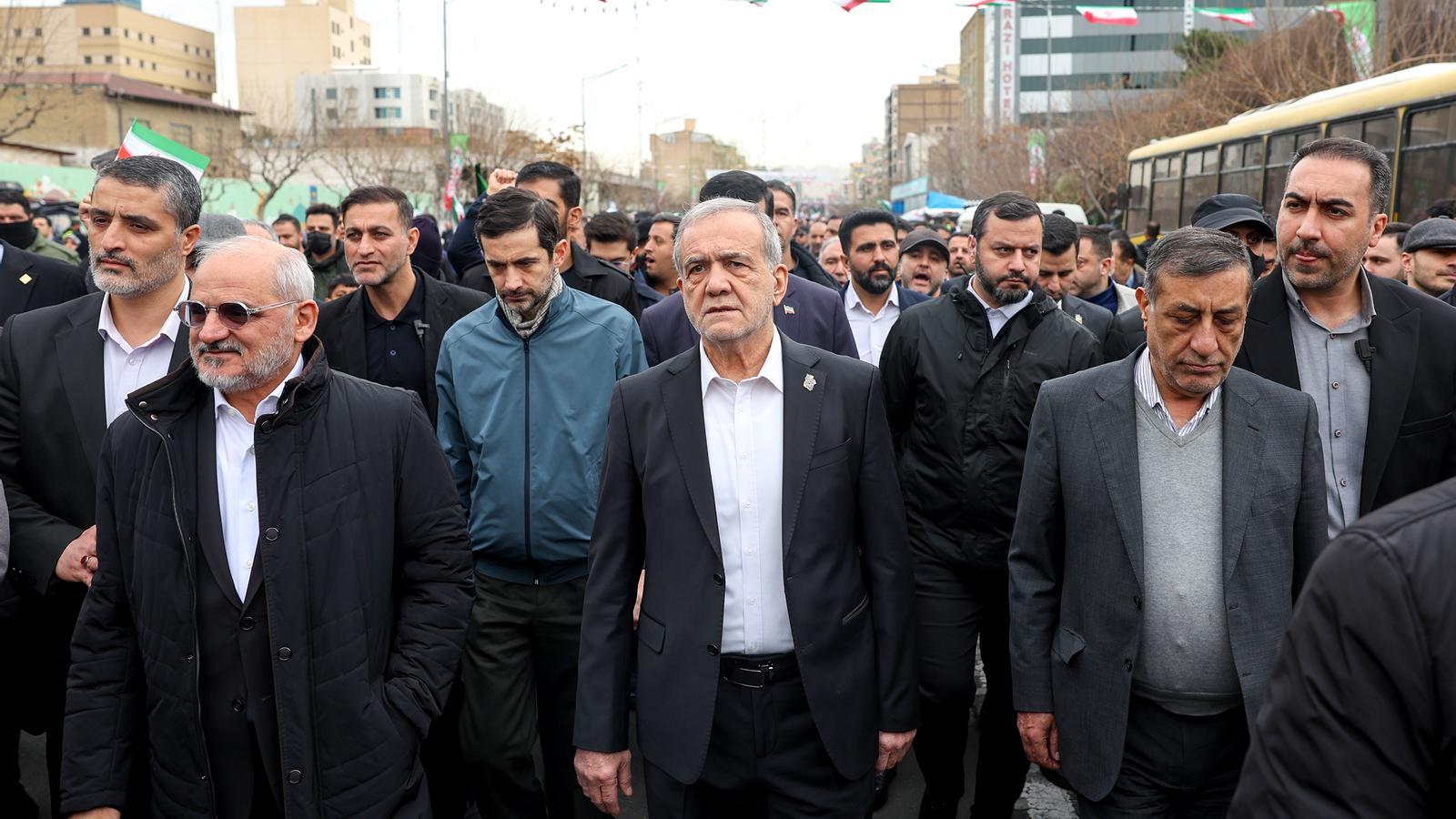
With the same boldness and spontaneity that his father, Masoud Pezeshkian, showed when he took to the streets after the Israeli and American attacks decapitated the Iranian regime, his son Yousef is writing a digital diary. He explains his daily life — how he meets friends, goes shopping, watches the news, or plays with his children — but also shares his fears and opinions on the Iranian stance in the conflict.
"At noon, the sound of missiles was heard and it was raining. The weather in Tehran had become pleasant and spring-like. I wish I had a camera and was taking pictures of the beautiful city views. I wish there was no war and I could take my wife and children for a walk through the city streets," he wrote on March 15.
Pezeshkian, who is 45 years old and a doctor of physics, describes a relatively calm life despite the war, with regular meetings with loved ones and hours dedicated to thought and writing. "Wednesday at 10 a.m. — he writes —. The weather is rainy and pleasant. How beautiful life is these days. I am meeting with my friends. We chat a bit. We talk about a tweet I posted last night and then we go to a viewpoint to observe the city. In the evening, we have dinner together."
The Iranian president's eldest son focuses on everyday details and recounts — in plain language — how, despite the conflict, the population tries to live a normal life amidst suffering. "After nineteen days of war, today I finally cried. And several times. I went to see my grandmother. The first week of the war, they hadn't even told her that the leader had died. She didn't know everything. [...] When she saw me, she cried and I comforted her by telling her that everything was normal. Nothing is happening. It's war. They attack us, and we retaliate, and so on and so forth," he recounts. "Until today I had kept myself strong and firm, I believed that no news could move me. But grandmother is different from the rest. She is a magician, she speaks directly to the heart. Her words penetrate your soul and her gaze takes you to the remotest places in the world... In the farewell hug, I got a lump in my throat and I couldn't say anything anymore, I just shook my head to hold back the tears. And as soon as I put a foot out the door... I couldn't hold back".
In defense of his father
Although he holds no official position, Yousef has acted as a close advisor to his father and defends him whenever he has the opportunity. He recounts how, in a chat shared with university colleagues, some of them had written messages against the president. "I didn't have the patience to respond. I left the group. When the disciples of the revolution in the Islamic Republic of Iran do not respect the president, how can we expect foreigners, who are our enemies, to respect us?" he asks himself. He also states that protecting the lives of the country's officials has become the priority of the ayatollahs' regime. Despite the internet outages affecting the majority of the population, the president's son's diary also indicates that the elite has privileged access to connectivity. Surprisingly, despite aligning himself with the regime, the president's son is indignant about the internet shutdown imposed by the Iranian authorities and believes that this could make them lose credibility in the eyes of the international community.
Yousef Pezeshkian assures that he has only seen his father twice since the start of the war. When Iran began to attack the Gulf countries, the Iranian president apologized, and this was not well received among some sectors of the Persian country, and was also criticized by the harder wing. As expected, his son defends him in the digital diary: "I know how my father tried to improve relations with the neighbors and Muslim countries in the region. How bitter it is that, to defend ourselves, we have to attack American bases in our friendly countries. I don't know if they understand our situation." And he adds that after the war they will need their neighbors.
The reflections and personal scenes mixed within are emotive, such as when he remembers his mother, a gynecologist by profession, and his brother, who died in a traffic accident in 1994. "Today is the anniversary of the death of my mother and my little brother —he wrote—. My mother was never under my father's shadow. She was an independent, people-oriented, free, logical, and loving woman like all mothers," he says.
Geopolitical readings
A recurrent observation is how the war has strengthened the Iranian regime in their view: "I believe that the war has killed the idea that the country's officials eat and drink while their children have a good time. The martyrdom of leaders and some of their families has changed many mentalities," he writes. "With this war, the enemy has helped us to repair one of the country's flaws."
While international headlines are full of the uncertainty of whether the United States will launch a ground operation in Iran, Pezeshkian assures that within the country "almost everyone agrees that Iran has an advantage in a ground attack and that the situation will not improve for the United States and Israel," and that they also suspect it may just be a bluff. Regarding this, two days earlier he stated that "our armed forces have been planning and preparing for these days for years. Everything is calculated and done with a regular and specific plan." And he adds: "I realize that our military sector has no concern about the prolongation of the war. That is to say, we have enough missiles to fight for months with this trend."
Iran's image abroad, in fact, concerns him. He believes that herein lies the key to explaining himself to the outside world. "Yes, we have flaws. We have made mistakes. We are not infallible. But our mistakes are not of a level that justifies the United States and Israel in this war or makes us guilty. I say with certainty that God is not on the side of the United States," he maintains. And he criticizes Trump without mincing words: "Sometimes I doubt if he is really intelligent and works with a plan or if he is a grumpy idiot who lacks personal stability," he writes.
The messages that Pezeshkian shares —both via Telegram and Instagram— also describe, with the regime's usual epic rhetoric, how some of the most decisive moments of the conflict were experienced, such as the death or burial of some of the leaders: "The news of Ali Larijani's death [...] spread through social networks. I really didn't want to believe it. We must not allow the enemy to have another successful assassination," he writes. And, about the ceremony, he recounts: "What a crowd there was! The tear-filled eyes of the imposing men and women of Iran, along with the deafening sound of the cries ""Allah Akbar" (God is great) and "Heyhat minna-dhilla" (We will never accept humiliation), created a heroic image."
