The United States unleashes war against Iran again: what remains of the agreement?
Tehran responds to the attacks by launching missiles against US military bases in the region and bids farewell to Khamenei in Mashad

-
CAT -
CAST
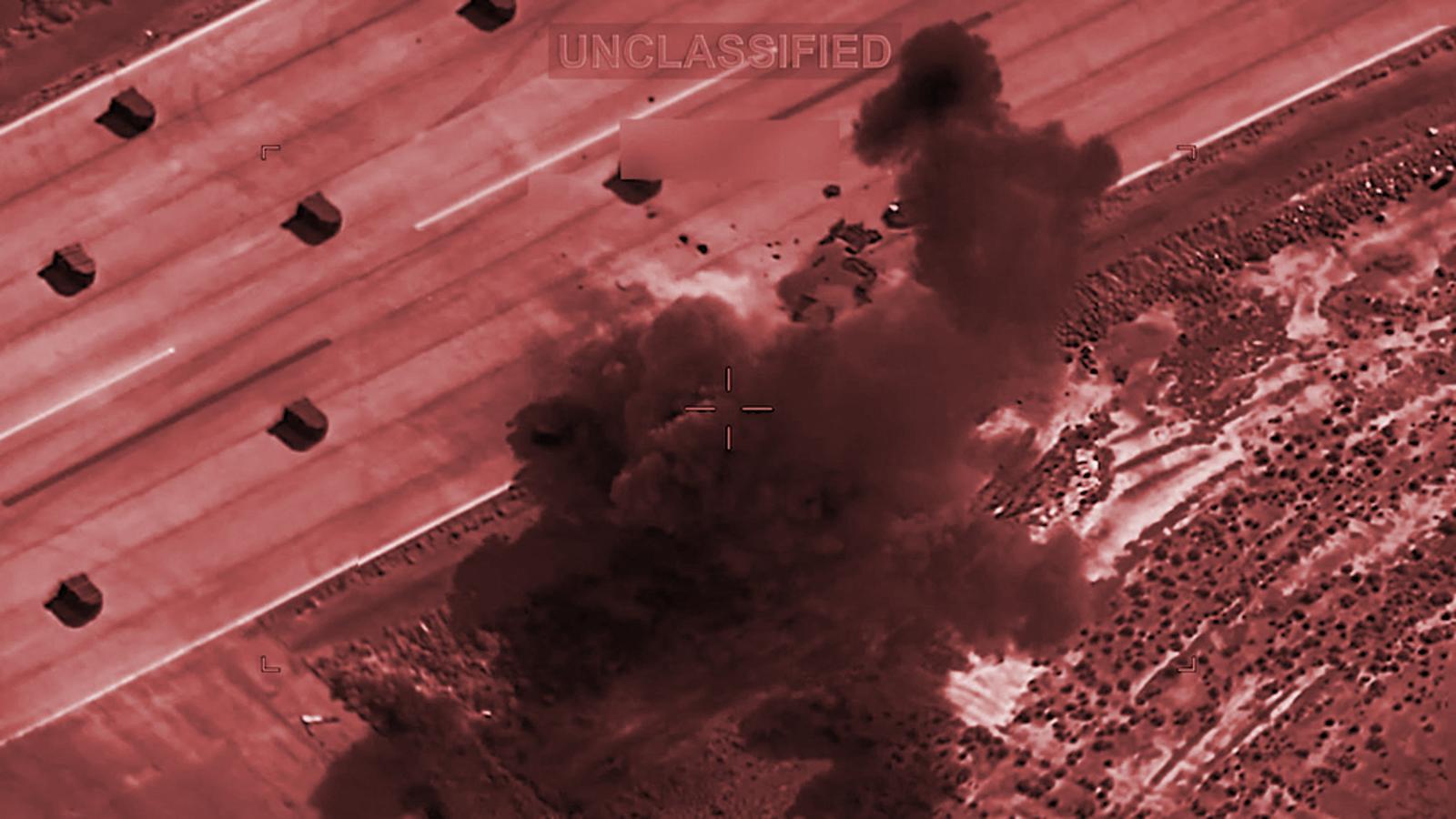
BeirutFor the second consecutive day, missiles have replaced diplomacy in the Middle East. Just two weeks after signing the memorandum of understanding that allowed a pause in fighting and opened the door to new negotiations between the United States and Iran, the attacks have intensified again. During Wednesday night and Thursday morning, Washington has once again bombed Iranian territory. The US military has stated that since Wednesday dawn it has struck nearly 170 military targets in the country, including air defense systems, coastal surveillance facilities, and missile and drone depots. According to the Iranian Ministry of Health, US attacks in the last two days have left at least 14 dead and 78 injured in five provinces of the country.
Among the affected sites is Bushehr province, home to Iran's only operational civilian nuclear power plant. A local official has confirmed that several locations in the province have been attacked, although Iranian authorities deny that the nuclear power plant has been the target of any direct attack. The area has strategic importance that goes beyond its atomic dimension. Off its coast lies Kharg Island, Iran's main oil terminal, from which most of the country's crude oil exports depart. The proximity between the two points connects two elements that until now had been analyzed separately: Iran's nuclear program and Tehran's energy capacity to influence international markets.
The Iranian Ministry of Foreign Affairs has also denounced attacks on several southern provinces and on two railway bridges in the east, calling them "war crimes." The attacks have also forced the suspension of train traffic between Tehran and Mashhad, the holy city where, after almost a week of funerals, this Thursday the final farewell ceremony and burial of Supreme Leader Ali Khamenei is being held, who died in attacks by Washington and Tel Aviv on February 28.

Tehran has assured that it will defend its sovereignty and territorial integrity and has promised to "punish the aggressors". Washington, for its part, maintains that its operations are directed against Iranian military capabilities to "reduce" Iran's ability "to threaten navigation" through the Strait of Hormuz.
The Iranian response has once again been directed against American military installations deployed in the region. The Revolutionary Guard has announced drone and missile attacks against American bases in Kuwait and Bahrain, while Tehran has also confirmed actions against Qatar, where Al Udeid air base is located, one of Washington's main military installations in the Middle East. Jordan has activated its alert systems and announced the interception of Iranian missiles, with no casualties or material damage. This is not an offensive against these countries, but against the American military presence in their territory. But Tehran's message is clear: any operation against Iran will have consequences beyond its borders.
The network of North American bases built for decades as an element of regional security is now becoming one of the main lines of tension between Washington and Tehran. The case of Qatar better summarizes this contradiction than any other. The emirate hosts Al Udeid, the largest U.S. air base in the Middle East, but at the same time it is one of the few countries that have been able to maintain open channels with Iran. Along with Pakistan, Qatar has participated in diplomatic efforts to try to contain the crisis. It is now in a difficult position: its role as a mediator coexists with its role as a central piece of the North American military presence in the region.
According to retired General Youssef Haidar, "Iran is trying to show that any attack against its territory will have a regional cost: its objective is to show that U.S. bases in the Middle East are not out of its reach," he explains. For the retired military man, "Tehran does not necessarily need to destroy all these facilities; it seeks to demonstrate that it can respond and that the conflict may not be limited to Iranian territory."
The memorandum of understanding, questioned
But beyond the military escalation, the central question is another: what remains of the agreement reached between Washington and Tehran? Until now, the United States had placed Iran's nuclear program at the center of the negotiation. Donald Trump has insisted that Iran had guaranteed it would not seek to develop a nuclear weapon and that this commitment had to be the basis of any agreement. Talks revolved around uranium enrichment, centrifuges, and international inspections. But the breakdown of the truce reached after the memorandum of understanding has also shifted the focus of the discussion.
The Strait of Hormuz returnsto the center of the crisis. Nearly 20% of the world's oil and liquefied natural gas circulates through this maritime route. Any threat to this passage has immediate consequences on energy markets. Tehran demands to impose its own conditions to keep the strait open, while Washington accuses Iran of having failed to fulfill its commitments after the attacks on commercial ships, and responds with new sanctions on Iranian oil.
According to Fares Boustani, from the Beirut Center for Strategic Studies, "for years international concern focused on Iran's nuclear program, but this crisis shows that Tehran's leverage does not depend solely on uranium enrichment." The analyst believes that "Hormuz represents a strategic tool, because any disruption of this route directly affects the global economy and forces major powers to intervene".
To all this is added another element of discord: Israel, which today has thrown more fuel on the fire. Benjamin Netanyahu has assured that the war with Iran "is not over yet" and has reiterated that his army is prepared for any scenario. During a graduation ceremony for new military pilots, the Israeli prime minister praised Tel Aviv's air superiority which "reaches everywhere, from Yemen to Iran" and warned that "the Iranian axis is weaker than ever," while "Israel is stronger than ever".
The impact of all this is already reflected in the markets. The price of a barrel of Brent crude rose again this Thursday, nearing $79 amid uncertainty about the future of the strait. While bombings continue in southern Iran and alerts sound again in various points of the Gulf, the question is no longer solely whether the ceasefire will survive. The issue is what kind of agreement will remain when Washington and Tehran sit down face to face again.

