The 'zamburiñas' that we buy in cans will be real 'zamburiñas' starting in January
A law asks canned goods brands to label with the real name what they sell; they have until the end of the year to finish them
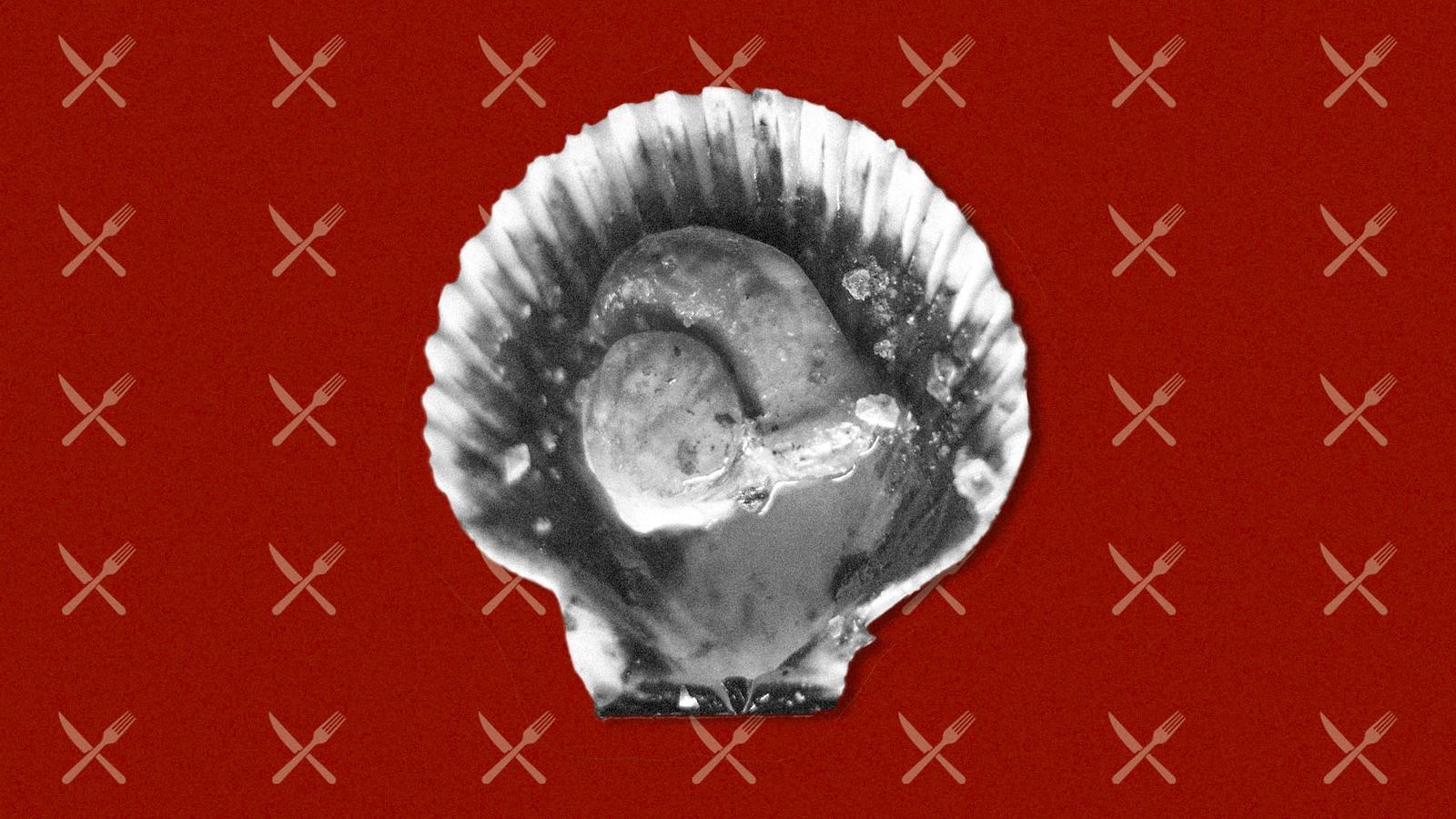

Until January of next year, when you buy a preserve labeled as zamburiña you will likely be purchasing Pacific scallop, Galician scallop, or variegated scallop. All three have an affordable price, and have traditionally been passed off as a more expensive mollusk: the variegated scallop, zamburiña in Galician. However, all this will end in January, because a new law will force canning companies to label with the correct name: they will not be able to pass one off for the other, neither in the name nor in the labeling photograph. Meanwhile, they have these remaining months of the year to finish the preserves that have the erroneous labeling, the one that tries to pass off as something grand what it is not.
As marine scientist Arnau Subías explains, the law arrives late, and he himself has always been denouncing it on his Instagram account, @gastrobio. But in this case, the phrase that claims it is better late than never is true. In fact, in January of this year, the newspapers La Voz de Galicia and El Diario Vasco explained that Galicia had sanctioned 119 restaurants with fines of 300 euros for substituting one bivalve for another. All this might seem like an innocent confusion, but it is not, because the price of each of the varieties is very different, and above all because there is one that is traditionally the most desired: the zamburiña. Furthermore, there is another important factor to understand the reason for the law: “When we call what we eat by the correct name, we properly value the product from a restaurant's menu to a display case or supermarket shelves,” states Arnau Subías.Key differences
To distinguish them, it must be said that Galician scallops have a light, almost white shell, and an orange gonad. On the other hand, variegated scallops (zamburiñas) have a dark shell and the gonad is not orange but a light color, like the rest of the body. They are bivalve mollusks, which means they have two pieces, two valves, and they live in the Atlantic and also in the Mediterranean. However, there is a fundamental difference between the two when they reach the market: the price. The variegated scallop has a very high price because, in addition to the closed seasons that regulate their fishing, the catch, when allowed, is scarce due to overfishing, while the scallop has a lower price and is fished more frequently.
And there are still more differences between the two mollusks that cause confusion, the scallop and the variegated scallop, and it is a matter of size. If you find a large bivalve mollusk on your plate, of large dimensions, so much so that the shell is often even used as a plate, you will have a scallop in front of you, never a variegated scallop (zamburiña), because the latter are always smaller in size.
Finally, in all cases, these bivalve mollusks need to be depurated, which means that, once caught, they pass through water tanks with purified water so they can extract what they have filtered while living in the sea. Scallops or variegated scallops, like mussels, oysters, and razor clams, must be depurated between 24 and 72 hours before reaching the market. And not only because they have filtered everything in the sea, but also because this way they are cleaned of sand.

