Don't let them pass off prawns as shrimp.
Both are crustaceans that are staples at festivals and have a long tradition in our dishes. We explain their similarities and differences.

-
CAT -
CAST
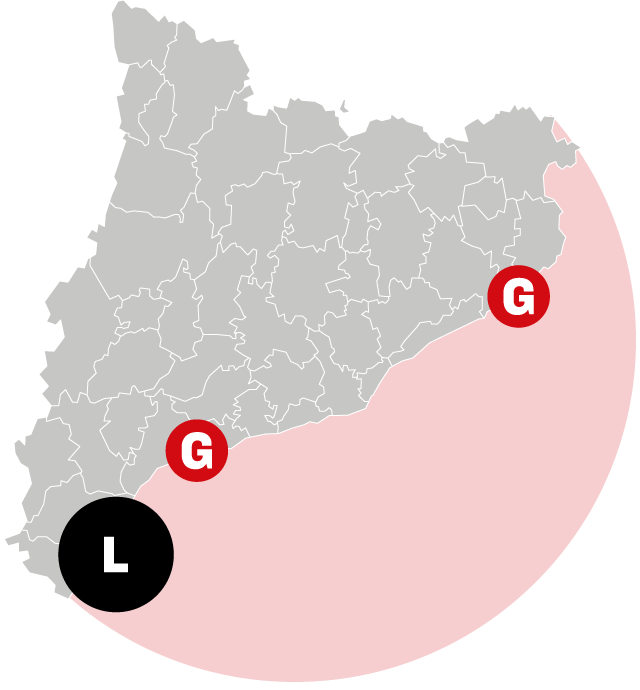
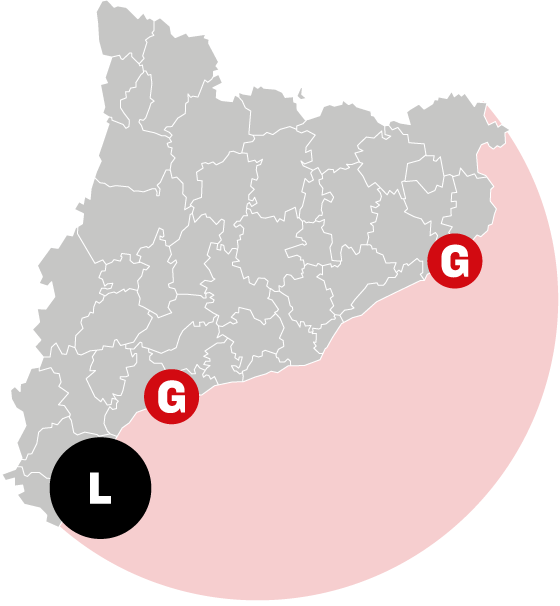
Where do they live?
The boats that fish for red shrimp are the ones that go the furthest and return to port the latest, because they have to go very far out to cast their trawls and catch them. They are fished throughout the Mediterranean, although in recent years it has been said that, due to ocean currents and climate change, they might have spread to other seas. However, the red shrimp has only one homeland: the Mediterranean.

Palamós
Tarragona
Mediterrani
Delta de l’Ebre
Palamós
Tarragona
Mediterrani
Delta de l’Ebre
Palamós
Tarragona
Mediterrani
Delta de l’Ebre
In contrast, the prawn lives in various seas and is caught in shallow waters. In our region, it is fished in the Ebro Delta, and the port of La Ràpita is the most important in Catalonia thanks to the fishing of this species.
How are they caught?
Red shrimp are caught using the trawling system (criticized for its high environmental impact), nets that stir up the seabed where the shrimp are buried.

Prawns, on the other hand, are usually caught using artisanal fishing methods, such as trammel nets or handlines, which are also used to catch other species. For example, cuttlefish are caught with handlines. Trammel nets are also used to catch fish in addition to crustaceans like prawns.
Close cousins
They can be considered close relatives since both are ten-limbed dendrobranchs and share the same anatomy in general terms. When we suck on the head of one of them, we eat the brain, stomach, gonad, heart, hepatopancreas, and antennal gland, while when we bite on the body, we eat the intestines; and as for the tail, the final part, we ingest the anus and rectum.

Size
- Shrimp: It is usually smaller and thinner.
- Prawn: It is generally larger and more robust.
Color
- G: More reddish, especially visible after cooking.
- L: More orange or brown color, often paler.
Body shape
- G: More slender and delicate body, with long antennae.
- L: Thicker and more compact, with stronger legs.
Paws
- G: It has 3 pairs of legs with pincers (maxillipeds).
- L: It only has 2, a key anatomical difference.
Taste
- G: More intense and marine taste, slightly sweet.
- L: Mild and less concentrated.
Texture
- G: Fine and tender.
- L: Firm and fleshy.
Kitchen
- G: Highly appreciated food on its own (grilled, boiled).
- L: Versatile in rice dishes, stews, kebabs or grilled.
Trademarks
In Catalonia there are four registered trademarks for extractive fishing products. Among these, two are prawns: the Palamós prawn and the Tarragona prawn. Specifically, the red prawn of Palamós (Aristeus antenatus) has been a guarantee mark since 2009. The other two are the Llançà langoustine and the Barceloneta fish.

The prawn is the same
All Mediterranean red prawns are the same. They hatch from fertilized eggs, which, when released, become larvae that travel across the Mediterranean thanks to ocean currents. An egg laid on the coast of Palamós can develop into a prawn in Vilanova i la Geltrú. That's why it's said that the red prawn's homeland is the entire Mediterranean coast. They don't limit themselves to populations confined to just one sea. It's also said that when the female prawns have a purple head (which is when they have their eggs), it's the best time to eat them, because their flesh will be firm, meaty, and flavorful.

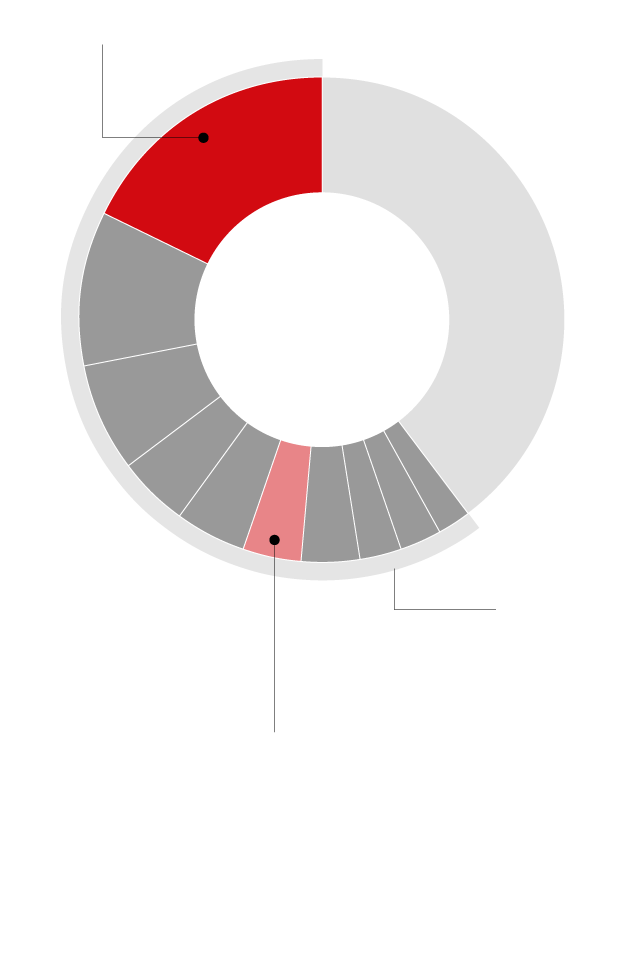
Gamba vermella 17,84%
Sardina 10,45%
Seitó 7,05%
Lluç 4,79%
Altres espècies
39,56%
Escamarlà 4,66%
Gamba blanca 3,96%
Moll de fang 3,78%
Orada 2,78%
Només 10 espècies ja acumulen més del 60% de la recaptació
Pop roquer 2,78%
Emperador 2,35%
Gamba vermella 17,84%
Altres espècies
39,56%
Sardina 10,45%
Només 10 espècies ja acumulen més del 60% de la recaptació
Seitó 7,05%
Lluç 4,79%
Escamarlà 4,66%
Gamba blanca 3,96%
Moll de fang 3,78%
Orada 2,78%
Pop roquer 2,78%
Emperador 2,35%
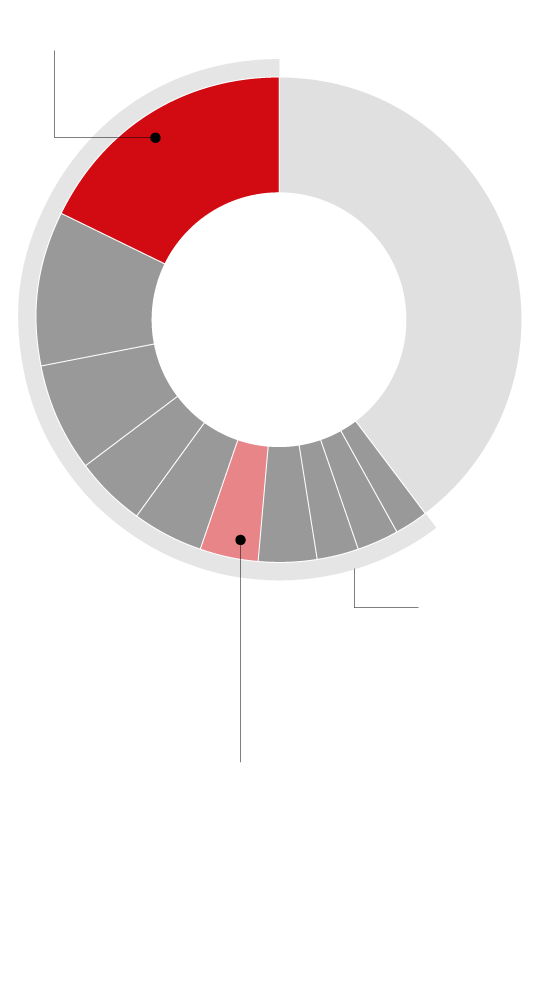
Gamba vermella 17,84%
Altres espècies
39,56%
Sardina 10,45%
Només 10 espècies ja acumulen més del 60% de la recaptació
Seitó 7,05%
Lluç 4,79%
Escamarlà 4,66%
Gamba blanca 3,96%
Moll de fang 3,78%
Orada 2,78%
Pop roquer 2,78%
Emperador 2,35%
Price and capture evolution
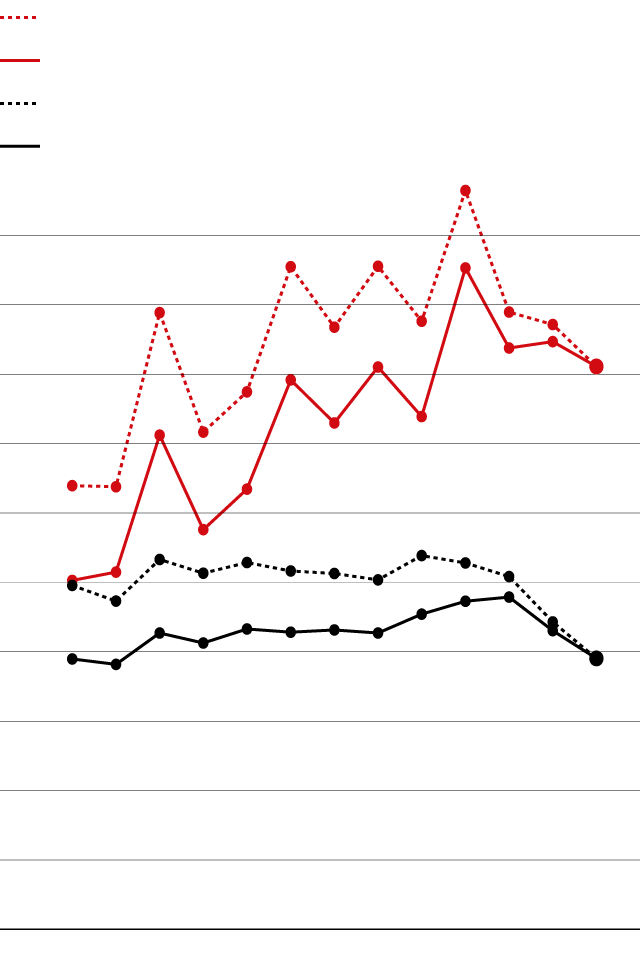
The price of small and medium-sized red shrimp is double that of prawns, as it is a product traditionally much more valued by Catalans. Its cost has fluctuated from €25 in 2012 to €40 in 2024 (with even higher peaks, such as in 2021), while the price of prawns has remained more stable. It is worth noting that large red shrimp can reach €100 or even peak at over €200. Price fluctuations are closely linked to catch data. In general, red shrimp fishing has been declining over the last decade due to the overall reduction in the Catalan fishing fleet. Furthermore, maximum fishing quotas have been imposed on this species in the last two years.

Preu constant de la gamba (petita-mitjana)
Preu constant del llagostí
Preu corrent del llagostí
Preu corrent de la gamba (petita-mitjana)
50 €/kg
45
40,56
40
35
30
25
19,52
20
15
10
5
0
2012
2014
2016
2018
2020
2022
2024
Preu constant de la gamba (petita-mitjana)
Preu corrent de la gamba (petita-mitjana)
Preu constant del llagostí
Preu corrent del llagostí
50 €/kg
45
40
40,56
35
30
25
20
19,52
15
10
5
0
2012
2014
2016
2018
2020
2022
2024

Preu constant de la gamba (petita-mitjana)
Preu corrent de la gamba (petita-mitjana)
Preu constant del llagostí
Preu corrent del llagostí
50 €/kg
45
40
40,56
35
30
25
20
19,52
15
10
5
0
2012
2014
2016
2018
2020
2022
2024

Gamba
Llagostí
600
400
200
0
2012
2013
2014
2015
2016
2017
2018
2019
2020
2021
2022
2023
2024

Gamba
Llagostí
600
400
200
0
2012
2014
2016
2018
2020
2022
2024

Gamba
Llagostí
600
400
200
0
2012
2014
2016
2018
2020
2022
2024

