The world is divided between pork lovers and pork haters, and in the middle are sausages.
These are the differences and the main families of traditional sausages made from pork in our house

-
CAT -
CAST
Traditionally made to make use of the pig during slaughter, they have gone from farmhouses to markets and contemporary kitchens. The quality of the meat, the climate, the slow curing process, and the experience passed down from generation to generation make Catalan sausages a living heritage that unites tradition, identity, and taste.
Pork consumption in the Mediterranean
The Mediterranean is divided between pork lovers and pork haters. We didn't invent this; it's how butchers have traditionally explained why some Mediterranean populations are passionate about pork, while many others (Muslims and Jews) don't eat it because they consider it unhygienic, or simply because they don't think about it. Similarly, while one part of Mediterranean culture has considered owning a pig (how many of us have had piggy banks?) a symbol of wealth, for another, it has been sinful. So close and yet so far, and at the heart of it all: the pig.
How are they classified?
CROSS DRYING
Once stuffed into the casing, they undergo a natural drying and curing process.
Belly meat preserved in black pepper.

Whole piece salted, macerated in pepper and cured for two or three weeks.
Made with lean meat, bacon, salt, pepper, and other spices. Vic sausage has an official Protected Geographical Indication (PGI) seal.
Narrower and longer than salchichón but made in a similar way. It's called chasquido, secallona, or somalla, depending on the region.
It is obtained by salting and then curing the hind legs of the pig. If it is the front legs, it is called shoulder.
*Although they are sold with the rest of the pork products, they are not properly sausages, because they are not put inside any casing.
COOKED
Cooked sausages were traditionally made on the same day as the pig slaughter because they utilized the animal's blood and the leftovers from other, more refined preparations. They are primarily made by stuffing the meat and other ingredients (such as rice, onion, or egg) into casings and then cooking them.
It is prepared with the best cuts of thigh and shoulder meat, along with salads. It is then cooked in broth in a cauldron.
It is made with pig blood and other meat ingredients from the slaughter, such as the head, feet, or some viscera.
It is made with the fattiest parts of the pig, ground and seasoned with salt. It is stuffed into a casing, tied, and cooked.
Typical of the Girona and Maresme regions. The name "del perol" refers to the pot in which it is cooked.
It is prepared in a very similar way to white sausage but with egg. It was originally eaten on Fat Thursday.
These are the widest cooked blood sausages. They have a thick texture and come in many varieties depending on the type of meat used.
It's reminiscent of French country pâtés. It's made with the same ingredients as liver pâté, but in a different format.
CRUS
They are sold raw and must be fried or cooked before they can be eaten.
It is made with the finest cuts of pork, seasoned with salt and black pepper, and stuffed into a casing. It is eaten grilled or fried.
Traditional sausage from the Empordà region that can be raw or dried. It contains sugar and lemon, which give it its characteristic sweet flavor.
Parts of the pig
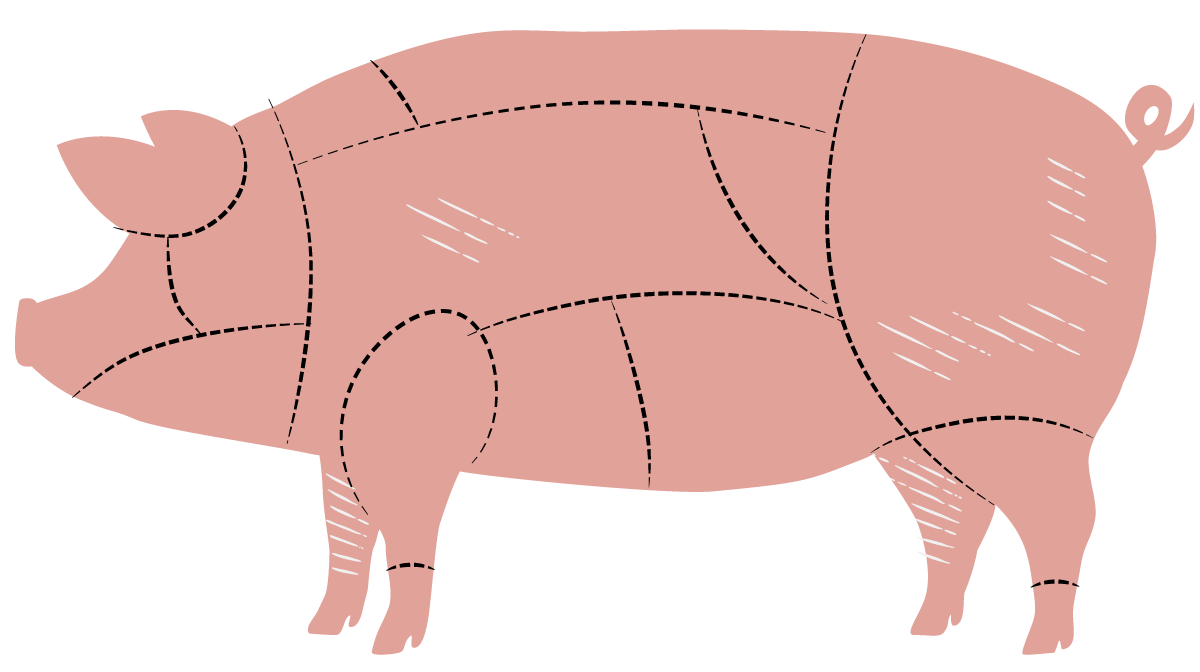
Cap de llom
Llom
Filet
Orelles
Costellam
Pernil
Galtes
Morro
Cansalada
viada
Papada
Espatlla
Panxeta
Garró
Peus
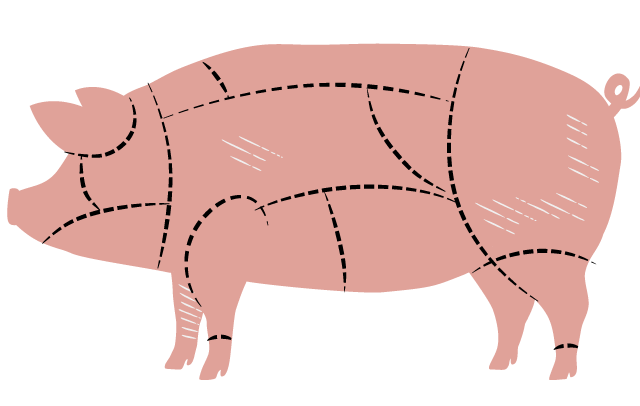
Cap de llom
Llom
Filet
Orelles
Pernil
Costellam
Galtes
Morro
Cansalada
viada
Espatlla
Papada
Garró
Panxeta
Peus
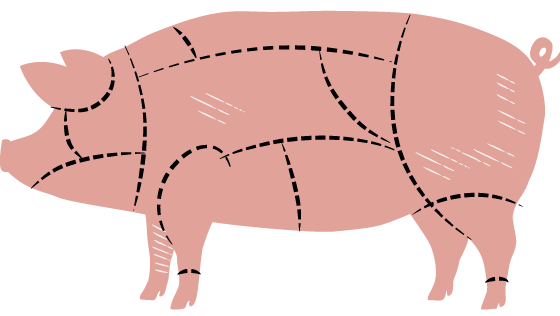
Cap de llom
Llom
Filet
Orelles
Pernil
Costellam
Galtes
Morro
Cansalada
viada
Espatlla
Papada
Garró
Panxeta
Peus
Some sayings
- At Christmas, salted pork
- He who has nine pigs in the salting box, a Merry Christmas is expected.
- By Saint Thomas, grab the pig by the nose
- From pig and from gentleman, it has to come naturally
- Hallelujah, hallelujah, he who doesn't kill a pig doesn't eat chuba
- Every dog has his day
- He who has a vegetable garden and a pig, has good comfort all year round.
- Slaughter the pig in January if you want it to keep well.
- The miser is like a pig; he only benefits when he's dead.
- From the pig, even the tail is good.
- Year over, fattened pig

