Catalonia, a fertile ground for illegal waste?

-
CAT -
CAST
An investigation by the Guardia Civil, Europol and the French Gendarmerie has uncovered a network of illegal waste trafficking that, originating from France, was being dumped in various locations in Catalonia. For now, the pointed-out sites are Sant Esteve Sesrovires (Baix Llobregat), Pujalt (Anoia), Rubí (Vallès Occidental) and Riba-roja d'Ebre (Ribera d'Ebre).
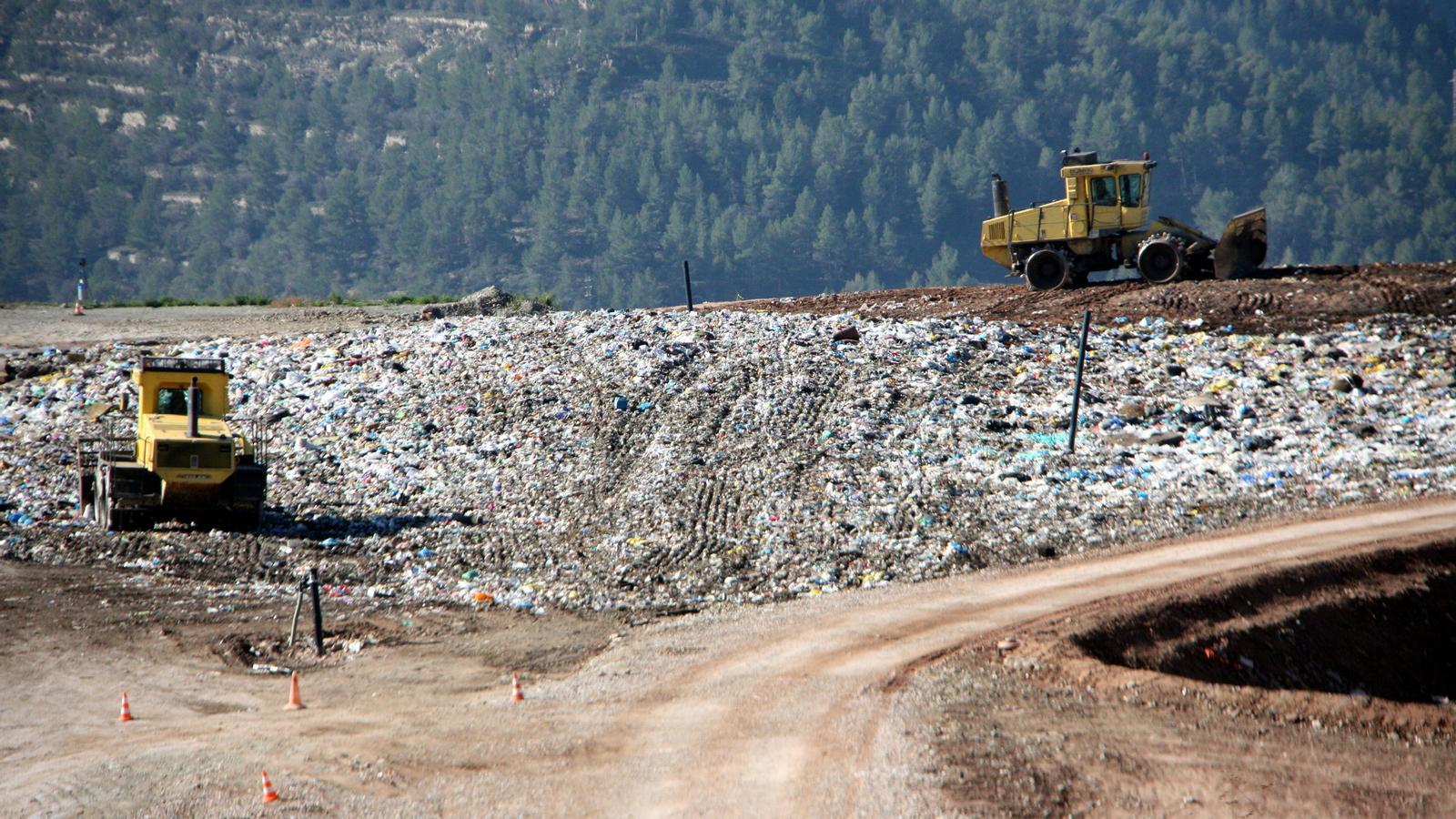
In fact, in recent years there has been a trickle of cases. In 2025, the owner of several landfills, including the one in Pujalt, had already been arrested, on that occasion for dumping waste and various materials from Italy carried out in 2021. Precisely the Pujalt landfill, very visible from the neighboring town of la Guàrdia Pilosa, accumulates different complaints.
Everything points to us being faced with interconnected environmental crimes. These would be criminal practices that seem consolidated and which mean that the Catalan territory would be becoming a fertile ground for the reception of uncontrolled waste from abroad. Just as with drug mafias, Catalonia is seen and used as a place of easy access and little surveillance.
What is happening to us? Why do we attract so much illicit business? Being a country with a large floating population, with a notable social diversity and well connected to Europe – and beyond – by land, sea and air, and a region, moreover, on the periphery of state political power, can be reasons that allow this type of illegal activities to be disguised.
The apparent lack of rigor and control exercised by administrations at all levels must also weigh on the choice of our territory. Is there an effective body of government environmental officials to monitor the proper functioning of landfills? Are the different police forces sufficiently resourced and prepared to follow these criminal activities on the ground? Do we have an environmental prosecutor's office with real capacity to intervene? Surely the answer is a triple no.
Knowledgeable voices of this dark reality believe that the 46,000 tons of waste illegally intercepted now in Sant Esteve Sesrovires, within the so-called Franger case, may be just the tip of the iceberg of a gigantic problem. The ongoing investigation, which has been ongoing for months, and which has led hundreds of agents to deploy across southeastern France and Catalonia, has led in recent hours to searches in homes and businesses in Sant Vicenç dels Horts and Molins de Rei. For security reasons, few details have been disclosed. The town councils of the affected municipalities know very little about it. The operation is large and has many ramifications. In fact, specialized units in nature protection, criminal investigation, taxation, borders, and citizen security are participating.
Environmental care has many facets. Having well-managed and controlled landfills is an essential one. As are the fight against and prevention of forest fires, the practice of responsible agriculture and livestock farming – for example, with slurry, another type of polluting waste – and the management of other types of hazardous waste: nuclear waste. In all these aspects, we cannot look the other way.
