The State invests in Catalonia only one out of every two euros budgeted for railways
Renfe and Adif have failed to execute more than €5 billion in investment since 2010.

-
CAT -
CAST
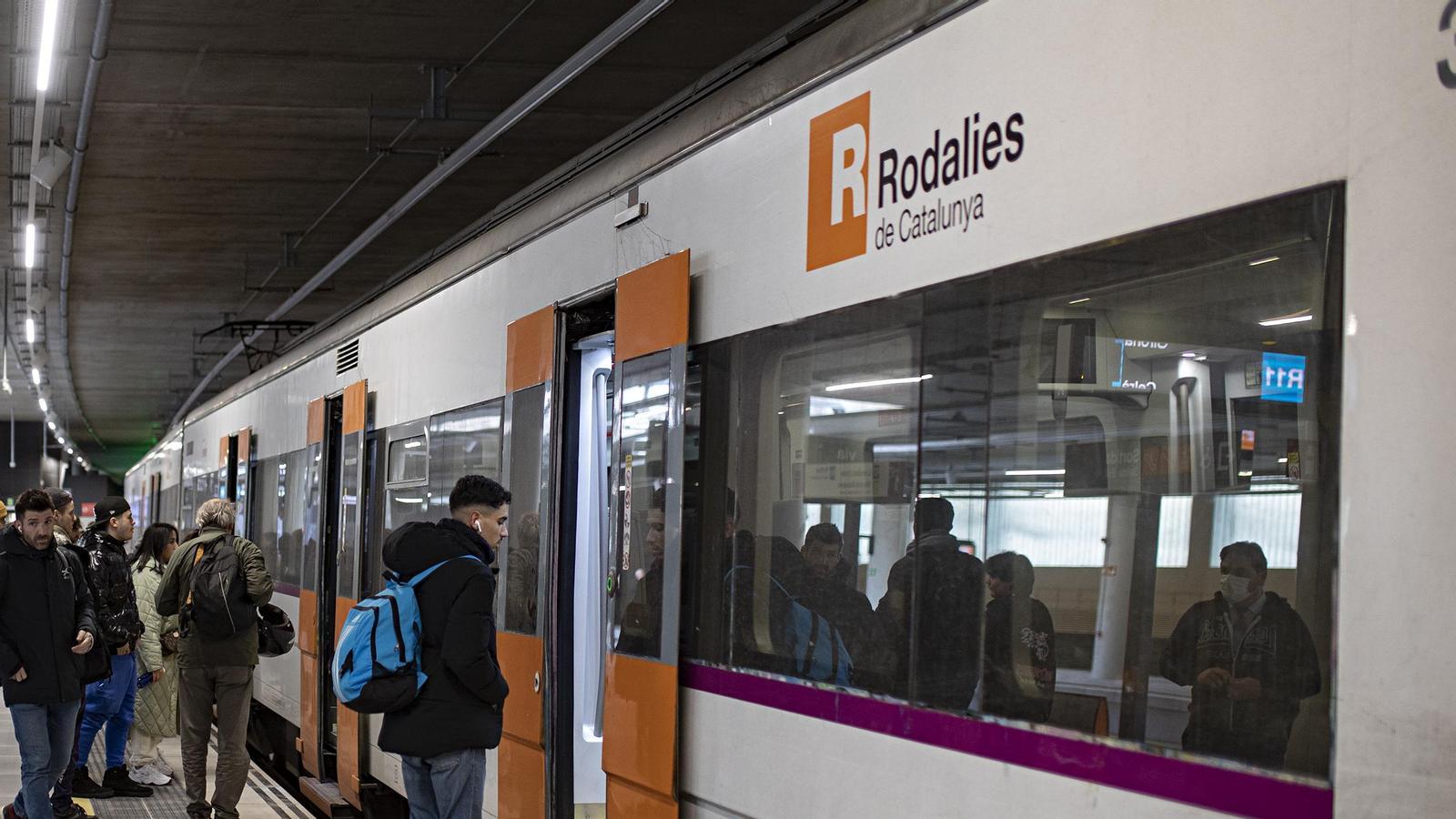
BarcelonaThe lack of investment in commuter rail is one of the reasons commonly cited to justify its poor performance. And there is concrete data to support this. According to the latest official figures, between 2010 and 2023 – the most recent data available – only one out of every two euros budgeted was invested in both infrastructure and trains.
These figures, published last December by the General Directorate of Heritage of the Catalan Government, corroborate the lack of budget execution by the State in the railway sector, a pattern that has been repeated under both the PSOE and the PP governments, as the analyzed period encompasses the end of Rodríguez Zapatero's government, the governments of Mariano Rajoy, and the first years of Pedro Sánchez's term. The data shows that Adif's budget execution rate in Catalonia during the analyzed period was 48.6%. In other words, of the €9.864 billion budgeted between 2010 and 2023, the state-owned company that owns and maintains the infrastructure—tracks, overhead lines, stations, safety systems, and other components—was supposed to invest €9.864 billion, but only spent €4.792 billion. That is, more than €5 billion of the total budgeted amount went unspent.
Something similar occurs with the investment of Renfe Operadora, the state-owned company responsible for trains. The execution rate was slightly higher, at 62.2%. However, in absolute figures, the lack of investment is less than that of Adif. Renfe Operadora had planned to invest €1.421 billion in Catalonia between 2010 and 2023, but only executed €883 million. That is, it failed to invest €538 million of the total planned.
Adding together the two companies that depend on the Ministry of Public Works, the planned investment in Catalonia's railways between 2010 and 2023 was €11.285 billion, but the execution rate during this period fell just over half, at 50.3%. In other words, of the more than 11 billion euros budgeted, 5.676 billion were invested, leaving 5.609 billion unspent. The data shows that the best year for budget execution by Adif and Renfe in Catalonia was 2012, with 108.2%, meaning that investments exceeded the budgeted amount. However, in the worst year, 2021, the execution rate was only 19.3%, meaning that only one out of every five euros budgeted was invested. This lack of investment coincides with two phenomena that further strain public transport, and especially commuter rail. On the one hand, population growth. Catalonia has gained more than 700,000 inhabitants in a decade and 2 million in the last 30 years; Therefore, the need for transportation increases. The other phenomenon that puts pressure on public transportation, and which is partly linked to population growth, is the housing crisis. High housing prices have led many people to live outside the city and have to commute for work or studies. Another factor adds to this problem: increased employment and decreased unemployment. When more people are working, the need for mobility increases.
Increased demand
In fact, from Monday to Friday, the Barcelona area registers nearly 3.6 million daily journeys on public transport. This is a record figure for the use of public transport and an 8.6% increase compared to 2013, according to the Feiner Day Mobility Survey (EMEF) published last July. This survey has been conducted for over two decades by the Metropolitan Transport Authority (ATM) and the Metropolitan Territory Institute. The report highlights that public transport has already recovered, and even surpassed, pre-pandemic levels, especially during morning rush hours. This survey shows that since 2010, demand for rail travel to Catalonia has increased by 22%, although it also reveals that private vehicle transport remains the most used mode of daily travel within the province of Barcelona.
