The pardon of six Asturian women, sentenced to prison, that has united trade unionism
The Spanish government approves the measure of grace for the CNT trade unionists

-
CAT -
CAST
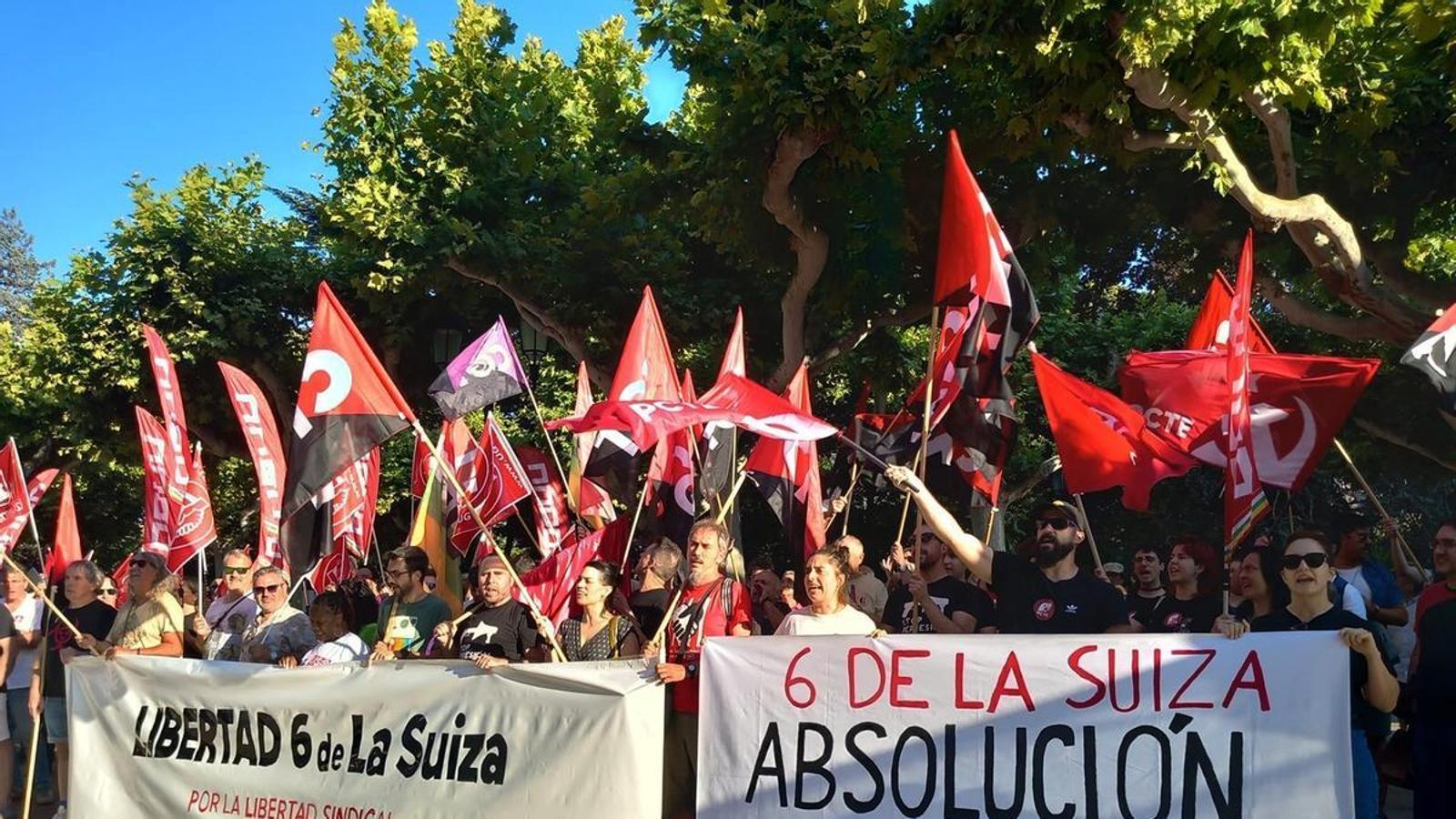
MadridIt is one of the cases that has left one of the most unified images of trade unionism: the imprisonment last summer of six CNT trade unionists from Gijón known as Las Seis de La Suiza; and which this Tuesday writes a new chapter with the approval of the pardon by the Spanish government.
The judicial decision of July last year came almost a decade after the labor dispute erupted and managed – even today – to unite different trade union organizations against a sentence that has been interpreted as a "criminalization" of the trade union struggle, especially considering the judge who initiated the case: Lino Rubio Mayo, head of court number 1 of Gijón's criminal court, known for his harsh sentences against draft resisters and trade unionists. Rubio Mayo is, in fact, the same magistrate who sent trade unionists Cándido and Morala to prison for 20 days, who inspired the film Los lunes al sol, for having broken a traffic camera during a protest at the Asturian city's shipyard.
Therefore, all trade unions, as well as social organizations, left-wing parties, and the Asturian government itself, have pressured throughout this time for Pedro Sánchez's government to approve the measure of grace. In fact, the Minister of Labor, Yolanda Díaz, committed to this with the six convicted individuals – five women and one man – to three and a half years in prison for a continuous offense of serious coercion and another against the administration of justice, and whom she met with once their imprisonment was ordered.
Although it has taken time, this Tuesday the six affected Asturian trade unionists see the Spanish government approve their pardon, which will take effect once it is published in the Official State Gazette (BOE). The Ministry of Labor justifies the decision because the conduct for which the trade unionists were convicted occurred in a labor context, in the exercise of trade union freedom and without the intention of committing crimes. "The Ministry of Labor and Social Economy has at all times defended the legitimacy of trade union action, as well as the right to strike, mobilize, and organize workers in a democratic state like Spain," stated this Monday from the department headed by Yolanda Díaz.
The case of The Six of La Suiza dates back to 2016. The six convicted trade unionists participated in protests in front of a pastry shop in Gijón, La Suiza, after supporting a former employee who had reported workplace and sexual harassment by the employer. These demonstrations, according to the Supreme Court –which confirmed the sentence–, constituted "boycott and pressure" towards the owner, who ended up closing the pastry shop. "The sentence is unjust and disproportionate. It is based on a completely false and orchestrated account," two of the convicted women denounced in 2022 in an interview with El Salto.

