The 2026 budgets in 10 key points
The accounts are based on spending growth below revenue, which in terms of own and transferred taxes will be a record, at 6,481 million.


-
CAT -
CAST
If ERC ultimately endorses the project, Catalonia will have a budget for 2026 for the first time in the last three years. In 2024, 2025, and up to the present day, it has had to extend its budgets due to a lack of support. It's close to 50 billion, a threshold that has been surpassed for the first time in history.This budget represents an increase of €9.1 billion in spending compared to the last budget approved three years ago, which at that time exceeded €40 billion for the first time. This time, the Catalan public accounts will no longer include the European Next Generation funds, which expire this year. Social spending will account for 74.3% of the total budget, the same as in 2023, but with increased resources and the incorporation of housing policies and public transport subsidies. The budget anticipates spending growth that will be slower than revenue growth, which includes record collections of over €6.4 billion in regional and transferred taxes. Unprecedented spending
Non-financial spending by the various departments will increase by 24.8% compared to the 2023 budget, reaching €40.399 billion. For Health, which usually exceeds the forecast – last November it already surpassed €14 billion due to spending from previous years – €13.840 billion is projected, representing a 21.3% increase compared to 2023, below the overall departmental average (24.9%); for Education, €8.356 billion, a 24.5% increase, also below the average; and for Social Rights and Inclusion, €4.248 billion, a 28% increase, above the average.
Including non-departmental funds and interest (€1.616 billion), expenditures reach €49.162 billion, 22.8% more than in 2023. Total projected spending is approaching the €50 billion threshold for the first time. Specifically, there is a 22.8% increase compared to the budget approved three years ago and a 10% increase compared to the figures extended last year, which included supplementary credit guaranteed by ERC and totaled an additional €4.604 billion. Including the volume of resources to be managed by the entire public sector (public companies and others), the figure is €54.747 billion.
Record revenue
Projected non-financial revenues, at €48.231 billion, will grow by 27.9%, thanks to non-earmarked revenues of €40.345 billion and earmarked revenues of €7.886 billion. Revenues from the financing model will increase by 30.3% to €32.894 billion, representing a 6.7% increase compared to last year. The settlement of the 2024 model will contribute €2.812 billion. Also noteworthy is the record collection of regional and transferred taxes at €6.481 billion, a 30.6% increase. The real driver of this growth is the property transfer tax (ITP), with €2.533 billion, 30.5% higher than in 2023.
More investment
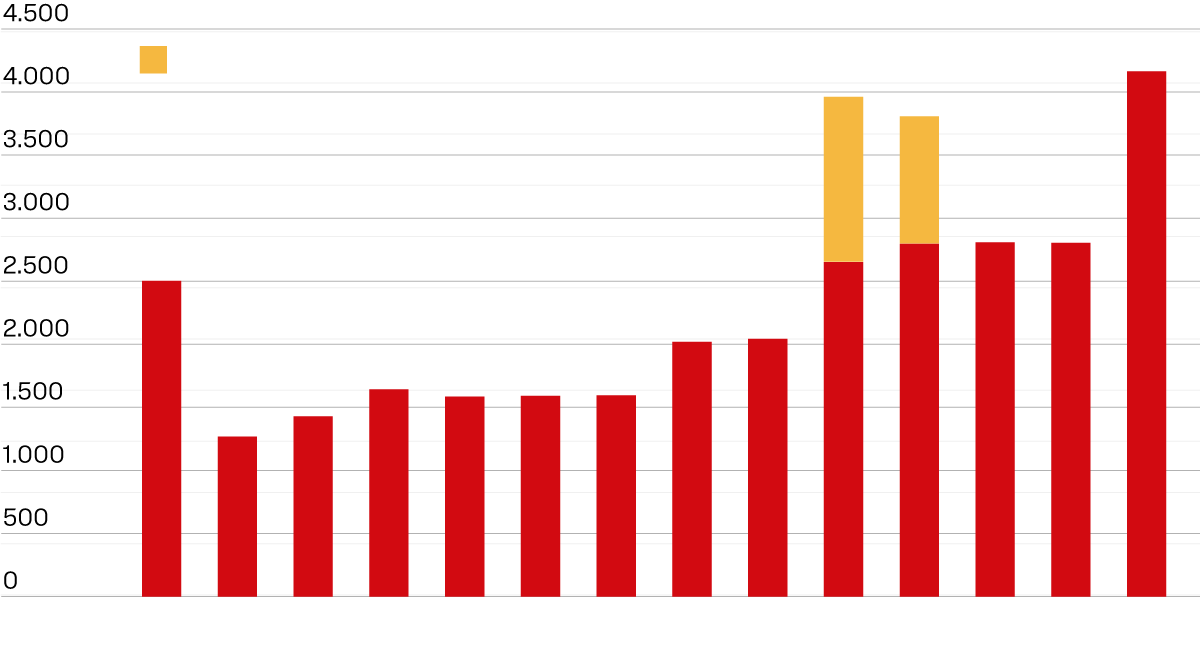
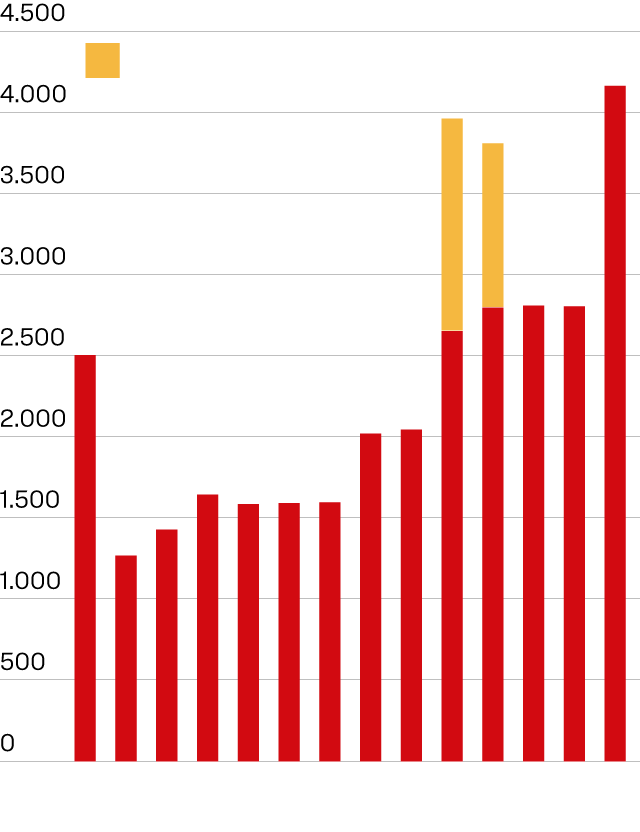
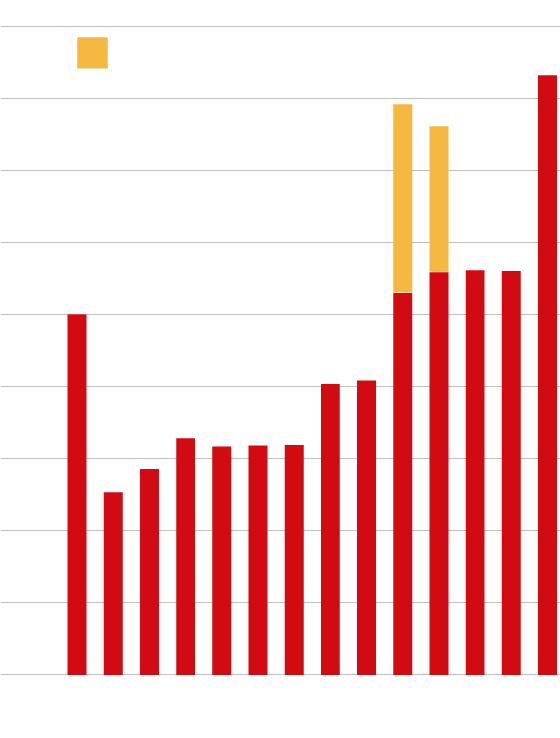
The planned investment volume of €4.146 billion exceeds that of 2023, although that year's figure included European funds, which are no longer available this year. It will also represent a significant increase compared to the levels projected for 2024 and 2025. The largest sum, €526 million, is allocated to railway and public transport infrastructure, followed by healthcare (Salut) with €463.3 million. Expansion and improvement works at hospitals across all integrated healthcare areas amount to €365.7 million. The pace of investment execution is noteworthy, reaching €3.423 billion last year, even with some European funding. The Catalan government attributes this forecast to "the best current savings in the entire historical series."
4.500
Fons europeus Next Generation
4.000
3.500
3.000
2.500
2.000
1.500
1.000
500
0
2020
2026
2024
2025
2023
2022
2018
2016
2019
2014
2015
2013
2021
2017
4.500
Fons europeus Next Generation
4.000
3.500
3.000
2.500
2.000
1.500
1.000
500
0
2013
2014
2015
2016
2017
2018
2019
2020
2021
2022
2023
2024
2025
2026
4.500
Fons europeus Next Generation
4.000
3.500
3.000
2.500
2.000
1.500
1.000
500
0
2021
2026
2013
2014
2015
2016
2017
2018
2019
2020
2022
2023
2024
2025
A decreasing deficit
The projected deficit in the accounts for 2026 is €329.6 million, representing 0.1% of gross domestic product (GDP). Furthermore, the debt-to-GDP ratio will decrease from 28.4% in 2025 to 27.4% in 2026, a reduction of approximately €90 billion. However, this proportion could fall to 22.2% if the cancellation of a portion of the outstanding debt through the Regional Liquidity Fund (FLA) is ultimately approved.
A healthy economy
The 2026 budget is based on a projected Catalan economic growth (GDP) of 2.1%, compared to 2.7% in 2025, significantly higher than the initial forecast. Exports continue to rise. In any case, inequality "remains stable."
Housing Resources
The budget allocates a total of €1.9 billion to housing policies, some of which has been agreed upon with the left-wing coalition. This is a "record high," according to the government. The budget includes improvements to rental assistance and to the rehabilitation and construction of subsidized housing. In addition, the Catalan Finance Institute (ICF) will make €600 million available, and another €50 million will be allocated for rehabilitation.
Industry and Tax Agency
The 2026 budget includes a €32 million increase in funding for the Catalan tax authority, with 200 permanent positions, 450 temporary positions, and plans to continue the technological transformation. The commitment to the Catalan Republican Left (ERC) is to collect 100% of personal income tax (IRPF), an issue stalled by the Socialist Party's (PSOE) opposition. The budget also begins to incorporate the commitment made to the employers' associations Foment del Treball and Pimec, and the unions UGT and CCOO, to allocate €5 billion to the national pact for industry through 2030.
More teachers and improved salaries
The budget also includes 4,162 additional teachers compared to 2023, along with improved salaries. An additional 314 million euros is earmarked for expansions, new construction, and a new fund to modernize schools.
Resources for public transportation
This section includes €194 million to maintain the T-Usual and T-Joven travel card discounts throughout the legislative term, €355 million for Cercanías de Catalunya (Catalan commuter rail) under the management contract, and €311 million for investments in rail and metro infrastructure.
More residences
The government plans to build 15 new public nursing homes and create 1,000 new places. 150 million euros have been allocated for the tariff system, to improve salaries and working conditions, and to hire 100 professionals for the coordinated management of the Minimum Living Income (IMV) and the guaranteed minimum income.
